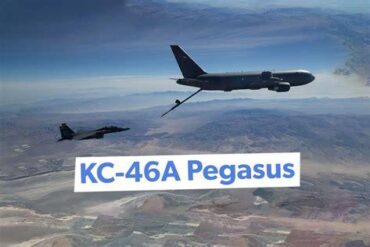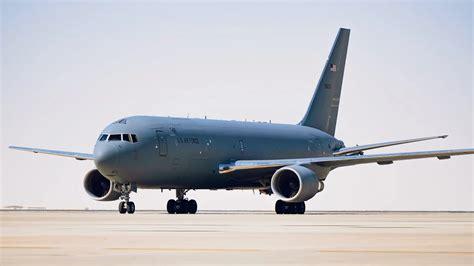
The Boeing KC-46A Pegasus was supposed to solve one of the U.S. Air Force’s most urgent problems: replacing a tanker fleet so old that some aircraft entered service when Dwight Eisenhower occupied the White House. Instead, the Pegasus has evolved into one of the most controversial aircraft programs in modern American military history. Despite offering significant advances in aerial refueling technology, cargo transport, medical evacuation capabilities, and battlefield connectivity, the KC-46 remains entangled in a web of technical failures, procurement battles, congressional scrutiny, and staggering financial losses.
The controversy surrounding the aircraft is not simply about cost overruns or delayed deliveries. It represents a larger debate about the future of American airpower, military procurement, and whether the Air Force can successfully modernize one of the most important support fleets in its inventory without sacrificing operational readiness.
For critics, the KC-46 symbolizes everything wrong with defense acquisition. For supporters, it remains the only realistic solution to an increasingly dangerous tanker crisis. That tension has transformed the Pegasus into one of the most closely watched military aircraft programs in the world.
The importance of the debate cannot be overstated. Aerial refueling is the invisible backbone of American military power. Fighters, bombers, surveillance aircraft, and transport fleets rely on tankers to extend range and maintain global reach. Without reliable aerial refueling, the United States would struggle to project military force across the vast distances of the Pacific, Europe, and the Middle East.
The challenge facing the Air Force is simple but severe. The aircraft currently performing most of that mission are approaching an average age that no military planner ever intended.
After decades of continuous service, the legendary KC-135 Stratotanker is rapidly becoming one of the oldest operational military aircraft fleets on Earth.
The Aging KC-135 Crisis That Forced The Air Force To Act
The roots of the KC-46 controversy begin long before the Pegasus itself.
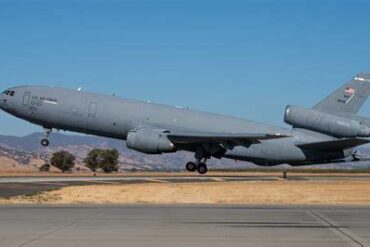
The KC-135 Stratotanker entered service during the Cold War and became one of the most successful military support aircraft ever built. For generations, it quietly enabled American airpower across conflicts ranging from Vietnam to the wars in Iraq and Afghanistan.
What makes the current situation extraordinary is that the KC-135 was never expected to remain operational for nearly seven decades. Aircraft structures experience fatigue, corrosion, and wear regardless of maintenance quality. As airframes age, inspections become more frequent, repairs become more expensive, and the risk of unforeseen failures increases.
Recent years have highlighted growing concerns regarding structural degradation and operational sustainability. Every additional year of service requires increasing investments simply to maintain acceptable readiness levels.
Yet despite these realities, the KC-135 remains responsible for the majority of America’s aerial refueling capacity.
This created a dangerous paradox. The Air Force desperately needed a replacement, but the replacement itself became a source of controversy.
The KC-46 was intended to end that dilemma.
Instead, it created a new one.
Why The KC-46 Pegasus Was Considered A Revolutionary Tanker
Unlike its predecessor, the KC-46 was never envisioned as merely a flying fuel station.
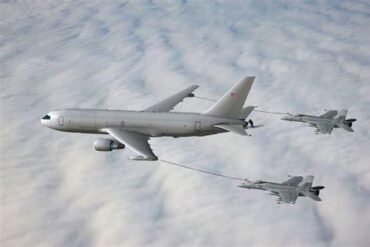
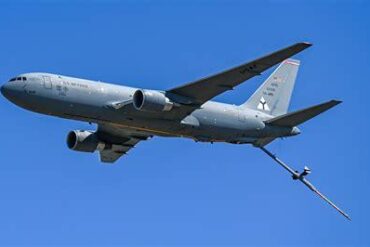
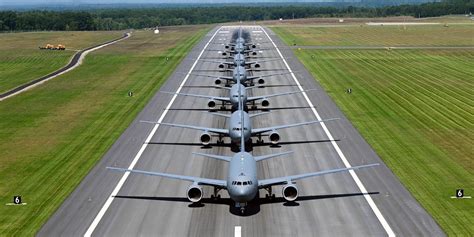
Built from the commercial Boeing 767 platform, the Pegasus was designed as a multi-role military aircraft capable of performing several missions simultaneously. It can conduct aerial refueling, transport cargo, move passengers, support humanitarian operations, and perform aeromedical evacuation missions.
This flexibility reflects changing military realities.
Modern conflicts require aircraft that can adapt rapidly to evolving operational demands. A tanker that can also carry cargo or medical patients provides commanders with significantly more options than a dedicated refueling platform.
The Pegasus was therefore conceived as a force multiplier rather than simply a replacement.
Its cargo capabilities dramatically exceed those of the KC-135. Passenger capacity is substantially greater. Medical evacuation capacity is larger. Mission conversion times are shorter.
The aircraft also incorporates modern communications systems, advanced networking capabilities, defensive equipment, and survivability enhancements that older tankers simply cannot match.
In theory, the Pegasus represented the future of military mobility.
In practice, serious technical problems soon overshadowed those ambitions.
The Remote Vision System Disaster
The most famous controversy involving the KC-46 centers on its Remote Vision System, commonly known as RVS.
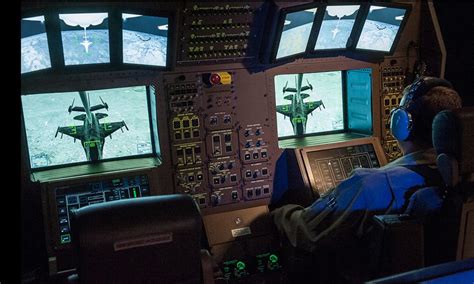
Traditional tanker aircraft rely on a boom operator physically observing the receiving aircraft while guiding the refueling boom into position. The KC-46 replaced this approach with a revolutionary remote operating station.
Instead of looking directly through windows, operators use cameras, sensors, and digital displays to control the boom.
The concept promised major advantages. Operators would work in a more comfortable environment, visibility could be enhanced using infrared systems, and nighttime operations could potentially become easier and safer.
Unfortunately, reality proved far more complicated.
Early versions of the system suffered from image distortions, inaccurate depth perception, glare issues, and reduced performance under certain lighting conditions. These problems significantly complicated aerial refueling operations and raised concerns about safety.
Pilots reported difficulties during contact procedures, while evaluators identified deficiencies serious enough to delay full operational confidence in the aircraft.
A system designed to represent the future of aerial refueling instead became one of the program’s biggest liabilities.
The Refueling Boom That Would Not Cooperate
If the Remote Vision System generated headlines, the boom controversy intensified them.
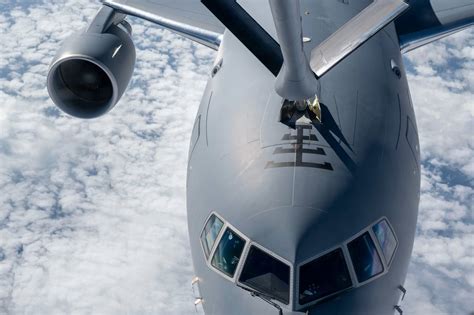
The KC-46 introduced a sophisticated fly-by-wire refueling boom intended to improve precision and efficiency. However, investigations revealed that the boom required significantly greater force to compress than the systems used on legacy tankers.
This characteristic created problems when refueling lighter aircraft.
During several incidents involving fighter aircraft, concerns emerged regarding excessive contact forces and potential aircraft damage. Investigators eventually identified issues involving boom stiffness and operator interaction that could lead to what became known as nozzle binding.
The consequences extended beyond routine maintenance concerns.
In some cases, boom behavior resulted in damage costing millions of dollars to repair. The issue attracted the attention of lawmakers, military leaders, and oversight bodies, all of whom questioned whether the Air Force should continue retiring older tankers before a permanent solution was implemented.
The resulting scrutiny transformed a technical engineering challenge into a major political issue.
For critics, the boom problem became evidence that the aircraft entered service before reaching full maturity.
For supporters, it represented a solvable design issue affecting an otherwise capable platform.
Boeing’s Multi-Billion-Dollar Financial Nightmare
The controversy surrounding the KC-46 is not limited to military concerns.
For Boeing, the program has become one of the most expensive defense contracts in company history.
The tanker was awarded under a fixed-price arrangement, meaning Boeing absorbed the financial consequences of many delays, redesigns, and technical corrections. As deficiencies accumulated, costs escalated dramatically.
Over time, the company recorded billions of dollars in charges associated with the program.
These losses transformed what was initially expected to be a flagship military success into a significant financial burden.
The scale of the losses is remarkable even by defense industry standards. Few major military programs have generated such large write-offs while simultaneously remaining central to future force planning.
This unusual situation creates a fascinating contradiction.
The Air Force continues expanding procurement plans while Boeing continues paying enormous financial penalties to fix problems.
Few defense programs better illustrate the complex relationship between military necessity and industrial reality.
Why The Air Force Keeps Buying More KC-46 Tankers
Given the long list of deficiencies, many observers wonder why the Air Force continues purchasing additional Pegasus aircraft.
The answer lies in strategic necessity.
There is currently no alternative aircraft available in sufficient numbers to replace aging KC-135 tankers quickly. Developing an entirely new tanker would require years of engineering, testing, certification, and production.
Meanwhile, the existing fleet continues aging.
Air Force planners therefore face an uncomfortable choice.
They can either continue operating increasingly elderly KC-135s indefinitely or accept a modern tanker that still requires improvement.
From a strategic perspective, many decision-makers believe the latter option is less risky.
The Pegasus may have flaws, but it remains a factory-new aircraft with modern systems, improved fuel efficiency, greater mission flexibility, and growth potential for future upgrades.
As a result, procurement plans have expanded well beyond the original expectations.
The Air Force increasingly views the KC-46 as the foundation of its future tanker force regardless of ongoing criticism.
The Indo-Pacific Threat Environment Changes Everything
One of the strongest arguments in favor of the KC-46 involves the changing nature of modern warfare.
During the Cold War and post-Cold War eras, support aircraft often operated in relatively permissive environments. Tankers typically remained far from enemy threats while fighters and bombers conducted missions closer to hostile territory.
Future conflicts may not offer that luxury.
Potential adversaries have invested heavily in long-range missiles, advanced radar systems, and sophisticated air-defense networks specifically designed to target high-value support aircraft.
Tankers are among the most valuable targets in any air campaign.
Destroying even a small number can dramatically reduce the range and effectiveness of fighter forces.
The KC-135 was never designed to survive in this environment.
The KC-46 incorporates defensive systems, modern communications architecture, electromagnetic hardening, and survivability improvements intended to help address these challenges.
While it is not a stealth aircraft, it represents a significant improvement over legacy platforms.
For military planners focused on potential Indo-Pacific conflicts, these advantages carry enormous weight.
The Failed Dream Of A Stealth Tanker
The controversy surrounding the KC-46 became even more significant because its potential successor effectively stalled before reaching reality.
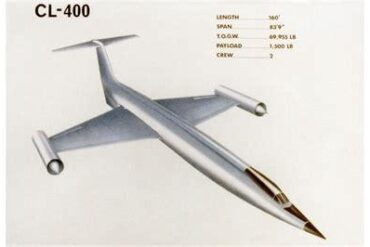
The Air Force had envisioned a Next Generation Air Refueling System, often referred to as NGAS, that would incorporate at least some level of stealth capability.
Such an aircraft could potentially support future operations involving advanced fighters and stealth bombers deeper inside contested airspace.
The concept was ambitious.
It was also extremely expensive.
Developing a stealth tanker would require solving complex engineering challenges never fully addressed before. The resulting program could cost tens of billions of dollars while introducing substantial technical risks.
Budget pressures eventually forced the Air Force to scale back investment.
As NGAS funding declined, the KC-46 became more important than ever.
The absence of a realistic alternative strengthened the Pegasus program despite its unresolved issues.
In many ways, the tanker’s greatest advantage is not perfection.
It is availability.
Congress Steps In To Control The Program
The ongoing controversies eventually attracted significant congressional attention.
Lawmakers grew increasingly concerned about major deficiencies, retirement schedules, fleet readiness, and procurement strategy. Congressional committees imposed restrictions designed to ensure corrective actions were completed before unlimited purchases continued.
These measures reflected a balancing act.
Congress wants the Air Force to modernize its tanker fleet.
Congress also wants accountability.
As a result, legislators have repeatedly linked future procurement decisions to progress in resolving key deficiencies. Oversight efforts focus heavily on boom performance, Remote Vision System improvements, operational readiness, and long-term sustainment planning.
At the same time, lawmakers recognize that tanker capacity remains a strategic necessity.
This creates a recurring cycle of criticism and support.
The aircraft receives intense scrutiny while simultaneously remaining central to future force structure plans.
Why The KC-46 Remains The Most Controversial Aircraft In The U.S. Military
The KC-46 Pegasus occupies a unique position in American military aviation.
It is neither a complete failure nor an unquestioned success.
Instead, it represents the uncomfortable reality of modern defense acquisition, where urgent operational requirements collide with technological ambition, budget constraints, and industrial challenges.
The aircraft unquestionably offers capabilities the aging KC-135 cannot provide. Its multi-mission flexibility, modern architecture, defensive systems, and future growth potential make it a far more capable platform on paper and increasingly in practice.
Yet its history is equally defined by technical deficiencies, delayed fixes, costly redesigns, congressional intervention, and billions of dollars in financial losses.
Those competing truths explain why the Pegasus remains so controversial.
The Air Force needs it.
Congress distrusts aspects of it.
Boeing continues paying for it.
And America’s future aerial refueling strategy increasingly depends upon it.
Whether history ultimately remembers the KC-46 as a troubled success story or a cautionary tale of defense procurement will depend largely on the effectiveness of ongoing fixes and upgrades. What is already clear, however, is that no other aircraft in the current U.S. military inventory better illustrates the tension between necessity and imperfection than the Boeing KC-46 Pegasus.