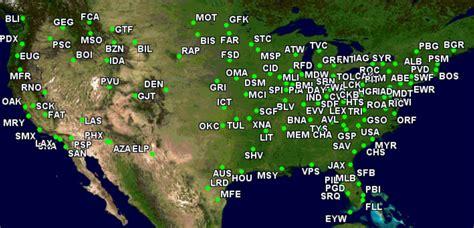
Allegiant Air’s network transformation in 2026 tells a story that extends far beyond route additions and cancellations. Headlines announcing dozens of route cuts and, almost simultaneously, a sweeping Florida expansion may appear contradictory at first glance. In reality, both developments are part of the same carefully calculated strategy. The ultra-low-cost carrier is reshaping its operations to match changing market conditions, stronger leisure demand, and a new competitive landscape that emerged after major industry shifts.
Rather than pursuing expansion everywhere, Allegiant has become increasingly selective about where it deploys aircraft. The result is a network that leans more heavily than ever toward Florida while reducing exposure in several western markets that previously played an important role.
By examining the airline’s largest airports during the second half of 2026, a clear picture emerges of where Allegiant believes future growth opportunities exist.
After several years of evolving travel patterns, vacation-focused destinations continue to generate the strongest demand for the carrier’s business model. That emphasis is now reflected in virtually every aspect of its airport rankings.

Florida Airports Continue to Anchor Allegiant’s Network
The dominance of Florida throughout Allegiant’s network is impossible to overlook. Orlando Sanford International Airport remains comfortably the airline’s largest operating base, handling more than 10,000 scheduled flights during the second half of 2026. Averaging roughly 58 daily departures, the airport continues to serve as the centerpiece of Allegiant’s nationwide leisure operation.
Its position is strengthened by the airline’s overwhelming market presence. Allegiant controls virtually all scheduled passenger service at the airport, giving it extraordinary operational flexibility while avoiding direct competition common at larger hubs.
Just behind Orlando Sanford sits St. Pete–Clearwater International Airport, another uniquely important facility for the carrier. Serving the Tampa Bay region, it supports approximately 50 departures every day and connects travelers with more than 60 destinations across the United States.
The consistency of these two airports at the top of the rankings demonstrates that Allegiant’s strategy remains centered on secondary airports capable of supporting efficient operations while providing convenient access to major vacation markets.
The broader rankings reinforce this conclusion. Five of the top ten airports are located in Florida itself, while several additional bases primarily funnel passengers into the state’s leisure destinations.
Allegiant’s Top 10 Airports Reflect a Leisure-Focused Strategy
The airline’s largest airports during the second half of 2026 illustrate an increasingly concentrated network built around tourism demand.
- Orlando Sanford International Airport (SFB)
- St. Pete–Clearwater International Airport (PIE)
- Harry Reid International Airport (LAS)
- Punta Gorda Airport (PGD)
- Phoenix-Mesa Gateway Airport (AZA)
- Fort Lauderdale-Hollywood International Airport (FLL)
- McGhee Tyson Airport (TYS)
- Cincinnati/Northern Kentucky International Airport (CVG)
- Asheville Regional Airport (AVL)
- Destin–Fort Walton Beach Airport (VPS)
Several airports outside Florida, including Knoxville, Cincinnati, and Asheville, primarily function as feeders that transport passengers almost exclusively toward Florida vacation destinations. This reinforces the state’s growing importance throughout Allegiant’s business model.
West Coast Retreat Marks One of the Biggest Strategic Shifts
While Florida expands, the western United States tells a very different story.
Over the past year, Allegiant has withdrawn from several major airports that once formed part of its broader network strategy. Large metropolitan gateways including Los Angeles International Airport, Oakland International Airport, and San Diego International Airport no longer appear within its operating footprint.
The absence of these airports from the top rankings highlights an important evolution in corporate priorities. Rather than competing aggressively in crowded metropolitan markets with intense pricing pressure, Allegiant appears increasingly committed to serving underserved regional airports where operating costs remain lower and competitive advantages are easier to maintain.
This selective approach reduces exposure to volatile demand while allowing aircraft utilization to remain focused on routes with stronger profitability potential.
Destin–Fort Walton Beach Enters the Top 10
Only one airport joins the top ten rankings in 2026, yet its arrival is particularly significant.
Destin–Fort Walton Beach Airport replaces Sarasota-Bradenton International Airport, moving into tenth position with more than 3,200 scheduled flights during the second half of the year. The airport has become one of America’s fastest-growing leisure gateways and offers a distinctive operating environment because it functions within Eglin Air Force Base.
Unlike conventional commercial airports, civilian aircraft share facilities with military operations, creating a unique experience where travelers frequently observe fighter jets alongside commercial departures.
Its strategic importance has increased steadily following investments in dedicated passenger infrastructure, including Allegiant’s own Concourse C expansion. From this facility, the airline now serves dozens of destinations while continuing to introduce additional routes that strengthen its Gulf Coast presence.
The airport’s rapid growth mirrors broader demand trends across Florida’s Emerald Coast, where tourism continues to attract increasing numbers of domestic travelers.
Fort Lauderdale Emerges as Allegiant’s Biggest Winner
Among all airports in Allegiant’s network, no location experienced more dramatic growth than Fort Lauderdale-Hollywood International Airport.
The carrier is scheduled to operate nearly 5,000 flights during the second half of 2026, representing a remarkable 33 percent increase compared with the previous year. More than 1,200 additional flights have been added, translating into approximately seven extra daily departures.
Growth has been fueled by both network expansion and frequency increases across existing routes.
Nine entirely new destinations have been introduced, including Albany, Boston, Chattanooga, Kansas City, Omaha, Pittsburgh, Chicago Rockford, Rochester, and Trenton. Simultaneously, Allegiant has expanded service levels across many previously established markets.
The combination has transformed Fort Lauderdale into one of the airline’s fastest-growing strategic assets.

Industry Changes Created New Opportunities in South Florida
Fort Lauderdale’s rapid expansion cannot be viewed in isolation.
The competitive environment surrounding South Florida changed substantially following the disappearance of Spirit Airlines as a dominant force at the airport. As one major low-cost competitor retreated, opportunities emerged for other airlines to capture passengers previously served by Spirit’s extensive network.
JetBlue rapidly increased its own presence, but Allegiant also moved aggressively to strengthen its position. Rather than merely replacing capacity, the airline appears focused on establishing Fort Lauderdale as a long-term growth platform capable of supporting future expansion throughout Florida and neighboring leisure markets.
This proactive response demonstrates management’s willingness to capitalize quickly when structural industry changes create favorable conditions.
Las Vegas Records the Largest Decline
Despite remaining Allegiant’s third-largest airport, Harry Reid International Airport has become the most notable loser within the 2026 rankings.
Scheduled flights during the second half of the year decline by approximately nine percent, representing roughly 681 fewer departures compared with the previous year. On an average day, the airport will see about four fewer Allegiant flights.
The reduction stems largely from the elimination of six destinations, including Phoenix Mesa, Nashville, Boise, Akron-Canton, Chattanooga, and Chicago Midway.
These cuts reflect broader market softness affecting Las Vegas tourism, where multiple airlines have reduced schedules amid declining visitor numbers.
Interestingly, Allegiant has still introduced one distinctive service from Las Vegas: the airline’s only regularly scheduled red-eye operation, flying weekly to Orlando Sanford on Friday evenings. Although relatively small in scale, the route demonstrates that Las Vegas continues to hold strategic importance even as overall capacity contracts.
The New Airport Rankings Reveal Allegiant’s Future Direction
Viewed collectively, Allegiant’s top ten airports reveal an airline becoming increasingly disciplined in its network planning.
Rather than chasing nationwide expansion, management appears focused on concentrating resources where leisure demand remains strongest and competitive dynamics are most favorable. Florida stands firmly at the center of that strategy, supported by dominant positions at airports where Allegiant can maximize operational efficiency while limiting direct rivalry.
Meanwhile, reductions across western markets and selective pruning of weaker routes illustrate a willingness to abandon underperforming opportunities in favor of more profitable alternatives.
The reshaped rankings also suggest that flexibility has become one of Allegiant’s greatest competitive strengths. The carrier is adapting quickly to industry disruptions, changing traveler preferences, and evolving market conditions without abandoning its low-cost leisure identity.
As 2026 progresses, the hierarchy of Allegiant’s largest airports provides more than a snapshot of current operations—it offers a roadmap for where the airline expects its next phase of sustainable growth to emerge. Florida’s dominance is no longer simply a historical characteristic of the network. It has become the defining pillar around which Allegiant is building its future.