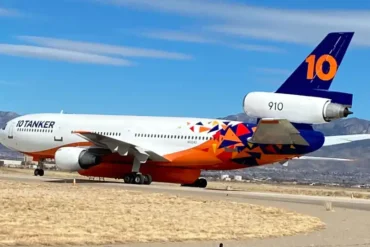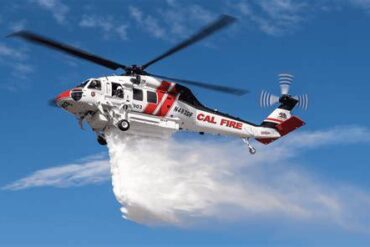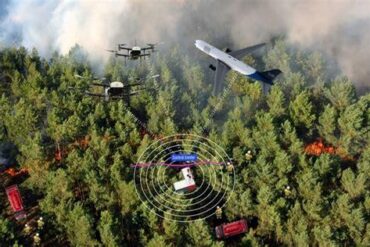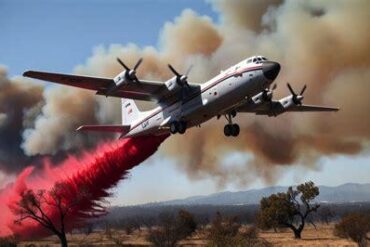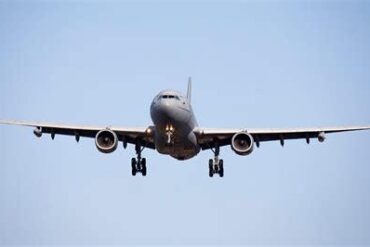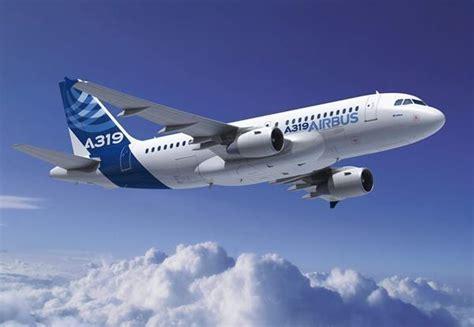
The Airbus A319 has spent decades shuttling passengers across short-haul routes, threading through busy European corridors and connecting secondary cities across North America and Asia. Now, one of commercial aviation’s most dependable narrowbodies is about to step into an entirely different theater of operations. In a first-of-its-kind program, Neptune Aviation is transforming the Airbus A319 into a next-generation large aerial tanker, purpose-built to combat increasingly destructive wildfires.
This is not a cosmetic rebranding or a simple livery change. It is a full-scale engineering conversion that aims to redefine what a mid-size jetliner can accomplish when the cabin seats come out and a sophisticated retardant delivery system goes in. The Missoula, Montana-based operator is preparing to phase out its long-serving BAe 146 fleet in favor of the more capable Airbus platform, with operational deployment targeted for the 2027 wildfire season.
A Commercial Jet Reimagined for Fireline Duty
Neptune Aviation’s decision to adopt the Airbus A319 followed two years of technical evaluation and simulated drop analysis. Working alongside Aerotec & Concept, the company assessed candidate airframes and conducted extensive modeling to ensure that the aircraft could meet stringent performance standards required for aerial firefighting.
At the heart of the conversion lies a tank system designed to carry a minimum of 4,500 gallons (approximately 17,000 liters) of fire retardant. This represents a significant increase over the roughly 3,000-gallon capacity of Neptune’s current BAe 146 tankers. The A319’s larger fuselage and higher maximum takeoff weight make this expanded payload feasible without sacrificing operational flexibility.
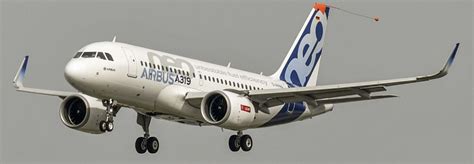
Beyond raw capacity, the A319 brings critical advantages in speed and range. Wildfires rarely burn in convenient clusters; they erupt across vast, often remote regions. A jet that can reposition quickly between fire complexes—or deploy internationally when hemispheres trade fire seasons—offers agencies valuable surge capability. The A319’s extra fuel capacity allows it to reach distant fire zones with a full retardant load, maximizing each sortie’s impact.
Integrating a modern retardant tank system into a fly-by-wire Airbus A320-family aircraft requires careful engineering. Fly-by-wire refers to the electronic control of flight surfaces through computers rather than direct mechanical linkages. The aircraft’s flight control laws must be harmonized with the unique aerodynamic and structural stresses associated with low-level retardant drops. Precision is paramount; retardant patterns must be consistent, repeatable, and compliant with interagency standards.
Neptune Aviation’s Evolution in Aerial Firefighting
Founded and headquartered at Missoula International Airport (MSO), Neptune Aviation has built its reputation on large aerial tanker operations. The company operates and maintains its own fleet, employs experienced pilots and technicians, and sustains an intensive winter maintenance cycle to ensure readiness when wildfire season peaks.
Its current backbone, the BAe 146 jet, has served reliably in wildfire operations for years. Equipped with Neptune’s active response tank system, the aircraft can deliver controlled, targeted retardant drops designed to reinforce containment lines and slow advancing flames. Yet wildfire behavior is evolving. Longer seasons, hotter temperatures, and extreme wind events are increasing the scale and intensity of fire incidents worldwide.
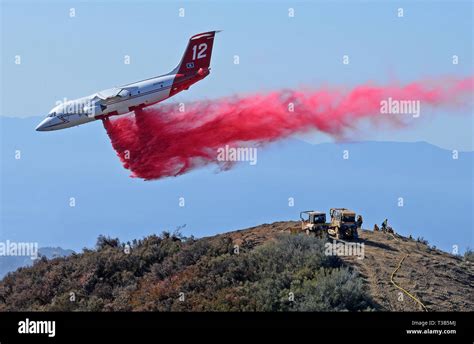
The shift to the Airbus A319 reflects both operational ambition and strategic foresight. Neptune intends to introduce the first converted aircraft into service in 2026, followed by gradual fleet expansion through 2029. Each aircraft must undergo interagency airtanker evaluation to verify drop coverage, safety margins, and system reliability before receiving full approval. The long-term vision includes a fleet of approximately 10 to 15 A319 tankers.
Neptune is more than a flight operator. It is also an aviation services hub offering heavy maintenance, avionics work, and non-destructive testing. That vertical integration allows the company to maintain tight control over modification quality and operational uptime—an essential advantage when aircraft must be ready at a moment’s notice.
Why the Airbus A319 Conversion Matters Globally
The significance of the Airbus A319 airtanker extends far beyond the United States. Around the world, governments are grappling with escalating wildfire risk. Converting a widely available narrowbody airliner into a firefighting platform introduces a scalable solution at a critical moment.
The Airbus A320 family is one of the most prolific commercial aircraft series ever produced. As airlines modernize fleets, a growing pool of mid-life or retired A319 airframes becomes available on the secondary market. Leveraging this global supply reduces acquisition costs and taps into a mature ecosystem of parts, engines, and trained technicians. That infrastructure already exists; the firefighting sector can piggyback on it rather than building support systems from scratch.
From a mission efficiency standpoint, a 4,500-gallon retardant load reduces the number of sorties required to establish or reinforce containment lines. Fewer trips mean faster line construction, lower fuel burn per delivered gallon, and potentially improved firefighter safety on the ground. The aircraft’s jet speed enables rapid repositioning between distant incidents, while its range opens doors to international deployment during off-peak seasons.

Neptune is operating within established regulatory frameworks for tank certification and coverage performance testing. The data generated during the A319 program could serve as a blueprint for other jurisdictions considering similar conversions. If successful, this initiative may broaden the portfolio of approved large airtanker types available to agencies worldwide, strengthening collective firefighting capacity.
Engineering Ambition Meets Environmental Urgency
The Airbus A319’s new mission underscores a broader transformation in aviation: the adaptive reuse of proven platforms for emerging global challenges. Where the aircraft once carried business travelers and holidaymakers, it may soon be laying down bright red lines of retardant ahead of advancing flames.
This is not merely an aircraft upgrade. It represents a strategic recalibration of aerial firefighting capability at a time when extreme wildfire events are becoming more frequent and more intense. By combining the durability and performance of a commercial jetliner with specialized suppression technology, Neptune Aviation is positioning the Airbus A319 as a cornerstone of next-generation wildfire response.
If the program delivers on its promise, the familiar silhouette of the A319 could become a common sight not at passenger gates, but above smoke-choked ridgelines—proof that innovation in aviation does not always mean building something entirely new. Sometimes it means reimagining what already exists and sending it into the fight with a very different purpose.