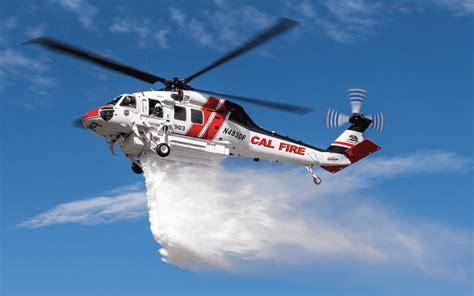
At first glance, the Firehawk helicopter may look like just another aircraft circling above wildfire zones. But a closer look reveals a cutting-edge, high-performance machine engineered for a mission that few helicopters could execute with such precision, power, and flexibility. The Firehawk is a purpose-built aerial platform that doesn’t just suppress fires—it saves lives, hauls essential gear, and adapts instantly to the changing tempo of emergencies.
Developed from the proven DNA of the military-grade Sikorsky UH-60 Black Hawk, the Firehawk has evolved into a top-tier aerial response system—trusted by elite agencies like Cal Fire and the Los Angeles County Fire Department. From precision water drops to high-speed medical evacuations, it has become the gold standard in multi-role rotorcraft.
Aerial Arsenal for Wildfire Combat
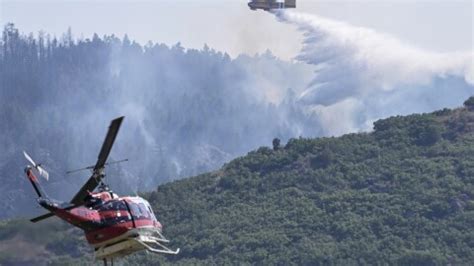
The Firehawk’s most prominent role is in aerial firefighting, where it delivers a lethal combination of speed, agility, and volume. Equipped with a belly-mounted water tank that holds up to 1,000 gallons, it can unleash a concentrated water or fire retardant drop on fast-moving hotspots. But what truly sets the Firehawk apart is its performance while fully loaded—this is not a machine that falters under weight.
Capable of hovering and maneuvering with precision in mountainous terrain, it delivers rapid drops and can return to refill in under three minutes. Its retractable snorkel system enables fast refilling from lakes, rivers, or portable tanks, allowing crews to mount multiple drops per hour without returning to base. In contrast to fixed-wing aircraft that often require longer runways and larger drop zones, the Firehawk can operate in confined areas, making it a front-line tool during the early, most critical stages of wildfire outbreaks.
Beyond the Blaze: Multi-Mission Mastery
While it excels at firefighting, the Firehawk is more than a flying water cannon. One of its most celebrated traits is its seamless role-switching. Without requiring reconfiguration downtime, it can:
- Transport firefighters directly to the fire line, even in remote terrain.
- Perform hoist rescues in rugged mountain areas or collapsed infrastructure.
- Evacuate injured civilians as a medical transport helicopter.
- Deploy equipment and supplies into inaccessible zones.
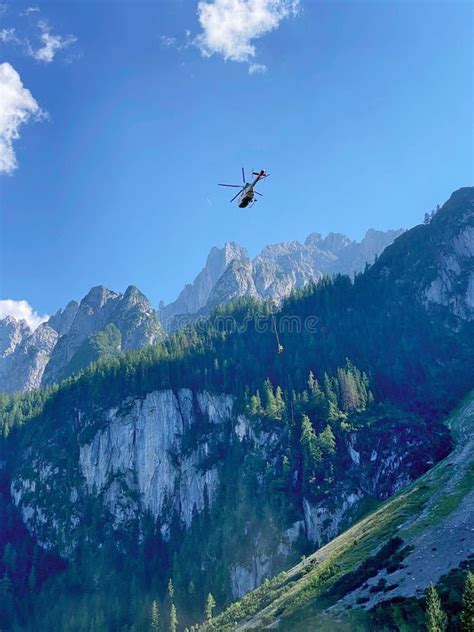
In life-threatening conditions where speed and access are everything, the Firehawk’s ability to pivot roles mid-mission makes it irreplaceable. For example, while battling a fire, it can be called to retrieve a firefighter suffering heat stroke, hoist them into its cabin, and deliver them to medical care without pausing operations.
The Black Hawk Legacy: From Military Muscle to Civilian Lifesaver
The Firehawk’s DNA traces back to one of the most robust and battle-proven aircraft ever built—the Sikorsky UH-60 Black Hawk. Originally a military workhorse designed in the 1970s for U.S. Army utility missions, the Black Hawk was prized for its durability, lift capacity, and all-weather reliability.
In 1973, aviation entrepreneur Chuck Brainerd founded Brainerd Helicopters and later became the first to commercially operate Black Hawks. By 1987, he adapted them for wildland firefighting, leveraging their military-grade lift and control capabilities to deliver powerful aerial support.
But the defining shift came in the late 1990s, when the Los Angeles County Fire Department began repurposing military surplus Black Hawks into customized “Legacy Firehawks.” Outfitted with specialized water tanks, hoists, and rescue kits, these helicopters laid the blueprint for a new generation of aerial emergency responders.
Factory-Built for Fire: The Modern Firehawk Emerges
The Firehawk’s evolution from retrofit to purpose-built helicopter took a monumental leap in 2016, when United Rotorcraft and Sikorsky (a Lockheed Martin company) collaborated to develop the S-70M and S-70i Firehawk. Unlike earlier conversions, these are built from the ground up for firefighting, rather than retrofitted after military service.
Each unit is constructed with firefighting in mind:
- Reinforced airframes for high-heat environments
- Advanced avionics for low-visibility conditions
- Integrated belly tanks with hover refill capabilities
- Medical interior options for emergency response
- Dual GPS and terrain avoidance systems
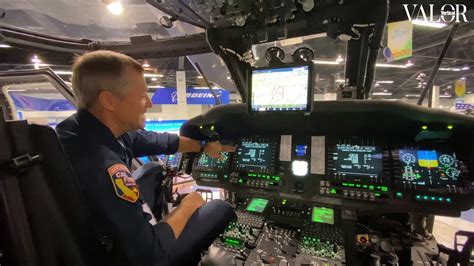
These enhancements enable agencies to deploy faster, operate longer, and deliver more effective outcomes across a range of critical missions.
The Cal Fire Fleet: Aerial Dominance in Wildfire Season
California has become ground zero for wildfires in the U.S., and Cal Fire has emerged as one of the Firehawk’s biggest advocates. With over a dozen units in service by 2025, the agency’s fleet of Firehawks represents one of the most sophisticated firefighting air operations on the planet.
In January 2025 alone, Firehawks were deployed to rapidly respond to an outbreak in the foothills of Northern California, where terrain and high winds made conventional attack nearly impossible. Their ability to deploy crews, suppress flames, and evacuate residents in a single flight cycle proved essential to containing the blaze within 48 hours.
Performance Specs That Define the Future
The Firehawk’s specifications read like a wishlist for any emergency response unit:
- Max Gross Weight: 22,000 lbs
- Water Tank Capacity: 1,000 gallons
- Top Speed: 193 mph (310 km/h)
- Hover Ceiling (IGE): 9,500 ft
- Range: 320 nautical miles
- Crew Capacity: 2 pilots + up to 12 personnel
- Lift System: Dual-stage hoist rated for 600 lbs
But raw specs only tell part of the story. What truly matters is the way it performs in dynamic, often chaotic environments—where smoke, wind, terrain, and time all work against responders. The Firehawk’s ability to absorb chaos and deliver order is what makes it indispensable.
Medical Lifeline: From Trauma Zones to Hospitals
More than a firefighter’s tool, the Firehawk also shines as a medical evacuation platform. Outfitted with life-support gear, cardiac monitors, and stretchers, it can serve as a flying ICU. In situations where ground transport is delayed by blocked roads or rugged terrain, the Firehawk delivers trauma care within the golden hour, dramatically improving survival rates.
When deployed during floods, earthquakes, or mass-casualty events, its cabin configuration allows medics to begin triage en route. This makes it more than just an air ambulance—it’s a force multiplier for overwhelmed ground units.
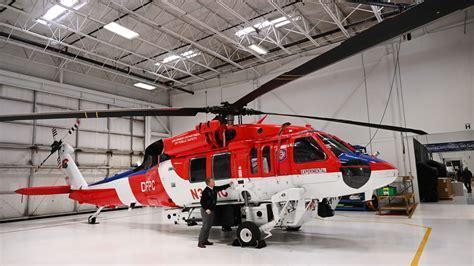
The Future: Expanding Roles and Smarter Systems
Looking ahead, the Firehawk is poised to take on even greater responsibilities as climate change intensifies disaster frequency and scale. Agencies are exploring integration with AI-assisted mission planning, real-time telemetry for command centers, and drone-assisted coordination to enhance situational awareness.
Emerging technologies such as infrared imaging, autonomous navigation, and networked flight ops will further elevate the Firehawk’s tactical edge. As other helicopters age out or require costly upgrades, the Firehawk’s factory-built durability and modular systems offer a future-proof investment.
Conclusion: A Flying Fortress for Crisis Response
The Firehawk isn’t just another helicopter—it’s a strategic asset that fuses military-grade power with civilian adaptability. Whether it’s battling fire, saving lives, or delivering critical supplies, its unmatched versatility and robust design allow it to thrive where other aircraft falter. From its Black Hawk roots to its high-tech present, the Firehawk stands as a symbol of resilience and rapid response, ready to answer the call when the stakes are highest.