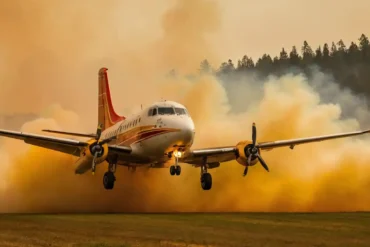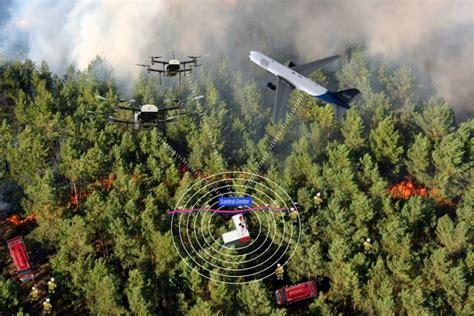
The increasing frequency and severity of wildfires across the globe have elevated the demand for sophisticated, large-scale aerial firefighting solutions. In response to this urgent need, Coulson Aviation USA is charting a bold new course with the Boeing 767 Very Large Air Tanker (VLAT) program, positioning it as the cornerstone of future firefighting operations. With unmatched payload capacity, modern systems, and enduring sustainability, the Boeing 767 is poised to revolutionize global wildfire suppression.
A New Era for Aerial Firefighting: Replacing Aging Giants
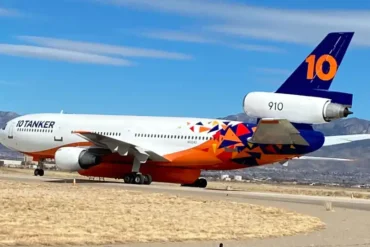
The decision to introduce the Boeing 767 into the aerial firefighting fleet comes at a critical time. The global retirement of legacy aircraft like the MD-11 and DC-10 has left a significant capability gap. These once-formidable platforms are no longer viable due to age, maintenance complexity, and dwindling parts availability. Agencies worldwide have been forced to adapt without a direct successor—until now.
The Boeing 767, with its robust airframe, extended range, and fuel-efficient engines, steps into this vacuum with authority. More than just a replacement, it is a next-generation platform designed to surpass the limitations of its predecessors, offering an optimal blend of performance, reliability, and long-term supportability.
The Power of the RADS System and Unmatched Payload
At the heart of the 767 VLAT’s transformation is Coulson’s patented Retardant Aerial Delivery System (RADS), the most advanced system of its kind in the world. This gravity-fed tank system ensures highly precise, consistent retardant drops across varying terrain and flight conditions. With a design that minimizes stress on the airframe and maximizes dispersion control, RADS is key to the platform’s effectiveness.
The Boeing 767 VLAT will deliver a greater fuel and payload capacity than any other large tanker in current operation. This includes:
- A retardant payload exceeding 20,000 liters, significantly higher than the industry norm.
- Passenger seating for up to 160 people, enabling rapid multi-mission deployment.
- Extended mission range thanks to larger fuel tanks and more efficient turbofan engines.
This makes the 767 a true multi-role aircraft, capable of executing long-duration suppression missions while also adapting to emergency transport or humanitarian operations.
Strategic Global Support and Operational Readiness
A key reason behind Coulson’s choice of the Boeing 767 lies in its global support infrastructure. As one of the most successful widebody airliners in history, the 767 benefits from an extensive ecosystem of parts, maintenance capabilities, and technical support. This reduces downtime, minimizes logistical complexity, and ensures cost-effective maintenance cycles.
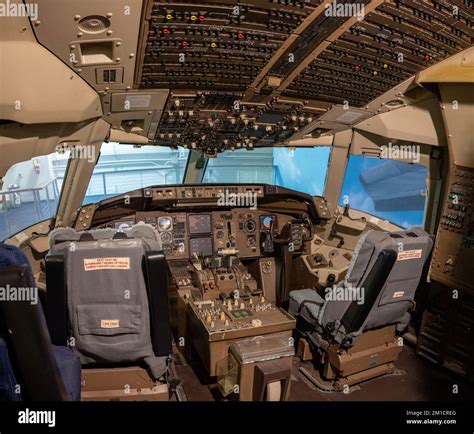
Furthermore, the aircraft is already equipped with modern avionics, automated flight control systems, and next-gen navigation tools, enabling enhanced operational safety and precision during low-altitude missions. This modernity eliminates the risks and delays typically associated with aging, retrofitted fleets.
Multi-Mission Flexibility: One Aircraft, Many Roles
Unlike traditional tankers, which are often single-role conversions, the Boeing 767 VLAT has been engineered with multi-mission versatility at its core. The same aircraft that suppresses fires in remote mountain ranges can be reconfigured to evacuate personnel, deliver cargo, or transport critical supplies in times of crisis.
This capability enables:
- Rapid re-deployment across continents for seasonal firefighting.
- Participation in disaster response, medical evacuation, and cargo missions.
- Nighttime operations, a frontier pioneered by Coulson, extending the fight against fires around the clock.
Such flexibility reduces fleet size requirements and increases the return on investment for governments and private agencies alike.
Coulson Aviation’s Vision: Investing Ahead of Demand
Coulson Aviation has always remained at the forefront of aerial firefighting innovation. As one of the few companies with a global footprint across North America, South America, and Oceania, their foresight into wildfire management has allowed them to anticipate operational needs well in advance.
The 767 VLAT program is a testament to this philosophy. Engineering, structural analysis, and systems integration are already underway, building a platform not just for today’s fires, but for tomorrow’s challenges. Coulson’s strategic investments include not only aircraft acquisition, but also:
- In-house tank manufacturing, ensuring self-reliant production and customization.
- Advanced simulation and training programs, preparing crews for complex missions.
- Long-term partnerships with government agencies, securing shared resources and missions.
Sustainability and the Future of Aerial Firefighting
With climate change intensifying wildfire seasons, firefighting solutions must become more sustainable. The 767’s fuel-efficient engines and optimized flight performance reduce emissions and cost per drop. Its extended service life—backed by a reliable global parts supply—ensures that operators won’t face the same obsolescence challenges that ended the MD-11 and DC-10 eras.
Furthermore, the aircraft’s ability to carry larger fuel and retardant loads per sortie reduces the total number of flights required during operations, further improving efficiency and lowering the environmental footprint of firefighting missions.
Conclusion: The Boeing 767 VLAT Is Not Just a Replacement—It’s a Leap Forward
The Boeing 767 VLAT program isn’t merely an evolution of the aerial firefighting platform; it’s a strategic revolution. By uniting capacity, versatility, modern systems, and sustainability, it directly addresses the void left by aging tankers while anticipating the operational demands of the next several decades.
Backed by Coulson Aviation’s deep industry expertise and pioneering spirit, the 767 is not just the future of global aerial firefighting—it is the standard by which all future platforms will be measured.