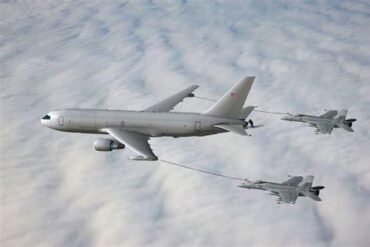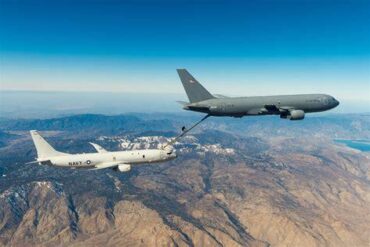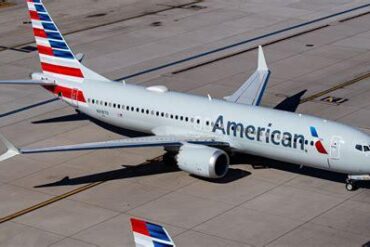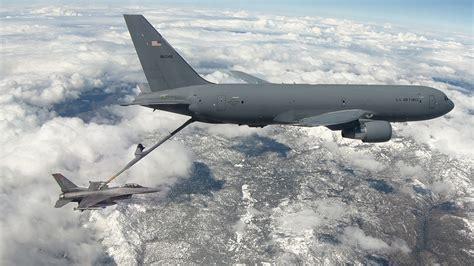
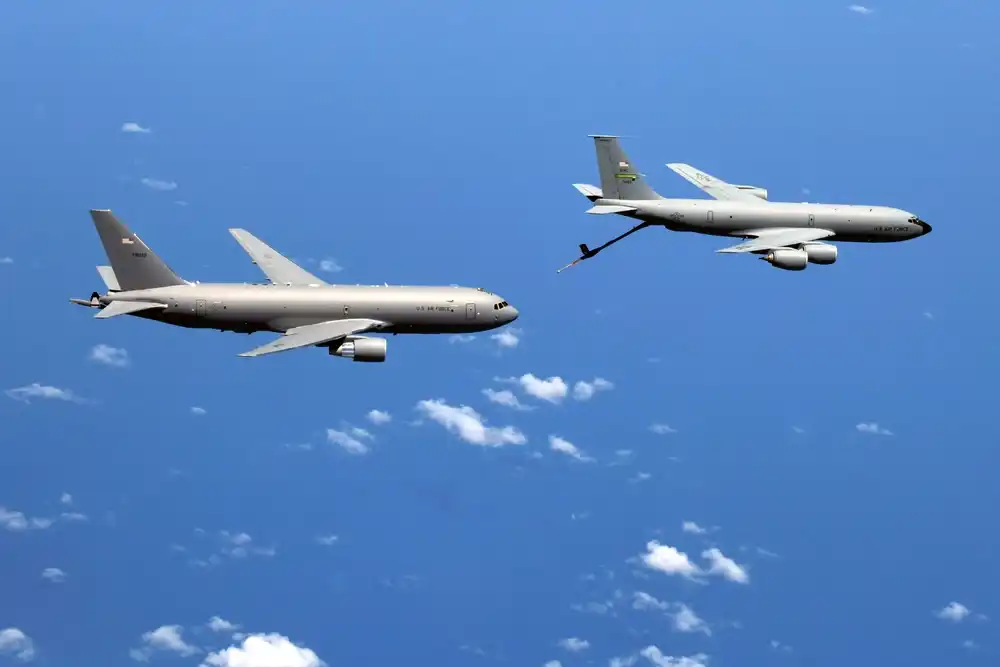
Despite its commercial obsolescence, the Boeing 767 remains an indispensable cornerstone of the United States Air Force (USAF) in 2025. As global threats evolve and aerial logistics become ever more vital to military success, the KC-46A Pegasus, a modified tanker variant of the Boeing 767-2C, is now at the forefront of America’s aerial refueling capability. In contrast to its retirement from the commercial passenger market over a decade ago, the 767 has found a second life in military service, offering robust performance, logistical adaptability, and cost-efficiency that no viable alternative currently surpasses.
The USAF’s selection of the Boeing 767 was a result of both strategic necessity and protracted procurement drama. Initially, the Air Force chose the Airbus A330 MRTT. However, after legal disputes and political pressure, the contract shifted to Boeing in 2008 and was reaffirmed in 2011. The Pegasus officially entered service in 2019—years after Boeing’s own 787 Dreamliner was already revolutionizing commercial aviation. Yet the 787 was never designed for a military tanker role and lacks a freighter variant, leaving the 767 as the only feasible option. Its Pratt & Whitney PW4000 engines, though outdated in commercial terms, continue to prove effective and reliable in military applications.
Dominance in Aerial Refueling: A Niche Only the US Fills
The USAF controls approximately 75% of the world’s aerial refueling assets, a staggering figure that underlines its unique operational requirements. With the recent retirement of the KC-10 Extender fleet in 2024 and a still-active fleet of aging KC-135 Stratotankers, the KC-46A has stepped into a critical transitional role. While it won’t completely replace the KC-135s, the KC-46A will serve in permissive environments, where contested airspace is not a factor. For more hostile scenarios, the USAF is still assessing its options.
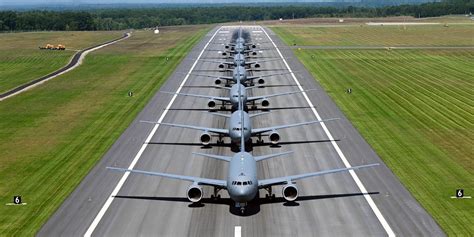
As of 2025, Boeing has delivered 106 KC-46As, including five for Japan. With the USAF planning to increase its total Pegasus fleet from the initially contracted 188 to 263 tankers, the 767 is more than a placeholder—it’s a strategic backbone. Despite a declining delivery rate—down from 15 aircraft in 2022 to nine in the first three quarters of 2025—the Pegasus remains central to the USAF’s planning horizon.
The Challenge of Replacing the Irreplaceable
The delay in next-generation tanker development—such as the Next Generation Air Refueling System (NGAS)—only underscores the 767’s current importance. Proposals for NGAS include stealth tankers and autonomous, cockpit-less designs, while other suggestions involve business jet-based solutions and blended-wing-body (BWB) concepts. JetZero’s BWB demonstrator, partnered with Northrop Grumman and powered by Pratt & Whitney PW2040 engines, reflects the innovative thinking the Air Force is investing in. Yet, none of these options are production-ready or field-tested at the scale required.
Financial constraints, combined with the technical risk of unproven platforms, leave the Air Force with few alternatives. Projects like the Sentinel ICBM and the next-generation F-47 fighter place immense strain on the Pentagon’s budget. A clean-sheet stealth tanker may be decades away, while the KC-46 is already here and maturing.
A Platform Built for the Long Haul
If history is any guide, the KC-46A Pegasus is poised to serve well into the late 21st century. The oldest KC-135s in active duty date back to 1957, meaning they have endured for over 68 years. Should the final 767 tanker be delivered around 2035 and serve a similar lifespan, it may still be in operation in 2103. While speculative, such projections are not without precedent in the USAF’s long hardware cycles.
The General Electric CF6-powered 767-300F, the commercial sibling of the KC-46A, is set to end production by 2026 due to new ICAO regulations. Beyond that point, the KC-46 will be the only remaining variant of the Boeing 767 in production—cementing its military relevance even as its commercial utility fades into history.
The Only Viable Choice in a Complex Landscape
The USAF’s ongoing reliance on the Boeing 767 reflects a complex balancing act: technological ambition tempered by budgetary reality and strategic necessity. It remains the only available and combat-proven platform capable of addressing the immediate needs of the Air Force while next-generation systems are developed, tested, and refined. While the threats posed by adversaries with stealth fighters and long-range missiles are real and growing, the KC-46 is not without purpose. It remains perfectly suited for operations in friendly airspace and strategic ferrying missions, such as those seen during Operational Midnight Hammer, where B-2 Spirits were refueled multiple times en route to their targets.
In 2025, the Boeing 767 may be an aging airframe in commercial terms, but in the hands of the US Air Force, it represents the practical, reliable core of aerial logistics. Its design, adaptability, and logistical familiarity ensure that it will remain a pillar of American air power for decades to come.