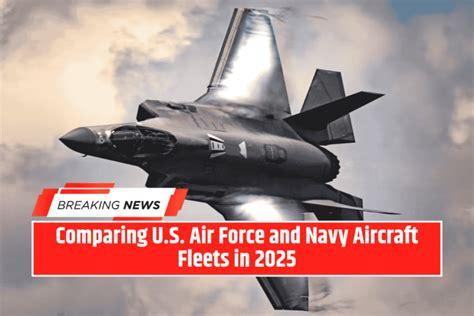
The United States Air Force (USAF) operates the most powerful combat aviation force on the planet. While headlines often focus on futuristic stealth aircraft and sixth-generation fighter concepts, the reality of American airpower is built on a diverse mixture of aircraft spanning more than five decades of aerospace engineering. Some jets were designed during the Cold War to counter Soviet forces in Europe, while others represent the cutting edge of network-centric warfare.
Today, the largest combat jet fleets in the U.S. Air Force reveal an extraordinary story about longevity, adaptation, and technological transformation. From the rugged A-10 Warthog, purpose-built to destroy tanks, to the stealth-dominated F-35A Lightning II, these aircraft represent different generations of combat philosophy. Together, they form the operational core that allows the United States to maintain global air superiority across multiple theaters.
What is particularly striking is the scale of some fleets. The F-16 Fighting Falcon, first flown in 1974, still dominates the USAF inventory by sheer numbers. At the same time, newer stealth fighters like the F-35A are rapidly expanding, reshaping how air battles are fought in the 21st century. Meanwhile, legendary aircraft families like the F-15 Eagle continue evolving with modernized variants such as the F-15EX Eagle II.
Understanding the five largest USAF combat fleets offers insight into how the Air Force balances modernization with practicality. Budget constraints, industrial realities, and shifting strategic priorities all influence which aircraft stay in service and which are gradually phased out.
5. Fairchild Republic A-10C Thunderbolt II Warthog – 162 Aircraft
Few combat aircraft in history have developed the legendary reputation of the Fairchild Republic A-10 Thunderbolt II, universally known as the “Warthog.” Designed during the Cold War to counter massive Soviet armored formations, the A-10 was built around one of the most intimidating weapons ever installed on an aircraft: the GAU-8 Avenger 30mm rotary cannon.
The cannon defines the entire aircraft. The fuselage is essentially wrapped around the weapon, which is capable of firing nearly 4,000 armor-piercing rounds per minute. The A-10’s mission was simple but critical—destroy enemy tanks and provide close air support for ground forces under heavy fire. Its rugged airframe includes a titanium “bathtub” surrounding the cockpit, protecting the pilot from ground fire and allowing the aircraft to survive damage that would down most fighters.
During the Cold War, more than 700 A-10 aircraft were in service. Today, the fleet has declined dramatically, with approximately 162 A-10C aircraft remaining according to the FY2026 Pentagon budget request. Retirement has accelerated in recent years as the Air Force pushes toward stealth-centric modernization.
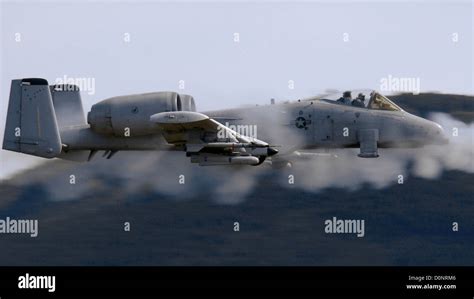
Despite ongoing efforts to retire the aircraft, the A-10 continues proving its operational value in modern conflicts. Its endurance, low-speed maneuverability, and heavy armament make it uniquely suited to missions that stealth fighters are not optimized for.
In recent operations across the Middle East under U.S. Central Command (CENTCOM), Warthogs have been used to intercept Shahed-type drones, a task where the aircraft’s cannon and long loiter time proved remarkably effective. The platform has also been deployed in maritime strike roles, demonstrating flexibility that few analysts predicted when the aircraft was originally designed.
Political debate over the Warthog’s future has become a recurring theme in U.S. defense policy. The Air Force has repeatedly requested permission to retire the fleet entirely, proposing a final drawdown by 2027 with an estimated $57 million budget allocation to complete the process. However, Congress has repeatedly blocked full retirement due to concerns that no aircraft currently replicates the A-10’s specialized close air support (CAS) capabilities.
Even as numbers decline, the Warthog continues to play a critical role in combat rescue missions and battlefield support. In a recent incident involving a downed F-15E Strike Eagle crew, A-10s were part of the response package, demonstrating how the aircraft remains deeply integrated into modern combat operations.
4. Lockheed Martin F-22 Raptor – 180 Aircraft
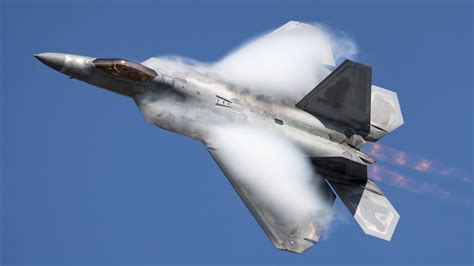
When discussing modern air superiority, the Lockheed Martin F-22 Raptor occupies a unique position. Widely considered the most capable air-to-air fighter ever built, the aircraft combines stealth technology, supercruise capability, extreme maneuverability, and advanced sensor fusion.
The Raptor was designed to dominate future air combat environments against peer adversaries. Its supercruise capability allows it to fly at sustained supersonic speeds without afterburners, dramatically increasing combat range and survivability. Thrust-vectoring engines provide unmatched agility, enabling maneuvers that most fourth-generation fighters cannot replicate.
Equally important is the aircraft’s sensor fusion architecture, which integrates radar, electronic warfare systems, and infrared sensors into a single coherent tactical picture. Instead of managing separate streams of data, the pilot receives a fully integrated view of the battlefield, enabling faster decision-making in high-speed engagements.
Despite its extraordinary capabilities, the F-22 program became one of the most controversial procurement decisions in aviation history. Originally, the U.S. Air Force intended to purchase 750 Raptors to replace older fighters and maintain overwhelming air superiority.
However, escalating development costs and shifting defense priorities led to dramatic reductions. The planned fleet shrank to 381 aircraft, and eventually to 187 production jets before the program was terminated in 2009.
Today, the USAF operates roughly 180 F-22 aircraft, including 32 older Block 20 jets primarily used for training and testing rather than frontline combat.
This relatively small fleet has created a strategic dilemma. The F-22 remains the only operational fifth-generation air superiority fighter in the U.S. inventory dedicated primarily to air combat, yet the number of available aircraft is far below original planning assumptions.
To address this gap, the Pentagon announced the Next Generation Air Dominance (NGAD) program in 2025. Boeing was awarded the contract to develop the F-47, a sixth-generation fighter designed to replace the Raptor in the long term. Until that aircraft enters service, the limited number of Raptors continues carrying a disproportionate share of the USAF’s air superiority mission.
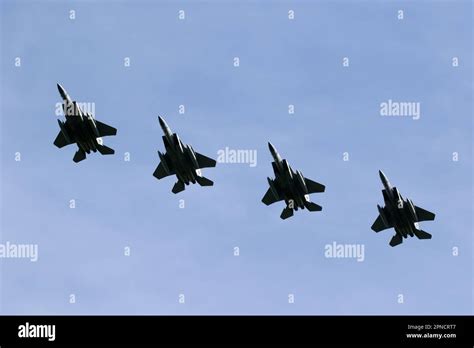
3. McDonnell Douglas F-15 Eagle Family – 385–400 Aircraft
Few fighter aircraft have achieved the legendary combat reputation of the McDonnell Douglas F-15 Eagle. Since entering service in 1976, the aircraft has built a record that remains unmatched in modern aviation: more than 100 aerial victories with zero confirmed losses in air-to-air combat.
Today, the F-15 family remains one of the largest combat fleets in the U.S. Air Force, with approximately 385 to 400 aircraft in service across several variants.
These include:
- F-15C/D Eagle air superiority fighters
- F-15E Strike Eagle multirole strike aircraft
- F-15EX Eagle II, the newest and most advanced variant
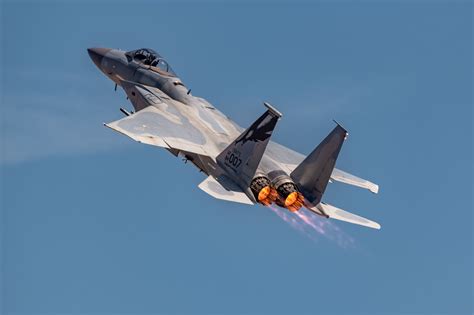
While stealth fighters dominate modern procurement discussions, the F-15 remains relevant because of one critical advantage: payload capacity. The newest F-15EX Eagle II can carry up to 22 air-to-air missiles, a weapons load unmatched by any other fighter currently in the USAF inventory.
This massive payload makes the aircraft particularly valuable in high-intensity air combat scenarios, where the ability to launch large numbers of missiles can overwhelm enemy defenses. In future conflicts, the F-15EX may even serve as a “missile truck”, supporting stealth aircraft like the F-35 by carrying additional weapons while remaining outside heavily defended airspace.
The aircraft also features advanced systems such as the Eagle Passive/Active Warning Survivability System (EPAWSS) and a fully open-architecture mission computer, allowing rapid upgrades as new weapons and sensors become available.
Despite these improvements, parts of the fleet face an uncertain future. The F-15E Strike Eagle, which entered service in 1988, is experiencing increasing maintenance challenges as airframes age. Current planning documents suggest that the number of operational Strike Eagles could decline significantly by 2030, driven by parts obsolescence and sustainment costs.
Nevertheless, the Eagle family remains a cornerstone of American tactical aviation. Its blend of range, payload capacity, and decades of combat experience ensures that the aircraft will continue serving alongside stealth fighters well into the coming decades.
2. Lockheed Martin F-35A Lightning II – 439 Aircraft
The Lockheed Martin F-35A Lightning II has rapidly become the centerpiece of the modern U.S. Air Force fighter fleet. With approximately 439 aircraft currently in service, the F-35A has already surpassed the entire F-15 family in total numbers.
Unlike previous fighter programs, the F-35 was designed from the beginning as a network-centric combat platform rather than simply a faster or more maneuverable aircraft. Its true advantage lies in how it collects, processes, and shares information across the battlefield.
At the heart of this capability is a sophisticated suite of sensors, including the AN/APG-81 AESA radar, the Electro-Optical Targeting System (EOTS), and the Distributed Aperture System (DAS). Together, these sensors provide a complete 360-degree awareness of the surrounding environment.
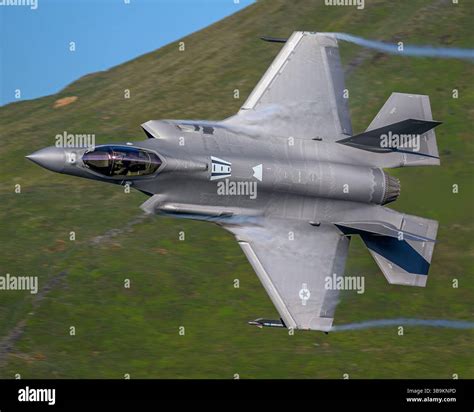
Instead of presenting separate radar screens and sensor outputs, the aircraft fuses all incoming data into a single tactical display. This dramatically reduces pilot workload while improving situational awareness.
The result is a fighter that functions as an information hub, sharing targeting data with other aircraft, ships, and ground forces. In modern warfare, this ability to control the flow of information can be as decisive as raw performance.
The F-35 program is still expanding rapidly. The USAF plans to acquire 1,763 aircraft, meaning the current fleet represents only a fraction of the intended total. Production milestones have been achieved steadily, including the delivery of the 500th aircraft in August 2025.
However, the program has faced significant challenges. The rollout of Block 4 upgrades, tied to the Technology Refresh 3 (TR-3) hardware package, has experienced delays. These upgrades are essential for integrating new weapons systems and expanding the aircraft’s electronic warfare capabilities.
Budget pressures have also slowed procurement. The FY2026 defense budget reduced planned purchases from 44 to 24 aircraft, far below the annual rate needed to fully replace aging fourth-generation fighters.
Even so, the F-35A remains the fastest-growing combat jet fleet in the U.S. Air Force, and its influence on future air warfare is difficult to overstate.
1. Lockheed Martin F-16 Fighting Falcon – 912 Aircraft
At the top of the list stands the enduring Lockheed Martin F-16 Fighting Falcon, known to pilots as the “Viper.” With approximately 912 aircraft in service, it remains the largest combat jet fleet in the U.S. Air Force by a wide margin.
The fleet includes around 762 single-seat F-16C aircraft and 150 two-seat F-16D variants, distributed across active-duty squadrons, the Air National Guard, and the Air Force Reserve.
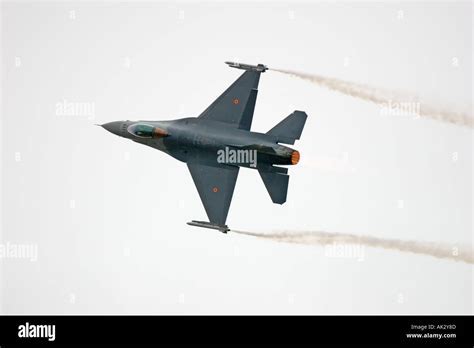
Originally designed as a lightweight fighter to complement the larger F-15 Eagle, the F-16 quickly evolved into one of the most versatile combat aircraft ever produced. Over time, it gained capabilities far beyond its initial mission, including precision strike, suppression of enemy air defenses (SEAD), nuclear delivery, and beyond-visual-range air combat.
One reason for its longevity is the aircraft’s remarkable adaptability. The USAF has continuously upgraded the fleet with modern technologies such as:
- AESA radar systems
- Sniper Advanced Targeting Pods
- Improved electronic warfare suites
- Structural service-life extension programs
These upgrades have allowed many F-16 airframes to remain operational well beyond their original design life.
Another factor is sheer production scale. More than 3,000 F-16 aircraft were built for the U.S. military alone, with thousands more exported to allied nations around the world. This massive production base created a global ecosystem of maintenance expertise, spare parts, and operational experience.
Even as the F-35A gradually replaces older fighters, the F-16 is expected to remain a significant part of the USAF inventory throughout the decade. Current projections suggest that nearly 500 combat-coded aircraft will still be operational by the end of the 2020s.
The Strategic Reality Behind America’s Fighter Fleets
Taken together, the five largest combat jet fleets in the U.S. Air Force illustrate the complex balance between technological innovation and operational necessity. While stealth fighters and next-generation concepts dominate defense headlines, the backbone of American airpower still relies heavily on aircraft designed decades ago.
The F-16 Fighting Falcon continues to provide numerical strength across multiple mission types. The F-35A Lightning II is steadily transforming air combat into an information-driven environment. Meanwhile, aircraft like the F-15 Eagle and A-10 Warthog demonstrate how thoughtful upgrades can keep older designs relevant far longer than originally expected.
At the same time, limited numbers of elite platforms such as the F-22 Raptor highlight the consequences of procurement decisions made decades earlier. As the Air Force prepares for future conflicts against technologically advanced adversaries, the transition toward next-generation aircraft like the F-47 will shape the next chapter of American air dominance.
For now, however, these five fleets remain the operational core of the world’s most powerful air force—an extraordinary combination of legacy resilience, cutting-edge stealth technology, and decades of combat experience that continues to define the modern era of military aviation.