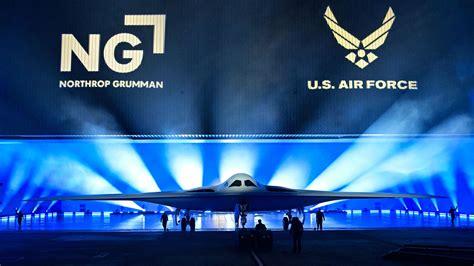
The modern battlefield is defined not just by speed or firepower, but by reach, survivability, and strategic flexibility. Nowhere is this more evident than in the United States Air Force’s bomber fleet—a force engineered to project power across continents, penetrate the most sophisticated defenses, and deliver precision strikes under any conditions. While the number of bombers may appear modest compared to Cold War peaks, their capabilities have evolved into something far more formidable: a fusion of stealth, endurance, payload dominance, and digital warfare integration.
Today, the bomber force stands at a pivotal crossroads. With legacy aircraft still performing critical missions and next-generation platforms entering testing, the United States is carefully balancing tradition and transformation. The four largest bomber fleets—each with distinct roles—collectively form a layered strategic doctrine that ensures global strike capability remains unmatched.
A Strategic Overview of America’s Bomber Arsenal
The U.S. Air Force currently operates three primary bomber platforms in active service, with a fourth—the B-21 Raider—emerging as the future cornerstone. Together, these aircraft represent a spectrum of capabilities, from high-speed penetration to stealth dominance and long-range missile delivery.
Despite having just over 140 operational bombers, the force is designed for efficiency and lethality rather than sheer numbers. Each aircraft is optimized for a specific mission profile, creating a complementary ecosystem rather than redundancy. This deliberate structure allows the Air Force to maintain global deterrence with fewer, but far more capable, platforms.
Interestingly, while other nations may field larger fleets numerically, the technological gap remains significant. American bombers are not just aircraft—they are integrated systems capable of operating in contested environments where survival depends on advanced stealth, electronic warfare, and networked operations.
The Future Spearhead: B-21 Raider’s Sixth-Generation Leap
The B-21 Raider represents a generational shift that goes beyond incremental upgrades. Designed as the world’s first sixth-generation bomber, it introduces a new philosophy of warfare: adaptability, survivability, and scalability.
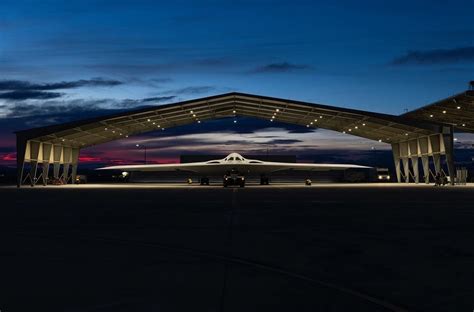
At first glance, the B-21 resembles a smaller version of the B-2 Spirit, but that similarity is deceptive. Its reduced size is a deliberate design choice, minimizing radar cross-section while enabling deployment from a wider range of airbases. This dispersal capability dramatically enhances survivability in high-threat scenarios.
What sets the B-21 apart is its open-systems architecture, allowing rapid software updates and seamless integration of emerging technologies. This ensures the aircraft remains relevant in a rapidly evolving threat landscape. Even more transformative is its optionally manned capability, enabling both crewed and autonomous missions depending on operational needs.
With only two airworthy units currently in testing, the fleet is still in its infancy. However, the Air Force plans to acquire at least 100 units, with potential expansion to 200. Once operational, the B-21 will form the backbone of the bomber force, replacing aging platforms and redefining strategic strike operations.
Its role will not be solitary. Instead, it will work in tandem with legacy systems, particularly the B-52, creating a dual-layered force of stealth penetration and long-range missile delivery.
The Stealth Pioneer: B-2 Spirit’s Enduring Legacy
Long before stealth became a buzzword, the B-2 Spirit redefined what was possible in aerial warfare. As the world’s first operational stealth bomber, it introduced technologies that remain classified decades after its debut.
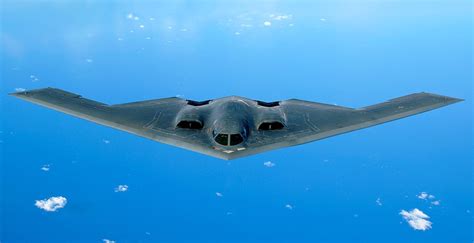
The B-2’s iconic flying wing design is not just visually striking—it is a masterpiece of engineering optimized for low observability. By eliminating vertical surfaces and carefully shaping its airframe, the aircraft minimizes radar reflections, allowing it to slip through heavily defended airspace undetected.
Its construction further enhances this capability. The use of carbon-graphite composites and radar-absorbent materials reduces its signature across multiple spectrums. Combined with a quadruple-redundant fly-by-wire system, the aircraft maintains stability despite its unconventional shape.
With a payload capacity of up to 40,000 pounds, the B-2 can deliver both conventional and nuclear weapons with pinpoint accuracy. Its ability to strike high-value targets deep within enemy territory makes it one of the most strategically valuable assets in the U.S. arsenal.
However, this sophistication comes at a cost. The B-2 is notoriously expensive to maintain, requiring specialized facilities and extensive upkeep. As a result, the fleet remains limited to just 19 operational aircraft.
The Air Force plans to retire the B-2 in the early-to-mid 2030s, gradually replacing it with the more efficient B-21. Until then, it continues to serve as a critical bridge between past innovation and future capability.
The Supersonic Workhorse: B-1B Lancer’s Relentless Versatility
If the B-2 is the silent infiltrator, the B-1B Lancer is the high-speed enforcer. Known for its variable-sweep wings and supersonic capability, the B-1 occupies a unique niche within the bomber fleet.
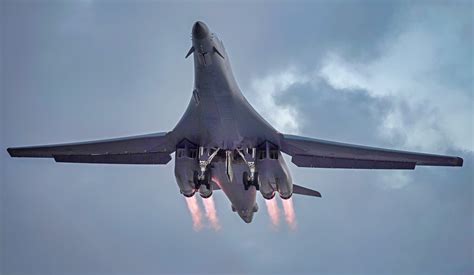
The aircraft’s design allows it to adapt mid-flight: wings swept back for high-speed penetration or extended for efficient takeoff and landing. This flexibility enables the B-1 to operate across a wide range of mission profiles, from rapid-response strikes to sustained combat operations.
Capable of exceeding Mach 1.2, it remains the only supersonic bomber in the U.S. inventory. But speed is only part of its appeal. The B-1 boasts the largest conventional payload capacity in the fleet, carrying up to 75,000 pounds of ordnance across multiple internal bays and external hardpoints.
Originally designed as a nuclear platform, the B-1 was later converted to a purely conventional role. This shift allowed it to excel in modern conflicts, where precision and adaptability often outweigh nuclear deterrence.
Despite its age, the B-1 is far from obsolete. Ongoing upgrades, including new modular pylons and compatibility with advanced hypersonic weapons, are extending its operational relevance. These enhancements ensure the aircraft remains combat-ready until its planned retirement in the mid-2030s.
The Lancer’s true strength lies in its versatility. It can deliver massive payloads quickly, adapt to evolving mission requirements, and integrate cutting-edge weaponry—all while maintaining a level of speed unmatched by its counterparts.
The Backbone of Power: B-52 Stratofortress Dominance
Few aircraft in history have achieved the legendary status of the B-52 Stratofortress. With over six decades of continuous service, it stands as a testament to durability, adaptability, and strategic importance.
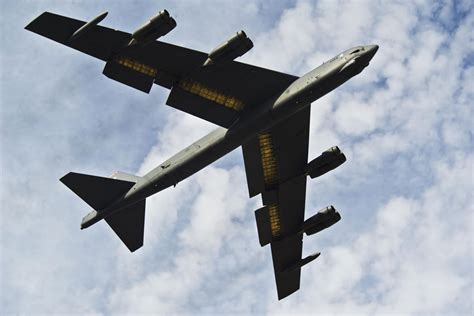
Nicknamed the “BUFF,” this aircraft is the most numerous bomber in the U.S. Air Force, with 76 airworthy units. Its sheer size is imposing: a wingspan of 185 feet and a length exceeding 159 feet. Powered by eight engines, it is capable of carrying massive payloads across intercontinental distances.
Unlike stealth bombers, the B-52 relies on a different philosophy—stand-off warfare. Instead of penetrating enemy defenses, it launches long-range cruise missiles from safe distances, effectively turning the aircraft into a flying arsenal.
Its range, exceeding 8,800 miles without refueling, allows it to operate globally with minimal support. This endurance, combined with its payload capacity of up to 70,000 pounds, makes it an indispensable component of the U.S. strategic triad.
What truly sets the B-52 apart is its ability to evolve. The upcoming B-52J variant will feature new engines, improved avionics, and advanced radar systems. These upgrades are expected to increase fuel efficiency by up to 40% while reducing maintenance demands.
Remarkably, the B-52 is projected to remain in service for nearly a century. This longevity underscores its unmatched adaptability and enduring relevance in modern warfare.
A Unified Doctrine: How These Fleets Work Together
Individually, each bomber platform is impressive. Collectively, they form a cohesive strategy designed to address every conceivable threat scenario.
The future structure of the bomber force is centered on a two-platform model: stealth penetration and stand-off strike. In this framework, the B-21 will handle high-risk missions requiring deep penetration into defended airspace, while the B-52 will deliver long-range missile strikes from safer distances.
During the transition period, the B-2 and B-1 continue to fill critical roles. The B-2 provides stealth capabilities where the B-21 is not yet available in sufficient numbers, while the B-1 offers unmatched payload and speed for conventional missions.
This layered approach ensures redundancy, flexibility, and resilience. It allows commanders to tailor responses based on mission requirements, threat levels, and operational constraints.
The Road Ahead: Modernization and Strategic Transformation
The evolution of the U.S. bomber fleet is not just about replacing old aircraft—it is about redefining how airpower is projected in the 21st century.
The introduction of the B-21 signals a shift toward networked warfare, where bombers are integrated into a broader ecosystem of satellites, drones, and cyber capabilities. This interconnected approach enhances situational awareness, decision-making, and mission effectiveness.
At the same time, legacy platforms like the B-52 are being modernized to remain relevant in this new environment. By combining old and new technologies, the Air Force is creating a force that is both reliable and forward-looking.
The gradual retirement of the B-1 and B-2 will mark the end of an era, but it will also pave the way for a more streamlined and efficient fleet. The ultimate goal is a force that can operate seamlessly across domains, adapt to emerging threats, and maintain strategic superiority.
Conclusion: The Unmatched Reach of American Airpower
The four largest bomber fleets in the U.S. Air Force are more than just collections of aircraft—they are pillars of national defense and global stability. Each platform represents a different chapter in the evolution of aerial warfare, from the enduring reliability of the B-52 to the cutting-edge innovation of the B-21.
Together, they form a force capable of striking anywhere, anytime, under any conditions. This capability is not merely about power—it is about deterrence, ensuring that potential adversaries think twice before challenging the balance of power.
As modernization continues and new technologies emerge, the bomber fleet will remain at the forefront of strategic warfare. It is a force defined not by numbers, but by capability—a precision instrument of power projection that continues to shape the future of global security.