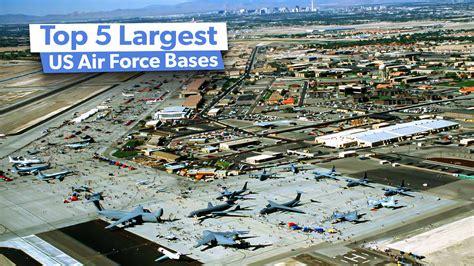
The global footprint of the United States Air Force extends far beyond the continental borders of the United States. While many of its largest bases by area are located domestically, several overseas installations are critical pillars in America’s strategic defense and global power projection. These immense foreign airbases serve as logistical hubs, intelligence centers, and, in many cases, frontline deterrents in key geopolitical regions. In this article, we explore the top five largest international US Air Force bases by area, analyzing their strategic roles, historical roots, and operational scope.
Pituffik Space Base (Formerly Thule Air Force Base) – Greenland
Positioned as a sentinel in the Arctic, Pituffik Space Base (formerly Thule Air Base) is arguably the most geographically extreme military installation in the US arsenal. Although its exact acreage is not officially confirmed, estimates place it at an astonishing 233,000 acres, making it not only the largest international US base by landmass but also one of the most isolated.
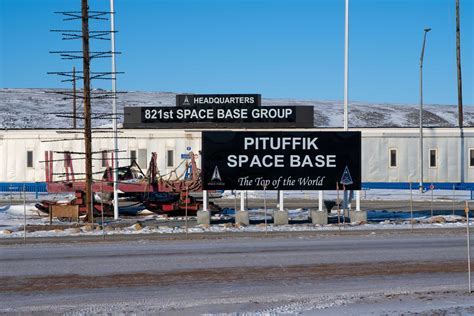
Located roughly 750 miles north of the Arctic Circle and about 947 miles from the North Pole, Pituffik is not just about military might—it’s about maintaining presence and awareness in the northernmost theater of operations. Constructed in 1943 and initially serving under the Air Force Space Command, Pituffik transitioned to the US Space Force in 2019 as part of its mission realignment. Today, the 821st Space Base Group manages the installation, with its duties primarily focused on missile warning, space surveillance, and satellite control.
Its frigid, remote location provides a unique vantage point for monitoring polar orbit satellites and detecting incoming threats from the Eurasian landmass. The recent renaming to “Pituffik” honors the Greenlandic cultural heritage, aligning US strategic interests with local diplomatic sensitivities.
Andersen Air Force Base – Guam
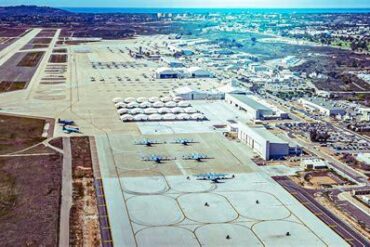
Stretching across 20,000 acres on the northern plateau of Guam, a US territory in the western Pacific, Andersen Air Force Base is an indispensable node in the Indo-Pacific security architecture. It is home to the 36th Wing and remains a crucial power projection platform for strategic operations throughout Asia and the Pacific.
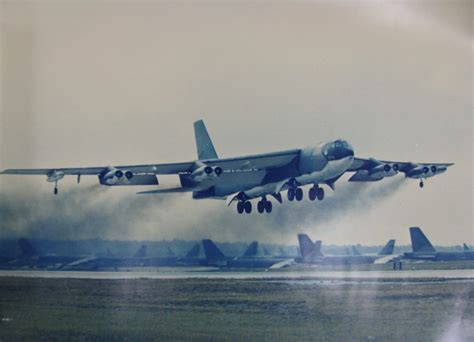
Built in 1944 during World War II, Andersen AFB has earned the moniker “unsinkable aircraft carrier” due to its strategic value and the flexibility it offers in receiving large contingents of aircraft—including B-1, B-2, and B-52 strategic bombers—during regional crises. While the base does not house permanent strike wings, its infrastructure is tailored for high-volume aircraft rotations, long-range missions, and rapid deployments.
Its significance has grown amid rising tensions in the Taiwan Strait and the South China Sea, as Andersen lies within operational reach of key hotspots. During the Cold War, the base even witnessed the accidental loss of a nuclear weapon—an incident still wrapped in partial secrecy.
To address vulnerabilities in the era of advanced missile threats, Andersen AFB has become a centerpiece of the Agile Combat Employment (ACE) doctrine, which seeks to disperse forces quickly and operate from austere locations across the Pacific.
Kadena Air Base – Okinawa, Japan
Situated on 4,900 acres in Okinawa, Japan, Kadena Air Base is the largest US Air Force installation in the Asia-Pacific region and one of the most strategically crucial. Dubbed the “Keystone of the Pacific”, Kadena supports an extensive range of missions that enable US military reach across East Asia.
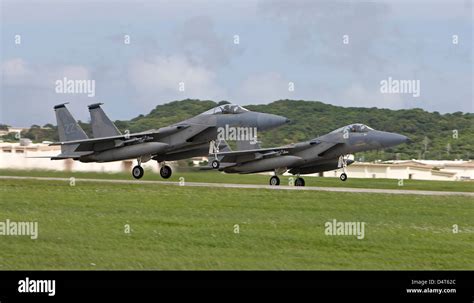
First constructed in 1945, Kadena is now the headquarters of the 18th Wing, which includes fighter squadrons, support units, reconnaissance, and combat search and rescue capabilities. Additionally, the base is home to the 353rd Special Operations Wing and elements of the Navy and Marine Corps, reflecting its integrated, joint-operational nature.
Kadena’s proximity to China (approx. 480 miles to Shanghai) and Taiwan (approx. 465 miles) enhances its importance, particularly in scenarios requiring rapid force deployment, intelligence gathering, or air superiority operations. With over 20,000 personnel, including military members, dependents, and local employees, Kadena also plays a major role in the Okinawan economy and geopolitics, sometimes becoming a focal point of local protest over US military presence.
Ramstein Air Base – Germany
Located in Rhineland-Palatinate, Germany, Ramstein Air Base spans 3,500 acres and serves as the primary airlift hub for US and NATO forces in Europe. Built between 1949 and 1953 during the tense early years of the Cold War, Ramstein was intended as a keystone logistics center in case of war with the Soviet Union.
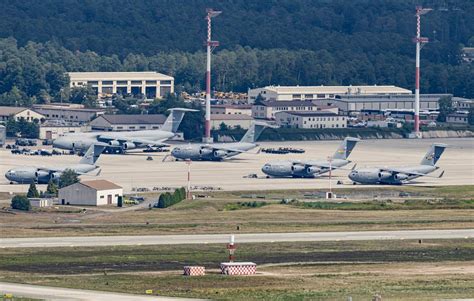
Today, Ramstein hosts the 86th Airlift Wing, responsible for Europe’s only tactical airlift operations, including airdrops, aeromedical evacuations, and combat support logistics. The base is also headquarters for the US Air Forces in Europe–Air Forces Africa (USAFE-AFAFRICA) and the NATO Allied Air Command, highlighting its broad command and control responsibilities.
With over 16,200 personnel, including US military, civilian employees, and contractors, Ramstein is a bustling center of activity. It is part of the Kaiserslautern Military Community, the largest American community outside the continental US. Its strategic centrality allows rapid response to crises in Eastern Europe, North Africa, or the Middle East, making it a cornerstone in the United States’ continued security commitments to NATO allies.
Incirlik Air Base – Turkey
Despite the often complex political dynamics between the United States and Turkey, Incirlik Air Base remains one of the most strategically vital American military installations in the Middle East. Covering 3,320 acres, Incirlik is jointly operated by the two nations and hosts the 39th Air Base Wing.
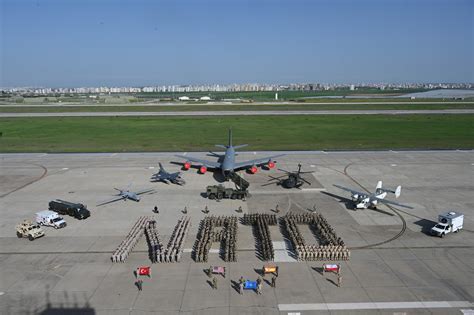
Constructed between 1951 and 1955 following agreements made during the Second Cairo Conference in 1943, the base has played key roles in numerous operations, from the Cold War to recent conflicts in Iraq and Syria. Its geographic position allows for fast air access to the Levant, Persian Gulf, and North Africa.
One of the more controversial aspects of Incirlik is its reported stockpile of 20 to 80 American B61 nuclear bombs, stored under NATO’s nuclear sharing agreement. This has led to ongoing debates within security circles about the wisdom of storing strategic weapons in a politically volatile region. Nevertheless, Incirlik continues to serve as a forward-operating platform, a humanitarian aid hub, and a vital NATO installation, bridging operations between Europe and Asia.
Conclusion: Strategic Real Estate That Shapes Global Power
The five bases highlighted here—Pituffik, Andersen, Kadena, Ramstein, and Incirlik—represent more than just vast swaths of military-controlled land. Each base is a geopolitical fulcrum, uniquely positioned to respond to crises, deter adversaries, and support allies. Whether perched in the frozen Arctic or the tropical Pacific, these installations showcase the United States Air Force’s unmatched ability to project global reach, sustain forward presence, and adapt to emerging threats in the 21st century.
From space monitoring to nuclear deterrence, aeromedical evacuation to strategic bombing readiness, these bases provide capabilities that are as sprawling as the land they occupy. And in a world defined increasingly by multipolar tensions and great power competition, their role is not just significant—it is indispensable.