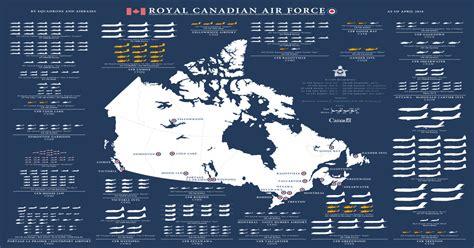
Canada occupies nearly ten million square kilometers of rugged wilderness, Arctic tundra, forests, and coastline. Defending such an enormous territory requires more than advanced aircraft—it demands vast operational bases capable of training pilots, supporting global deployments, and maintaining constant vigilance over North American airspace. The Royal Canadian Air Force (RCAF) operates a network of installations that blend strategic geography with massive training areas, modern infrastructure, and international cooperation.
These air bases are not simply runways with hangars. Many function as multi-mission military ecosystems, supporting fighter interception, maritime patrol, search and rescue operations, logistics transport, and multinational training exercises. Some control training ranges larger than entire countries. Others serve as logistical lifelines connecting Canada to NATO partners and remote Arctic outposts.
Measured by land area, several Canadian air bases are enormous compared with those found in most nations. Their scale reflects a distinctive military reality: Canada relies heavily on large training spaces and sparse population density to prepare crews for complex missions across oceans, mountains, and polar regions.
The following seven installations represent the largest Canadian air bases by land area, each playing a unique role in protecting Canadian sovereignty and supporting international security operations.
CFB Moose Jaw – Canada’s Premier Pilot Training Hub
Canadian Forces Base Moose Jaw, officially known as 15 Wing Moose Jaw, occupies approximately 1.5 square miles (4 square kilometers) in Saskatchewan. While it ranks as the smallest installation on this list, its influence within the RCAF is far larger than its footprint suggests. The base is the heart of Canada’s modern pilot training pipeline and one of the most internationally connected training centers in the country.
Moose Jaw houses the 2 Canadian Forces Flying Training School (2 CFFTS), where future military pilots learn the fundamentals of advanced aviation. The training program integrates simulation technology, classroom instruction, and live flight operations, producing skilled aviators capable of transitioning to high-performance aircraft such as the CF-18 Hornet and the upcoming F-35A Lightning II.
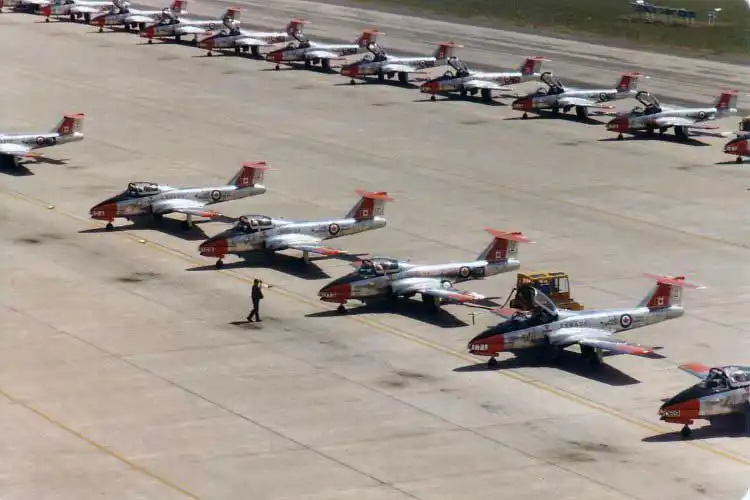
The base is also famous as the home of the 431 Air Demonstration Squadron, better known worldwide as the Snowbirds. Flying the distinctive CT-114 Tutor jet trainers, the Snowbirds perform aerial demonstrations across North America each year. Their precise formations are more than entertainment; they represent a public showcase of Canada’s aviation heritage and training excellence.
Moose Jaw’s importance is increasing due to the Future Aircrew Training (FAcT) program, an ambitious initiative valued at roughly $11.2 billion. The program will modernize Canada’s pilot training system with new aircraft, advanced simulators, and updated facilities designed to prepare pilots for fifth-generation fighter operations.
International cooperation also defines Moose Jaw. Through the NATO Flying Training in Canada (NFTC) program, pilots from allied countries train alongside Canadian aviators. Each year, roughly 140 pilots from NATO and partner nations pass through the program, turning this prairie base into a hub of multinational aviation culture.
CFB Comox – Pacific Coast Guardian
Located on the Lazo Peninsula of Vancouver Island, 19 Wing Comox serves as the RCAF’s primary installation on Canada’s Pacific coast. Covering nearly 2 square miles (5 square kilometers), the base occupies a strategic position overlooking the vast maritime approaches of the Pacific Ocean.
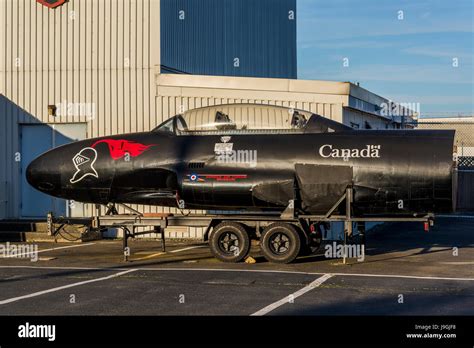
Comox supports a diverse set of missions, but its most critical responsibility is search and rescue (SAR) across one of the most challenging geographic regions in North America. The 442 Transport and Rescue Squadron operates aircraft and helicopters capable of responding to emergencies from the Pacific coastline to the Rocky Mountains. This SAR region includes remote wilderness, storm-lashed waters, and rugged alpine terrain.
The base also supports maritime patrol operations, frequently deploying CP-140 Aurora aircraft to monitor shipping routes and detect potential submarine threats in the Pacific. These patrols play a key role in Canada’s contribution to regional security and ocean surveillance.
An unusual feature of CFB Comox is its dual-use infrastructure. The military shares its runway with civilian commercial flights at Comox Valley Airport, creating a unique blend of military and civil aviation activity. The installation also hosts the Comox Air Force Museum, which preserves artifacts from Canada’s long history of coastal defense and aviation development.
With its proximity to major shipping lanes and the Pacific Rim, Comox acts as both a defensive outpost and a humanitarian response center, ready to launch rescue missions within minutes.
CFB Trenton – Canada’s Strategic Air Mobility Engine
In the world of military logistics, airlift capability determines how quickly a nation can respond to crises. Canadian Forces Base Trenton, located in Quinte West, Ontario, is the operational center of Canada’s global mobility network. Spanning just over 2 square miles (5.5 square kilometers), it is the busiest air force base in Canada.
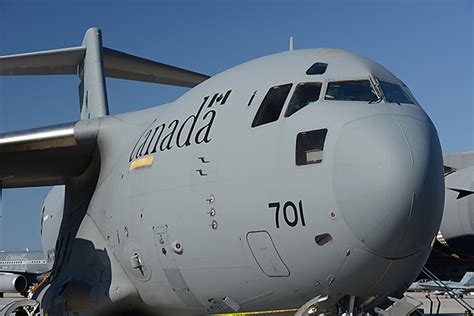
Trenton hosts 8 Wing, the formation responsible for nearly all of Canada’s fixed-wing transport operations. From humanitarian missions to combat deployments, aircraft from this base deliver personnel, equipment, and supplies across the globe.
The fleet operating at Trenton represents the backbone of Canadian airlift capability:
- CC-177 Globemaster III heavy transport aircraft for strategic cargo
- CC-130J Hercules tactical airlifters used for versatile operations
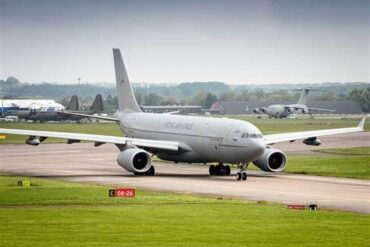
- CC-150 Polaris aircraft adapted for transport and aerial refueling
- Rotary-wing support helicopters
Because of these capabilities, Trenton functions as the Main Operating Base East for both NORAD and NATO operations. The base’s 10,000-foot runway accommodates large cargo aircraft and supports round-the-clock missions.
Trenton is currently undergoing a major $850 million modernization program, designed to support the incoming CC-330 Husky strategic tanker transport fleet. These aircraft will dramatically expand Canada’s aerial refueling capacity and long-range deployment flexibility.
The installation also houses the National Air Force Museum of Canada, a major historical archive showcasing aircraft from the Second World War through modern operations.
CFB Bagotville – Fighter Defense of Eastern Canada
In the province of Quebec, the airspace above forests, rivers, and Arctic approaches is protected by 3 Wing Bagotville, one of Canada’s two primary fighter bases. Covering about 4 square miles (10 square kilometers), Bagotville is a central node in the NORAD air defense network.
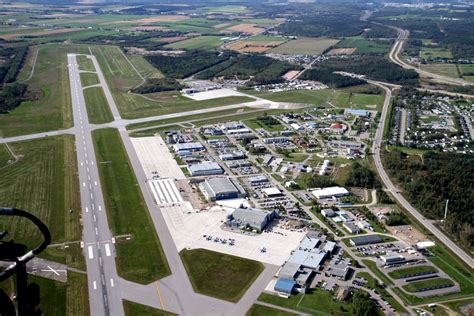
Two tactical fighter squadrons operate from this installation: 425 Tactical Fighter Squadron and 433 Tactical Fighter Squadron. Both units fly the CF-18 Hornet, Canada’s long-serving multirole fighter jet. These squadrons maintain a Quick Reaction Alert (QRA) posture, meaning fighters can scramble within minutes to intercept unidentified aircraft entering Canadian airspace.
Bagotville is undergoing a dramatic transformation as Canada prepares to introduce the F-35A Lightning II stealth fighter. Infrastructure upgrades include:
- A new hangar complex with 16 aircraft bays
- Secure operational briefing centers
- High-fidelity flight simulators
- Reinforced security zones for stealth aircraft maintenance
The base also serves as headquarters for 2 Wing, the RCAF’s deployable expeditionary unit. This organization specializes in rapidly constructing temporary airfields anywhere in the world, complete with power, communications, and logistics infrastructure.
Like Comox, Bagotville shares its runway with a civilian airport and hosts one of the country’s largest aviation events, the Spectacle Aérien International de Bagotville, which draws aviation enthusiasts from across North America.
CFB Greenwood – Atlantic Canada’s Maritime Patrol Stronghold
Situated in the Annapolis Valley of Nova Scotia, 14 Wing Greenwood is the largest operational air base in Atlantic Canada. Spanning roughly 5.5 square miles (14 square kilometers), it forms the backbone of the RCAF’s maritime surveillance and search-and-rescue operations on the East Coast.
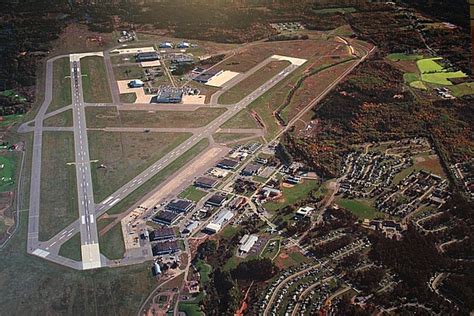
Greenwood’s mission revolves around long-range ocean patrol. Aircraft stationed here monitor shipping traffic, track submarines, and patrol vast sections of the North Atlantic. The base’s current patrol platform is the CP-140 Aurora, a sophisticated maritime patrol aircraft derived from the American P-3 Orion.
Canada plans to replace the Aurora fleet with the Boeing P-8A Poseidon, one of the most advanced anti-submarine warfare aircraft in the world. Preparations for the new aircraft include major infrastructure investments and runway upgrades to meet modern RCAF performance standards.
Recent development projects at Greenwood illustrate the scale of its ongoing expansion:
- Construction of 208 new residential units for personnel
- A $33 million aircraft refueling complex
- Reconstruction of a secondary runway
- Expanded infrastructure for remotely piloted aircraft systems (RPAS)
Greenwood also supervises offshore training areas used for anti-submarine warfare exercises, sovereignty patrols, and search-and-rescue drills across the North Atlantic.
CFB Cold Lake – Canada’s Massive Fighter Training Range
Few military air bases anywhere in the world can match the sheer scale of Canadian Forces Base Cold Lake. Located near the Alberta–Saskatchewan border, this installation oversees more than 4,500 square miles (11,700 square kilometers) of training territory through the Cold Lake Air Weapons Range (CLAWR).
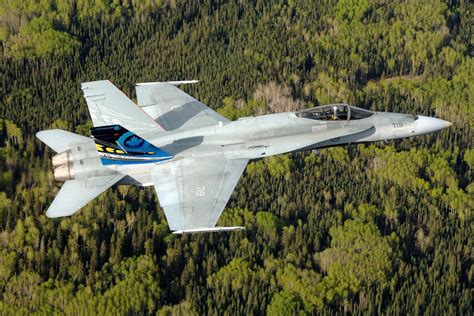
Cold Lake is considered one of the premier fighter training environments on the planet. The range contains unrestricted airspace, simulated enemy targets, and diverse terrain that allows pilots to train in realistic combat conditions.
Two CF-18 squadrons operate here:
- 401 Tactical Fighter Squadron
- 409 Tactical Fighter Squadron
These units conduct advanced weapons training, air combat exercises, and joint operations with allied forces. The base frequently hosts multinational exercises where NATO pilots practice complex aerial maneuvers, electronic warfare, and simulated missile engagements.
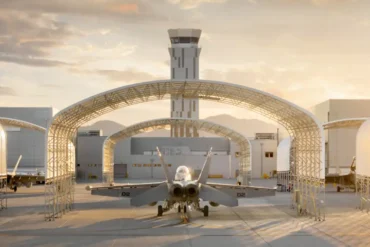
Cold Lake is also central to Canada’s transition to fifth-generation fighter technology. The base is undergoing a massive infrastructure overhaul in preparation for the arrival of the F-35A Lightning II around 2028.
Construction projects include:
- Six advanced stealth-capable hangars
- Secure maintenance facilities
- Upgraded electrical grids for high-tech simulators
- Expanded training infrastructure
The scale of the CLAWR allows pilots to conduct live weapons training with minimal airspace restrictions, a rare advantage in modern military aviation.
CFB Goose Bay – One of the World’s Largest Military Training Areas
At the top of this list stands Canadian Forces Base Goose Bay, located in Labrador. While the base itself has modest permanent infrastructure, it manages an astonishing 50,000+ square miles (over 130,000 square kilometers) of military flight training territory.
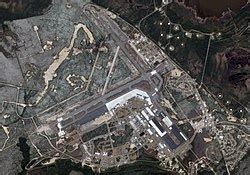
This immense training area makes Goose Bay one of the largest military aviation ranges in the world. During the Cold War, NATO forces used the region extensively to practice low-level flight operations, flying as low as 100 feet above ground level to simulate radar-evading attack missions.
The rugged wilderness of Labrador provides an ideal environment for such exercises. Vast forests, lakes, and mountains allow pilots to train without interfering with civilian air traffic or populated areas.
Today, Goose Bay continues to host international training deployments, including aircraft from NATO partners such as Germany and the United States. The base also supports winter warfare training and complex tactical exercises.
Another unique mission conducted from Goose Bay is Operation BOXTOP, an annual resupply effort for CFS Alert, the northernmost permanently inhabited location on Earth. Aircraft fly thousands of kilometers into the Arctic to deliver supplies to this remote NORAD station, which performs surveillance, research, and Arctic rescue support.
The base’s 11,000-foot runway can accommodate the world’s largest transport aircraft, making Goose Bay a strategic staging point for both military operations and Arctic logistics.
The Strategic Importance of Canada’s Largest Air Bases
Canada’s largest air bases reveal a fascinating truth about modern defense strategy: space can be as valuable as technology. The country’s enormous geography allows the RCAF to operate training ranges that dwarf those found in most nations, giving pilots the freedom to practice complex missions without heavy airspace restrictions.
These installations support everything from fighter interception under NORAD to global humanitarian airlift, from submarine hunting in the Atlantic to Arctic resupply missions at the edge of the polar ice.
Each base represents a different facet of Canadian military aviation. Moose Jaw trains the next generation of pilots. Comox and Greenwood guard the oceans. Trenton moves forces around the globe. Bagotville and Cold Lake maintain fighter readiness. Goose Bay offers one of the largest aerial training environments on Earth.
Together they form the backbone of Canada’s air power, quietly maintaining readiness across one of the largest and most challenging national territories in the world. In a country defined by vast distances and harsh environments, these sprawling air bases ensure that the Royal Canadian Air Force remains capable of defending the skies—from the Pacific coastline to the high Arctic.