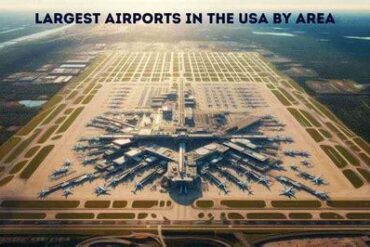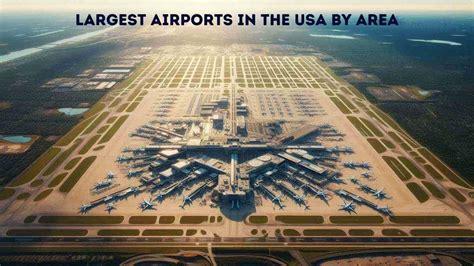
Airports are often judged by passenger traffic or flight movements, but land area tells a far deeper story about power, flexibility, and long-term vision. Acreage determines whether an airport can add runways without political warfare, absorb new terminals without demolition, or quietly prepare for aircraft that do not yet exist. In the United States, the largest airports by land area function less like transportation facilities and more like self-governing infrastructure ecosystems, complete with wildlife preserves, rail networks, fuel farms, logistics zones, and future-proof buffers against urban sprawl.
This article examines the ten largest currently operating US airports by total land area, moving from the smallest of the giants to the undisputed continental colossus. Each section explores not only acreage, but how that land is strategically used to manage traffic, noise, sustainability, and expansion in a rapidly evolving aviation landscape.
Detroit Metropolitan Airport (DTW): Midfield Precision on a Massive Scale
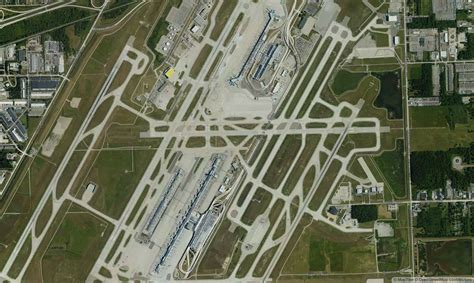
Detroit Metropolitan Airport stands as a masterclass in efficient land utilization, balancing size with operational discipline. Serving as Michigan’s primary international gateway and a cornerstone hub for Delta Air Lines, DTW anchors the Midwest’s global connectivity while maintaining remarkably short taxi times for an airport of its scale.
Spanning approximately 4,850 acres, DTW is the smallest airport on this list, yet it punches far above its weight. Its six-runway layout is arranged to support parallel operations, while the two main terminals are positioned around a midfield concept that minimizes aircraft congestion. The McNamara Terminal, stretching nearly a mile in length, operates as a linear transit spine, enabling high passenger throughput without the chaos common to older hub designs.
Beyond concrete and asphalt, DTW manages the 1,000-acre Crosswinds Marsh, a protected wetland that acts as both an environmental counterbalance and a natural noise buffer. This integration of aviation and conservation demonstrates how even large airports can coexist with surrounding ecosystems when land is intentionally allocated rather than consumed.
DTW’s acreage places it firmly among America’s mega-airports, yet its disciplined layout proves that size alone does not guarantee efficiency. Here, land becomes a tool for precision rather than excess.
John F. Kennedy International Airport (JFK): Density Mastery in a Coastal Metropolis
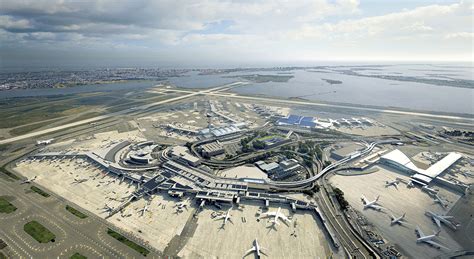
John F. Kennedy International Airport occupies a paradoxical position: one of the largest airports by land area in the United States, yet hemmed in by one of the densest urban environments on Earth. Located in Queens on land once used as a golf course, JFK has evolved into America’s most recognizable international gateway.
Covering roughly 4,930 acres, JFK supports four runways, including a 14,511-foot strip capable of handling the heaviest long-haul aircraft. More than seventy airlines operate here, making JFK a central artery for transatlantic and intercontinental travel. Its land footprint allows for extensive cargo facilities, fuel farms, and maintenance zones rarely visible to passengers but critical to 24-hour global operations.
What makes JFK exceptional is not just size, but intensity of use. Every acre is contested, engineered, and optimized. The ongoing $19 billion redevelopment project aims to unify its fragmented terminal system into a cohesive, modernized complex without expanding its physical footprint. This is urban aviation at its most demanding, where land scarcity forces architectural ingenuity.
JFK demonstrates how acreage can be leveraged vertically and strategically, proving that even constrained airports can sustain global dominance when land is treated as a finite, high-value asset.
San Francisco International Airport (SFO): Engineering an Airport on the Edge of the Bay
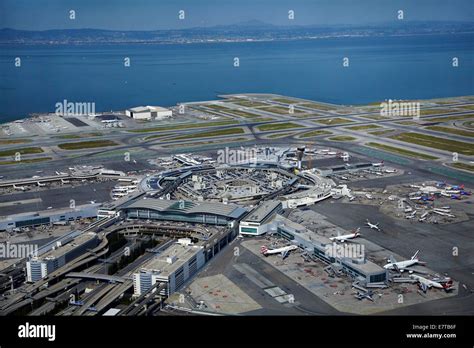
San Francisco International Airport occupies one of the most technically challenging sites in American aviation. Positioned along the edge of the San Francisco Bay, SFO spans approximately 5,207 acres, much of it reclaimed land shaped by decades of careful engineering.
This waterfront footprint enables a distinctive intersecting runway configuration designed to maximize operations during clear weather while respecting environmental and tidal constraints. Nearly half of SFO’s land includes tidal zones and conservation areas, reinforcing its reputation as one of the most sustainability-focused airports in the world.
SFO serves as a major hub for United Airlines and Alaska Airlines, acting as Silicon Valley’s primary global gateway. Its land allocation supports advanced terminal architecture, resilient seismic design, and ambitious modernization efforts such as the Terminal 3 West rebuild and full runway repaving projects scheduled into the late 2020s.
Despite its coastal limitations, SFO’s acreage supports innovation rather than sprawl. Every expansion is surgical, every redevelopment deliberate. The result is an airport that proves land size is not merely about quantity, but about engineering intelligence under constraint.
O’Hare International Airport (ORD): Runway Density at Continental Scale
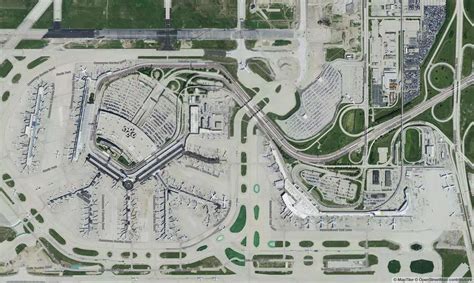
Chicago O’Hare International Airport is aviation geometry taken to its logical extreme. With 7,627 acres dedicated to flight operations, ORD hosts the most complex runway system in the United States, supporting simultaneous arrivals and departures under nearly any weather condition.
Eight active runways form the backbone of O’Hare’s operational supremacy. This configuration, made possible only through extensive land acquisition, allows ORD to function as the Midwest’s primary aviation interchange, linking nearly 250 destinations worldwide. United Airlines and American Airlines both maintain major hubs here, feeding traffic across North America and beyond.
O’Hare’s land area is currently being leveraged through the O’Hare 21 expansion program, which includes the construction of a new Global Terminal and additional concourses designed to modernize passenger flow while preserving runway capacity. Unlike many legacy airports forced to choose between terminals and airfield efficiency, O’Hare’s acreage allows it to pursue both simultaneously.
The result is an airport that treats land as operational insurance, ensuring resilience against delays, storms, and traffic surges that would overwhelm smaller facilities.
Salt Lake City International Airport (SLC): High-Altitude Space and Strategic Calm
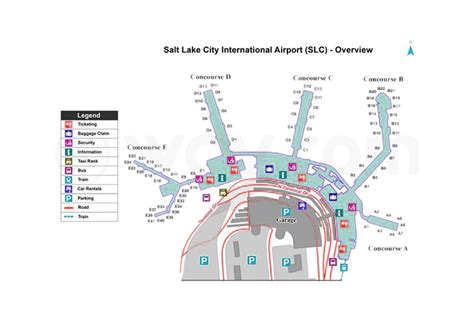
Salt Lake City International Airport occupies 8,044 acres of open terrain west of downtown, sitting atop a former lakebed that provides rare geographic freedom. This vast expanse supports wide runway separation, long approach paths, and minimal noise conflict with surrounding communities.
As a fortress hub for Delta Air Lines, SLC connects the Intermountain West to both coasts and international destinations. Its two parallel 12,000-foot runways are engineered for high-altitude performance, compensating for thinner air while accommodating heavy aircraft.
The recently completed $5.2 billion Terminal Redevelopment Program represents a rare phenomenon: an entirely new US hub built in the 21st century from the ground up. Land availability made this possible without phased demolition or passenger disruption, allowing designers to prioritize clarity, scalability, and energy efficiency.
SLC’s acreage also preserves over 1,000 acres of wetlands, reinforcing the idea that land-rich airports can integrate conservation without sacrificing capacity. Calm, spacious, and meticulously planned, SLC exemplifies how geography can enable serenity at scale.
George Bush Intercontinental Airport (IAH): Houston’s Aviation Frontier
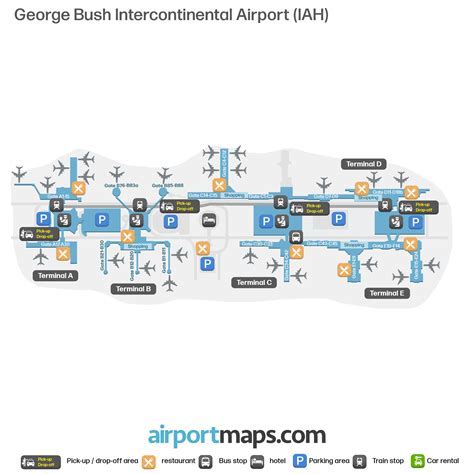
George Bush Intercontinental Airport stretches across approximately 10,000 acres, marking the threshold where airports begin to resemble cities. Located north of Houston, IAH functions as a primary gateway to Latin America and a critical hub for United Airlines.
Five runways and five terminals are distributed across this enormous property, connected by an underground people mover system uniquely designed by Disney. This internal transit network exists only because land availability allowed terminals to be spaced for noise control, safety, and future expansion rather than forced proximity.
IAH’s acreage supports around-the-clock operations with minimal residential impact, a rarity among international hubs. Recent developments include the Terminal B transformation and the opening of the Mickey Leland International Terminal D-West Pier, capable of handling the Airbus A380 and future widebody aircraft.
Here, land enables ambition. IAH’s physical scale provides operational freedom that many airports can only envy, allowing Houston to compete globally without spatial compromise.
Washington Dulles International Airport (IAD): Foresight Cast in Concrete
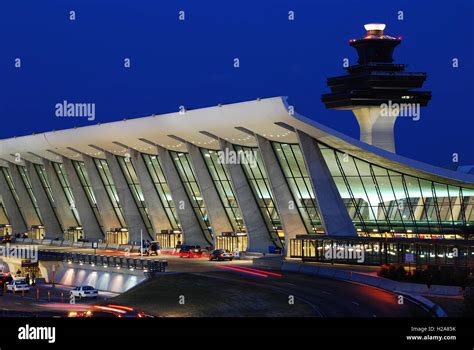
Washington Dulles International Airport represents one of the most visionary land acquisitions in aviation history. Spanning approximately 13,000 acres, Dulles was deliberately built far from the urban core to anticipate growth that would take decades to materialize.
That foresight now defines its advantage. Four massive runways operate with ample separation, while reserved land remains available for a future fifth runway. United Airlines maintains a major hub here, and more than forty international carriers rely on Dulles as their primary entry point to the US capital region.
The iconic main terminal designed by Eero Saarinen anchors a property that balances architectural legacy with modern expansion. The upcoming Concourse E project will replace outdated commuter facilities with a fully integrated AeroTrain-connected structure, again made possible by land abundance rather than demolition.
Dulles proves that acreage is not excess when paired with patience. It is strategic time stored as soil.
Orlando International Airport (MCO): Tourism Infrastructure at Mega Scale
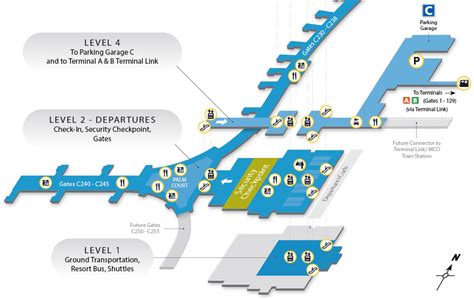
Orlando International Airport spans 11,605 acres, a vast property inherited from its origins as McCoy Air Force Base. Today, it serves as the busiest airport in Florida and the primary gateway to the world’s most concentrated tourism market.
Four parallel runways enable relentless arrival waves, while three main terminals manage extraordinary seasonal passenger surges. The recently opened Terminal C, built at a cost exceeding $3 billion, reflects Orlando’s evolution into a global destination rather than a regional leisure airport.
MCO’s land footprint also accommodates the integration of Brightline high-speed rail, transforming the airport into a multimodal transportation hub. Beyond aviation, large portions of the property remain undeveloped or environmentally protected, preserving space for future terminals that could push capacity beyond 100 million passengers annually.
Orlando’s acreage is not merely operational; it is anticipatory, engineered for decades of growth fueled by global tourism.
Dallas/Fort Worth International Airport (DFW): A City Between Cities
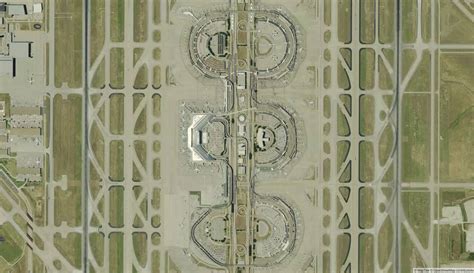
Dallas/Fort Worth International Airport is aviation on a municipal scale. Covering 17,207 acres, DFW is larger than Manhattan and operates as its own city, complete with emergency services, infrastructure, and governance.
Seven runways form one of the most flexible airfield systems in the world, allowing DFW to handle nearly 2,000 daily flights as the primary global hub for American Airlines. Five terminals currently operate, with Terminal F under construction as part of the $9 billion DFW Forward program.
DFW’s land area enables something rare: simultaneous modernization and expansion without disrupting existing operations. Terminals can be rebuilt while others absorb traffic, a logistical luxury unavailable to constrained airports.
This acreage transforms DFW from an airport into an aviation metropolis, capable of evolving continuously rather than cyclically.
Denver International Airport (DEN): The Continental Titan
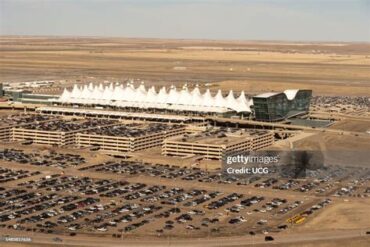
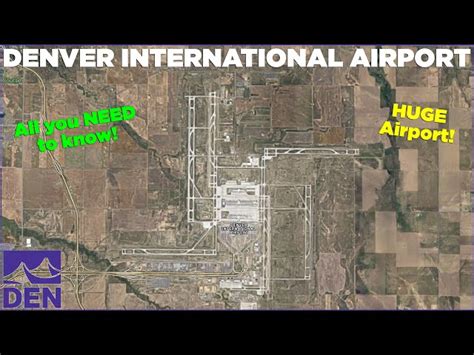
Denver International Airport stands alone. At 33,531 acres, DEN is not only the largest airport in the United States, but the largest commercial airport in North America, dwarfing its nearest competitors.
Built to replace the landlocked Stapleton Airport, DEN was intentionally placed far from urban development, securing expansion freedom for generations. Six runways, including the nation’s longest at 16,000 feet, operate with immense separation. Enough land remains to double runway capacity without relocation.
DEN’s ongoing Vision 100 and Operation 2045 plans aim to support 100 million passengers annually through concourse expansions and the complete transformation of the Jeppesen Terminal. United Airlines and Southwest Airlines both operate major hubs here, leveraging Denver’s central geography and unlimited physical potential.
DEN is not just an airport. It is continental infrastructure, designed on a scale that acknowledges aviation’s future rather than its past.
Why Land Area Defines the Future of American Aviation
Passenger numbers fluctuate. Aircraft types evolve. Airlines merge and vanish. Land endures. The largest US airports by acreage possess an advantage that cannot be retrofitted or fast-tracked: space to adapt.
These ten airports demonstrate how land area shapes everything from noise policy to sustainability, from terminal design to operational resilience. In an era of accelerating demand and technological disruption, acreage is not excess. It is foresight made tangible.
As aviation enters its next century, the true giants will not be defined by how many passengers they move today, but by how much room they have to evolve tomorrow.