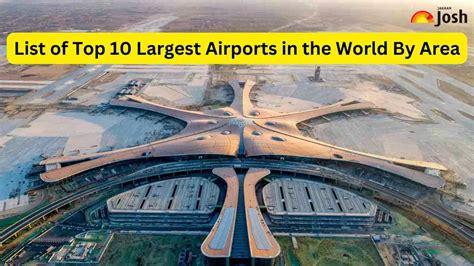
Modern aviation is often measured by passenger traffic, flight frequency, or international connectivity. Yet one of the most revealing ways to understand an airport’s true long-term power is through land area. Massive airports are not simply large because they move millions of travelers—they are large because they were designed for decades of expansion, cargo growth, runway additions, maintenance zones, logistics parks, and future city-scale development.
Some of the world’s busiest airports, such as Atlanta or Los Angeles, do not top this ranking. Instead, the biggest airports by land size are often found in deserts, open plains, or carefully selected strategic regions where expansion was possible from the beginning. These enormous aviation complexes demonstrate that land is one of the most valuable assets in global transportation.
From Florida’s tourism gateway to Saudi Arabia’s desert mega-airports, these are the 7 largest airports in the world by total land area.
7. Orlando International Airport (MCO) – 69.6 km² / 27 mi²
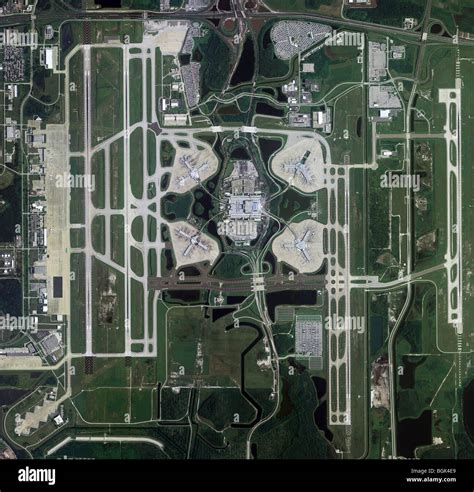
Orlando International Airport is one of the most important leisure airports on Earth. Located in Central Florida, it serves the nonstop flow of tourists heading to theme parks, resorts, cruise ports, and convention centers. Its vast footprint of 69.6 square kilometers reflects the need to handle seasonal traffic surges without crippling congestion.
Unlike older airports trapped by surrounding urban development, Orlando had room to grow. That strategic advantage allowed planners to create a highly scalable airport with wide runway spacing, expandable terminals, and efficient landside access. The result is an airport capable of absorbing traffic increases year after year.
Its central terminal complex connects to multiple airside concourses, creating smoother passenger flow while keeping aircraft operations efficient. The addition of Terminal C modernized the airport further, introducing upgraded technology and increased capacity for domestic and international growth.
Airlines including Delta Air Lines, Southwest Airlines, and numerous foreign carriers depend on Orlando as a high-volume gateway. As tourism in Florida continues to grow, Orlando’s greatest advantage remains simple: space.
6. Dallas/Fort Worth International Airport (DFW) – 69.6 km² / 27 mi²
Equal in size to Orlando but dramatically different in mission, Dallas/Fort Worth International Airport is one of the most efficient mega-hubs ever built. Positioned between two major Texas cities, DFW became a masterpiece of network planning and operational scale.
The airport’s location in the center of the United States gives airlines enormous scheduling advantages. Flights from coast to coast, north to south, and international services can all connect through DFW with relative efficiency. That geographic strength is matched by infrastructure built for speed.
Five semicircular terminals are linked by the Skylink train system, allowing passengers to transfer rapidly between gates. Multiple parallel runways support high traffic volume while minimizing delays. Few airports combine size and throughput as effectively.
Beyond passenger terminals, DFW uses its land for maintenance centers, cargo facilities, airline offices, support roads, and future development zones. It is the primary fortress hub of American Airlines and a crucial node in global aviation.
For many industry observers, DFW represents the blueprint for how to use enormous land area intelligently rather than wastefully.
5. Istanbul Airport (IST) – 76.5 km² / 29.5 mi²
Istanbul Airport is one of the newest entries on this list, but it was built with unmistakably grand ambition. Opened in 2018 to replace the constrained Atatürk Airport, the new facility was designed to transform Türkiye into one of the world’s leading air transit powers.
Its location between Europe and Asia gives it natural strategic value. Aircraft connecting London to Africa, Asia to Europe, or the Middle East to North America can route efficiently through Istanbul. Geography alone made the project compelling. Scale made it powerful.
The airport spans 76.5 square kilometers, with one of the largest terminal buildings under a single roof anywhere in the world. Vast concourses, centralized screening, and transfer-friendly design support heavy connecting traffic.
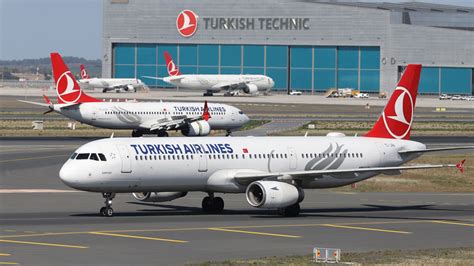
Turkish Airlines uses Istanbul as the heart of its global network, operating flights to more countries than almost any other airline. The airport’s land reserves also allow future runway and terminal additions, ensuring it can keep growing as demand rises.
Istanbul Airport is not merely large—it is strategically positioned to dominate intercontinental transfer traffic for decades.
4. Kuala Lumpur International Airport (KUL) – 100 km² / 38.6 mi²
Kuala Lumpur International Airport, commonly known as KLIA, is one of Asia’s most spacious and forward-looking airport developments. Built during Malaysia’s economic rise in the late 1990s, it was envisioned as more than an airport. It was planned as a future aerotropolis.
Located roughly 45 kilometers from central Kuala Lumpur, KLIA covers 100 square kilometers, giving it immense room for aviation and commercial expansion. It combines long-term planning with operational flexibility.
The airport serves both premium and budget travel markets through separate facilities. The main KLIA terminal handles full-service carriers such as Malaysia Airlines, while KLIA2 became one of the world’s major low-cost terminals, supporting AirAsia’s explosive growth.
This dual-airport concept inside one mega-complex allows efficient segmentation of traffic while maximizing capacity. Cargo centers, hotels, road links, rail connections, and green zones all sit within the wider land reserve.
KLIA’s size ensures that Southeast Asia’s future aviation boom can be met without the painful land constraints faced by many older regional airports.
3. Denver International Airport (DEN) – 137.8 km² / 53.2 mi²
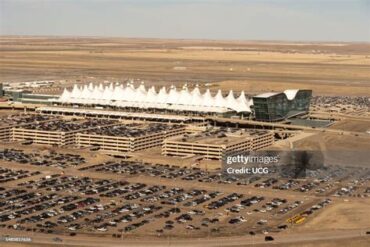
Denver International Airport is the largest airport in North America by land area and one of the most recognizable airports in the world. Its tent-like terminal roof has become iconic, but the true story lies beyond the architecture.
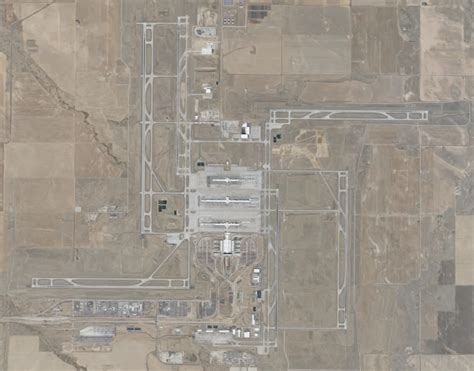
When Denver replaced Stapleton Airport in 1995, planners chose a site with enormous room for future expansion. That decision created an airport spanning 137.8 square kilometers, a scale few North American cities could match.
Its terminal system centers on Jeppesen Terminal, linked to midfield concourses by underground rail. This design separates landside and airside functions efficiently while preserving flexibility for future gate expansion.
Denver currently operates multiple runways with land reserved for many more. That runway potential matters greatly because Denver’s altitude and weather conditions can require special operational spacing and performance considerations.
United Airlines and Southwest Airlines both maintain major operations there, using Denver as a central connecting hub. Cargo growth and population expansion across the Mountain West continue to strengthen its importance.
Denver proves that when an airport is given enough room, it can evolve for generations rather than decades.
2. King Khalid International Airport, Riyadh (RUH) – 375 km² / 145 mi²
King Khalid International Airport in Riyadh is where aviation scale becomes almost surreal. Located in Saudi Arabia’s capital, the airport occupies 375 square kilometers, making it the second-largest airport on Earth by land area.
Built in the desert, the airport benefited from something many urban airports lack entirely: unlimited surrounding space. That allowed planners to create a giant aviation zone rather than a cramped passenger terminal with runways attached.
The airport serves as a major base for Saudia and an increasingly important gateway linking the Middle East with Europe, Asia, and Africa. Ongoing expansion programs tied to Saudi Arabia’s Vision 2030 initiative are reshaping its role even further.
Large undeveloped tracts inside the airport boundary create extraordinary potential for new terminals, cargo districts, aerospace industries, and logistics parks. It is expected to evolve into an even larger integrated aviation ecosystem.
What makes Riyadh remarkable is not only what exists today—but how much still remains possible.
1. King Fahd International Airport, Dammam (DMM) – 776 km² / 300 mi²
The largest airport in the world by total land area is King Fahd International Airport in Dammam, Saudi Arabia. Its staggering footprint of 776 square kilometers places it in a category of its own.
To understand that number, many entire cities are smaller than this airport. No other commercial airport comes close to matching its land reserve.
Despite its giant size, King Fahd does not rank among the busiest passenger airports. That contrast makes it fascinating. Rather than maximizing immediate throughput, the airport was built around long-term strategic capacity.
It includes a main passenger terminal, royal facilities, cargo infrastructure, maintenance zones, and vast undeveloped sections that could support future runways, industrial development, or major logistics expansion.
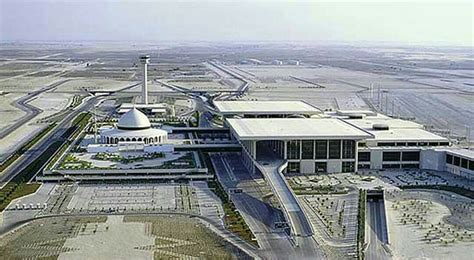
The airport can handle large widebody aircraft, including the Airbus A380, and connects eastern Saudi Arabia to regional and international destinations. Yet the most impressive feature remains the land itself—a reserve of infrastructure potential unmatched anywhere in global aviation.
King Fahd International Airport is the clearest example that in aviation, space equals power.
Why Airport Land Area Matters More Than Ever
In the modern era, the world’s largest airports are no longer judged only by how many passengers move through terminals. Land area determines whether an airport can add runways, build cargo centers, attract airlines, create maintenance hubs, or develop airport cities.
Crowded legacy airports often struggle with noise limits, runway shortages, road congestion, and surrounding urban barriers. Airports with huge land reserves avoid those traps.
That is why this ranking matters. It highlights which airports were built not just for today’s demand—but for tomorrow’s aviation economy.
Final Thoughts
The seven largest airports in the world by total land area reveal a deeper truth about aviation strategy. Passenger numbers rise and fall. Airlines merge. Routes change. Technology evolves. But land remains permanent leverage.
From Orlando’s tourism machine to Denver’s continental hub and Saudi Arabia’s desert giants, these airports hold something priceless: room to grow.
And in aviation, growth is everything.