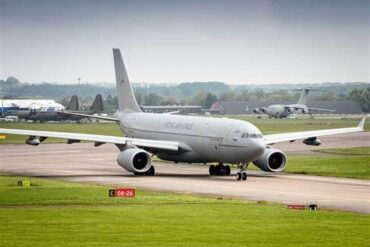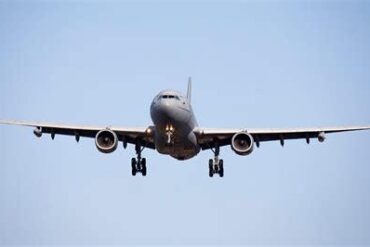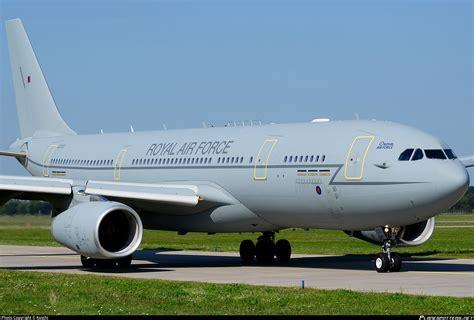
The Royal Air Force has always relied on aircraft that extend Britain’s reach beyond its shores, but no aircraft in its inventory embodies that mission quite like the Voyager. Derived from the Airbus A330 Multi Role Tanker Transport, the Voyager is the largest aircraft currently operated by the RAF, and it functions as both a flying fuel station and a strategic transport platform. In an era where air power is as much about endurance and logistics as it is about speed and weapons, this wide-body giant sits quietly at the center of British military aviation strategy.
The Voyager is not a traditional military aircraft built from the ground up for war. Instead, it represents the modern philosophy of adaptable platforms, where a commercial airframe is transformed into a high-end military asset. The A330’s civilian pedigree brings reliability, efficiency, and long-range performance, while its military conversion adds defensive systems, secure communications, and specialized refueling hardware. The result is a hybrid machine that can deploy fighters, move troops, evacuate casualties, and transport heads of state across continents.
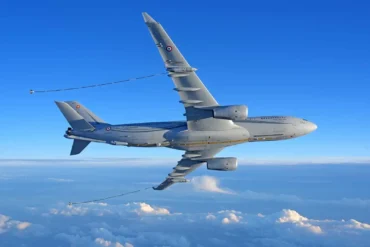
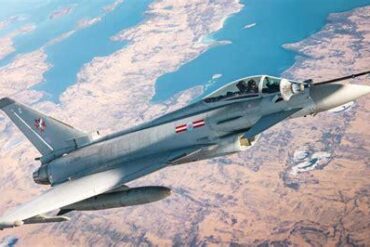
In RAF service, the Voyager fleet is divided into two variants: the KC.Mk2 and the KC.Mk3. Both serve as aerial tankers and transports, but they differ in refueling configurations, reflecting the diverse mission profiles of British air power. The KC.Mk2 uses underwing pods to refuel fast jets, while the KC.Mk3 adds a centerline hose to support larger aircraft. This modular refueling architecture makes the Voyager a universal fuel donor in coalition operations, capable of supporting everything from Typhoon fighters to heavy transport aircraft.
By weight, size, and operational impact, the Voyager is not merely the largest RAF aircraft in physical dimensions but arguably the most strategically influential. Fighters cannot project power without fuel, and transport aircraft cannot reach distant theaters without tanker support. The Voyager is the invisible enabler of nearly every long-range RAF mission, quietly circling thousands of meters above conflict zones or oceans, extending the reach of every other aircraft in the fleet.
The Airbus A330 MRTT: From Civilian Airliner to Military Titan
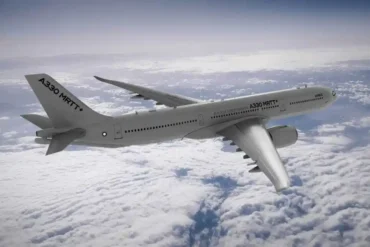
The story of the Voyager begins with the Airbus A330, a wide-body twin-engine airliner known for long-haul efficiency and reliability. Airbus Defense and Space transformed this commercial platform into the A330 Multi Role Tanker Transport, or MRTT, adding refueling systems, strengthened structures, and military avionics. The first MRTT entered service in 2011, marking a shift toward commercial-derived military tankers in Western air forces.
The conversion process is extensive. A standard A330-200 is delivered to Airbus Military’s conversion center in Getafe, Spain, where engineers integrate refueling pods, hose-and-drogue systems, additional fuel tanks, defensive aids, and secure communications. The aircraft retains its wide-body fuselage, which allows for enormous passenger and cargo capacity alongside fuel carriage. This dual-role design is what makes the Voyager uniquely flexible compared to legacy tankers that were purely dedicated to refueling.
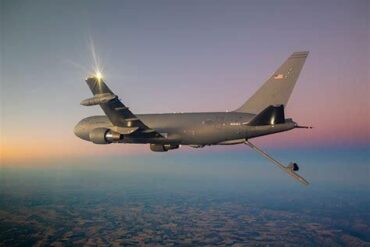
The A330 MRTT has become the dominant non-US tanker platform globally, with dozens of nations adopting it for its efficiency and multi-mission capabilities. Its commercial roots mean lower operating costs and proven reliability, while its military modifications ensure survivability and interoperability with NATO allies. For the RAF, this combination delivers strategic endurance without the financial burden of developing a bespoke tanker aircraft.
Voyager Fleet Structure and the AirTanker Partnership Model
Unlike many military aircraft programs, the RAF Voyager fleet is not directly owned by the British government. Instead, it is operated under a long-term lease agreement with the AirTanker consortium, a private-public partnership established in 2008. This arrangement represents a novel procurement model in military aviation, blending civilian ownership with military operational control.
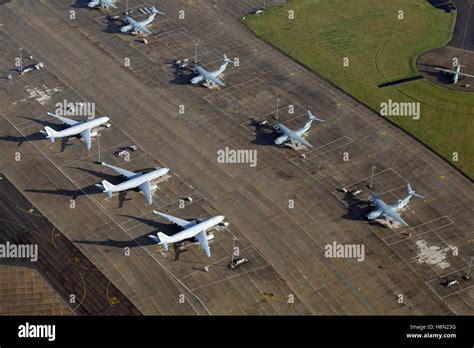
The fleet consists of fourteen aircraft divided into a “Core Fleet” and a “Surge Fleet.” The Core Fleet includes nine aircraft in continuous RAF service, while the Surge Fleet consists of five aircraft that can be used commercially when not required by the military. This flexible model reduces costs while ensuring additional capacity can be activated rapidly during crises or large deployments.
AirTanker provides maintenance, infrastructure, training, and some personnel, including sponsored reserve pilots and engineers. The RAF operates the aircraft operationally, integrating them into military missions, exercises, and deployments. This hybrid model reflects modern defense economics, where efficiency and adaptability are prioritized alongside capability.
Operational Deployment and Global Reach
The Voyager is primarily based at RAF Brize Norton, the United Kingdom’s main strategic air transport hub. From this base, 10 Squadron and 101 Squadron operate the fleet, providing air-to-air refueling, troop transport, and strategic lift. A dedicated aircraft is stationed at RAF Mount Pleasant in the Falkland Islands, supporting Quick Reaction Alert Typhoon fighters and maintaining Britain’s defensive posture in the South Atlantic.
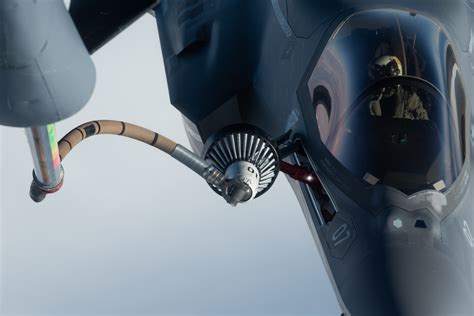
Voyagers operate in two primary refueling modes: towline and trail. In towline mode, the tanker orbits a designated area, waiting for receiver aircraft to arrive and connect to its hoses. In trail mode, the tanker flies alongside a formation of fast jets, refueling them en route over long distances while managing navigation and fuel logistics. This capability is essential for deploying fighters across oceans or maintaining combat air patrols far from base.
The aircraft also functions as a long-range transport platform. When not carrying fuel, its cabin can be configured for passengers, cargo, or medical evacuation. It can carry up to 291 passengers, palletized cargo in the lower hold, or a medical configuration with 40 stretchers and critical care facilities. This flexibility allows the Voyager to switch roles rapidly depending on mission requirements.
Strategic Impact in Combat and Coalition Operations
The Voyager has been a critical asset in UK and coalition operations. During Operation Shader, it refueled RAF F-35 Lightning II and Typhoon aircraft, as well as allied jets including US Marine Corps Harriers and F/A-18 Hornets. Tanker support is often the limiting factor in sustained air campaigns, and the Voyager’s capacity ensures that British and allied fighters can remain on station longer and strike farther from base.
Exercises such as Mobility Guardian have demonstrated the Voyager’s strategic value. During these exercises, an A400M transport conducted a long transoceanic flight with in-flight refueling support, highlighting how tankers extend the operational radius of heavy aircraft. In multinational missions like France’s Pégase deployments, the A330 MRTT enables fighters to traverse thousands of kilometers with minimal stops, transforming regional air forces into global actors.
The Voyager also supports air bridges, ferrying personnel and equipment to overseas territories like the Falklands. It refuels fast jets during ferry flights, enabling rapid reinforcement of distant bases. In this sense, the Voyager is not just a support aircraft but a force multiplier that amplifies the effectiveness of the entire RAF fleet.
Voyager Vespina: Britain’s Diplomatic Flagship in the Sky
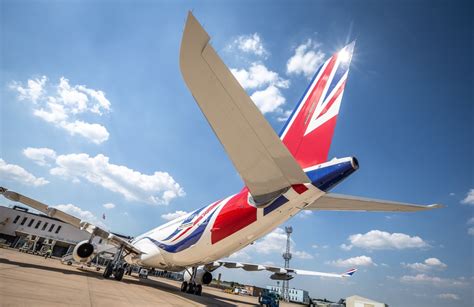
Among the RAF’s Voyager fleet, one aircraft stands out for its distinctive role and appearance: Voyager Vespina. This KC.Mk3 variant serves as the UK’s de facto VIP transport aircraft, carrying the British royal family, the Prime Minister, and senior government officials on diplomatic missions. Named in 2020, Vespina represents Britain’s closest equivalent to the US Air Force One concept, though on a more understated scale.
Vespina’s original livery matched the standard gray military scheme, but it was repainted in a glossy “Global Britain” livery to reflect its diplomatic role. The aircraft frequently appears at international air shows alongside the Red Arrows, projecting British aerospace capability and national identity. Despite its VIP configuration, Vespina remains fully mission-capable and can be reconfigured for tanker duties, refueling fast jets like any other Voyager.
The UK’s history with VIP transport has been fragmented, with proposals for dedicated diplomatic aircraft repeatedly delayed or canceled. The Voyager fleet finally provided a platform that could balance prestige with practicality. Vespina is not a luxury palace in the sky but a working military aircraft with enhanced interiors, symbolizing a pragmatic approach to state aviation.
Technical Specifications and Performance Capabilities
The Voyager’s technical performance places it among the most capable tankers in the world. Powered by two Rolls-Royce Trent 772B turbofans, each producing around 71,100 pounds of thrust, the aircraft achieves a maximum speed of approximately Mach 0.86 and a service ceiling of 41,000 feet. Its wingspan of nearly 60 meters and fuselage length of almost 59 meters make it the largest aircraft currently operated by the RAF.
Fuel capacity is the aircraft’s defining feature. With a maximum fuel load of approximately 245,000 pounds, the Voyager can deliver around 132,000 pounds of fuel during a typical five-hour mission at 500 nautical miles from base. Its range extends to about 8,000 nautical miles with maximum fuel, enabling intercontinental missions without refueling.
Payload capacity is equally impressive. The aircraft can carry around 99,000 pounds of cargo or up to 291 passengers, making it a strategic transport platform as well as a tanker. This dual capability allows the RAF to optimize fleet usage, reducing the need for separate transport and tanker aircraft in certain scenarios.
The Global A330 MRTT Ecosystem and NATO Integration
The A330 MRTT is not unique to the UK; it has become a cornerstone of allied air forces worldwide. Nations including Australia, France, Saudi Arabia, Singapore, South Korea, the UAE, Spain, Canada, and NATO’s Multinational MRTT Fleet operate the aircraft. Its widespread adoption ensures interoperability in coalition operations, where shared refueling standards and procedures simplify joint missions.
The aircraft dominates the non-US tanker market, holding more than 90 percent share. This dominance reflects a shift away from older platforms like the KC-135 and KC-10 toward modern, fuel-efficient wide-body tankers. For NATO, shared MRTT fleets reduce costs and enhance collective readiness, enabling smaller nations to access strategic refueling capability without maintaining independent fleets.
In missions such as Air Shielding, the A330 MRTT supports allied fighters on standby across Europe, ensuring rapid response capability in a tense security environment. The aircraft’s role as a logistical backbone highlights how modern warfare increasingly depends on networked, multinational infrastructure rather than isolated national assets.
Evolution Toward Autonomous Refueling and Future Warfare
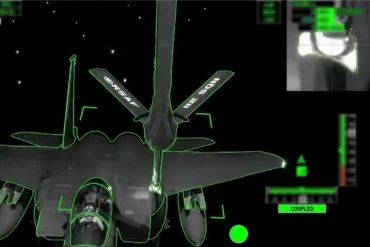
The Voyager’s future extends beyond current capabilities. Airbus is developing autonomous refueling technologies through the Auto’Mate campaign, exploring systems that allow tankers to guide receiver aircraft, transfer fuel, and manage separation without direct human control. These technologies aim to support both crewed and uncrewed aircraft, integrating with Europe’s Future Combat Air System and next-generation drone platforms.
Autonomous refueling could transform air operations by enabling unmanned combat aircraft to operate over long distances without human pilots. Tankers like the Voyager could become command nodes, orchestrating formations of drones and crewed aircraft in networked operations. This vision positions the A330 MRTT platform as a bridge between traditional aviation and future autonomous air warfare.
The Next Generation: A330 MRTT+ and Sustainability
Airbus is preparing the A330 MRTT+, an upgraded version with new wings, updated engines, and improved connectivity. The goal is to reduce fuel consumption by up to 8 percent while increasing range and payload. Enhanced digital connectivity would allow the aircraft to serve as a forward command node, integrating data from multiple platforms and sharing it across the battlespace.
Sustainability is also becoming a priority. The A330 MRTT is being tested with sustainable aviation fuels, aligning military aviation with broader environmental goals. While defense aviation will always be energy-intensive, incremental efficiency gains can reduce operational costs and environmental impact, ensuring the platform remains viable for decades.
Why the Voyager Matters in Modern Air Power Doctrine
In popular imagination, military aviation is dominated by fighters and bombers, but logistics aircraft like the Voyager are the true enablers of air power. Without tankers, fighters are constrained by fuel, transports are limited in range, and global operations become impossible. The Voyager embodies the concept of strategic enablers, aircraft that do not directly engage the enemy but make all other missions possible.
The RAF’s ability to deploy Typhoons, F-35s, and transports globally depends on the Voyager. Whether supporting combat operations, humanitarian missions, diplomatic travel, or rapid deployments, the aircraft sits at the center of Britain’s global mobility network. Its presence allows the UK to project power, respond to crises, and maintain alliances far beyond its shores.
Cultural and Symbolic Significance of the RAF’s Largest Aircraft
Beyond its technical and strategic role, the Voyager has become a symbol of modern British aerospace capability. Vespina’s glossy livery, air show appearances, and diplomatic missions showcase the UK’s industrial and military competence. The aircraft represents a fusion of European aerospace engineering and British military tradition, highlighting the interconnected nature of modern defense industries.
The private-public partnership model, multinational adoption, and ongoing technological evolution reflect broader trends in defense procurement and aerospace development. The Voyager is not just an aircraft but a case study in how modern militaries adapt to economic, technological, and strategic pressures.
Conclusion: The Quiet Giant That Powers the RAF
The Voyager A330 MRTT stands as the largest aircraft in the Royal Air Force, but its significance extends far beyond size. It is a flying fuel depot, a strategic transport, a diplomatic flagship, and a platform for future autonomous warfare. Its presence enables the RAF to operate globally, sustain long-range missions, and integrate seamlessly with allies.
In an age where power projection depends on endurance, connectivity, and logistics, the Voyager is one of the RAF’s most valuable assets. Fighters may capture headlines, but the Voyager quietly ensures they can reach their targets and return home. It is the unseen giant that underwrites Britain’s air power, carrying fuel, people, and national prestige across the skies.