Singapore has reached a quiet but profound milestone in military aviation, one that reshapes a task long considered among the most demanding in the air. With the full operational certification of Automatic Air-to-Air Refuelling (A3R) on the Airbus A330 Multi Role Tanker Transport, the Republic of Singapore Air Force has become the first air force in the world to field a tanker aircraft capable of conducting boom refuelling without direct human control. This achievement is not a laboratory demonstration or a limited trial. It is a certified, combat-ready capability cleared for day and night operations across the full mission envelope.
Announced by Airbus Defence and Space on 4 February 2026, the certification marks the culmination of years of joint development between Airbus, the Republic of Singapore Air Force (RSAF), and Singapore’s Defence Science and Technology Agency (DSTA). Approval was formally granted by Spain’s National Institute for Aerospace Technology, confirming that the system meets stringent military airworthiness and safety standards. In practical terms, it means that automated refuelling is no longer experimental. It is now part of the operational playbook.
For Singapore, a nation whose air force places an exceptional premium on precision, reliability, and force multiplication, the certification represents far more than a technical trophy. It introduces a fundamentally new way of conducting tanker missions, reducing crew workload while improving consistency and safety in some of the most challenging flight conditions imaginable.
A First-of-Its-Kind Certification with Global Implications
Automatic air refuelling has been discussed in aerospace circles for decades, but moving from concept to certified reality has proven elusive. The act of guiding a refuelling boom into a fast-moving receiver aircraft demands millimetre-level precision, constant situational awareness, and rapid response to turbulence, lighting changes, and formation dynamics. Traditionally, this task has relied entirely on the skill and endurance of a human operator.
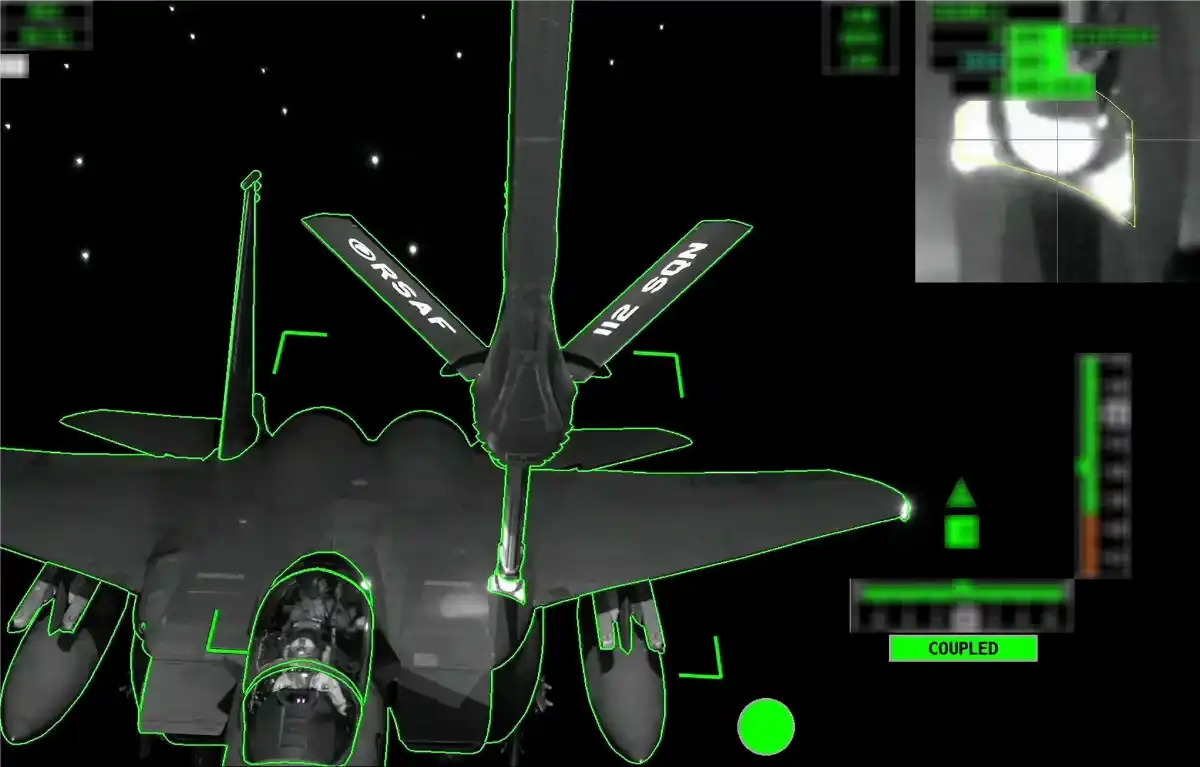
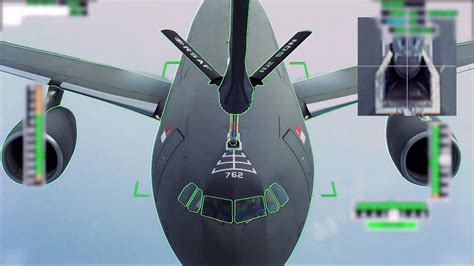
What Singapore has now certified is a system that transfers this responsibility to onboard automation. Once activated, the A3R system takes control of the boom, using computer vision, advanced electro-optical sensors, and real-time flight control algorithms to detect, track, and align with the receiver aircraft’s refuelling receptacle. Throughout the contact phase, the system maintains optimal geometry and safe separation without manual input.
This is not a partial automation or pilot-assist feature. It is a fully autonomous refuelling sequence, approved for operational use across both daytime and night missions and within an expanded flight envelope that reflects real-world combat support scenarios.
How the A3R System Changes Tanker Operations
From an operational standpoint, the implications are significant. Air-to-air refuelling missions often involve long hours, multiple receiver aircraft, and demanding conditions that can tax even the most experienced crews. Fatigue is a real and persistent risk. By automating the most technically demanding phase of the mission, A3R allows tanker crews to focus on mission management, airspace awareness, and safety oversight rather than continuous manual control.
The system demonstrated stable performance during certification trials in low-light conditions, turbulent airflow, and complex formation geometries. These are precisely the environments where human workload peaks and error margins shrink. Automation introduces a level of repeatability that human performance, however skilled, cannot always guarantee over extended operations.
Importantly, the human operator is not removed from the loop entirely. The system is designed with layered safety redundancies and oversight functions, ensuring that crews can monitor, intervene, or disengage automation as required. This balance between autonomy and control is one reason regulators were willing to grant full certification rather than a limited approval.
A Multi-Year Campaign Built on Operational Reality
The road to certification began in 2020 and relied heavily on Singapore’s frontline assets rather than test-only platforms. RSAF A330 MRTTs served as the tanker aircraft throughout the campaign, while operational F-16 and F-15 fighter aircraft acted as receivers. Hundreds of refuelling contacts were conducted to validate system performance under realistic conditions.
Flight testing took place across multiple regions, including European airspace and the Singapore training environment. This geographic diversity exposed the system to varying weather patterns, air traffic densities, and operational tempos. Engineers involved in the programme have emphasized that this breadth of testing was essential not only to refine the automation algorithms but also to prove the robustness of the boom’s control laws and fault-detection mechanisms.
The result is a capability that has been stress-tested in conditions that mirror real-world operations rather than idealized test scenarios.
The A330 MRTT as a Platform for Advanced Automation
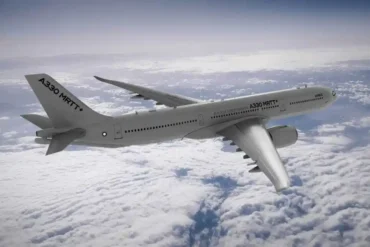
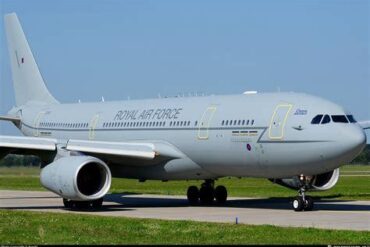
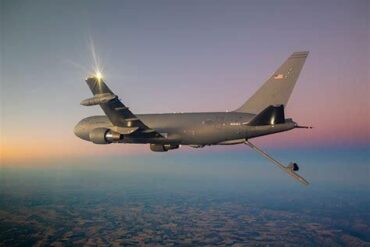
The success of A3R is inseparable from the maturity of the Airbus A330 MRTT itself. Based on the proven A330-200 widebody airframe, the MRTT has been extensively militarized to serve as a true multi-role platform. It can carry more than 100 tonnes of fuel without additional tanks, enabling long-range tanker missions while preserving full cargo and passenger capacity.
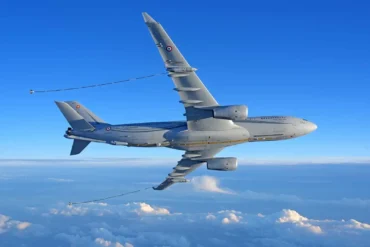
In its refuelling configuration, the aircraft combines a fly-by-wire refuelling boom with underwing hose-and-drogue pods and an optional fuselage refuelling unit. This allows it to support both receptacle-equipped and probe-equipped aircraft, from fast jets to large intelligence and surveillance platforms. The integration of A3R builds directly on this architecture, enhancing the existing boom system rather than replacing it.
Beyond refuelling, the A330 MRTT can transport up to 300 troops, carry more than 45 tonnes of cargo, or be rapidly reconfigured for aeromedical evacuation, complete with intensive care modules and medical staff. Its twin high-bypass turbofan engines provide intercontinental range and fuel efficiency, making it a cornerstone asset for sustained air operations.
Singapore’s Strategic Approach to Aerospace Innovation
Singapore’s role as the first certifying nation is no accident. The RSAF and DSTA have long pursued a strategy of early adoption paired with deep industrial collaboration. Rather than acquiring off-the-shelf systems, Singapore often positions itself as a co-developer, shaping capabilities to meet specific operational needs while influencing global standards.
This approach is evident in the A3R programme. By committing operational aircraft and crews to the certification effort, Singapore accelerated the transition from experimental technology to deployable capability. The payoff is tangible. 112 Squadron, which operates the RSAF’s A330 MRTT fleet, becomes the first unit worldwide to field a fully certified autonomous refuelling capability.
Singaporean defence leaders have been clear about the operational value. DSTA Chief Executive Ng Chad-son highlighted that certification enables continuous, around-the-clock use of automatic refuelling, directly reducing crew fatigue and enhancing mission safety. Chief of Air Force Major-General Kelvin Fan emphasized that the capability strengthens the RSAF’s ability to sustain air operations under compressed timelines, a critical factor for a small but highly networked air force.
Implications for the Global Tanker Market
For Airbus, the certification significantly strengthens the competitive position of the A330 MRTT. As air forces around the world face increasing operational demands with limited personnel pools, automation that safely reduces workload is becoming a decisive factor in procurement decisions. The A3R capability aligns with Airbus’ broader SMART MRTT vision, which seeks to integrate automation, connectivity, and decision-support tools across the tanker platform.
Analysts note that future air operations will likely involve a mix of crewed fighters, stealth aircraft, and unmanned systems operating from distributed bases. In such environments, the precision and consistency offered by automated refuelling could prove essential. By achieving first certification with Singapore, Airbus has effectively set a benchmark that competitors will now be measured against.
A Quiet Shift in the Future of Air Refuelling
Air-to-air refuelling has always been a force multiplier, extending range, endurance, and operational flexibility. What Singapore has now demonstrated is that this critical capability can evolve beyond manual execution without sacrificing safety or control. The certification of fully automatic refuelling on the A330 MRTT does not eliminate the human role. Instead, it elevates it, allowing crews to manage missions rather than wrestle with mechanics.
In the long arc of military aviation, such shifts often begin quietly before becoming standard practice. With this certification, Singapore has not only gained a tangible operational advantage but has also helped define the future of how air forces sustain themselves in the sky.