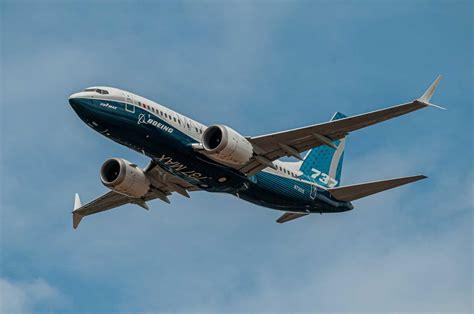
The Boeing 737 has shaped global aviation for more than half a century, serving as the backbone of short- and medium-haul travel and acting as one of the most commercially successful aircraft families in history. When the first 737-100 entered passenger service in February 1968, few could have imagined that the same basic fuselage would still be in production more than five decades later. Yet Boeing’s narrowbody strategy has long revolved around evolution rather than revolution, leading to a product line that has delivered more than 12,000 aircraft as of September 2025 and remains deeply entrenched in airline fleets across every continent.
The arrival of the 737 MAX was intended to be the next logical step in that lineage. Boeing aimed to challenge the Airbus A320neo, which had rapidly gained traction by offering airlines lower fuel burn and modernized engines without requiring a clean-sheet aircraft. The MAX program was designed to achieve the same goal: introduce a more efficient, competitive aircraft using as much of the existing 737 ecosystem as possible. That meant familiar cockpits, unchanged fuselage cross-sections, shared maintenance procedures, and production lines that could continue running at scale without major retooling.
Despite that strategy, the MAX family has endured one of the most turbulent product introductions in aviation history. The two accidents in 2018 and 2019, the global grounding, extensive scrutiny, and subsequent redesigns created a reputational crisis and regulatory labyrinth that Boeing is still working through. Against this backdrop, the remaining uncertified members of the family—the 737 MAX 7 and 737 MAX 10—have become critical elements of Boeing’s future. Their certification is not merely a bureaucratic milestone; it is a commercial, financial, competitive, and strategic necessity.
Unlocking a Massive Backlog and Protecting Airline Commitments
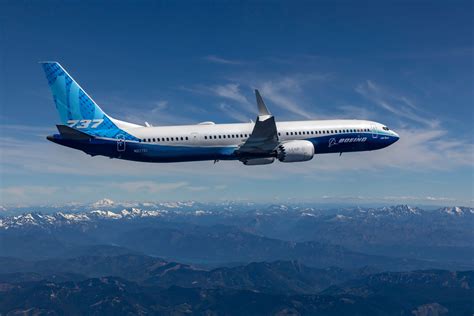
Airlines around the world are waiting for the MAX 7 and MAX 10, and those pending deliveries represent billions in revenue and long-term fleet planning commitments. Boeing holds approximately 1,200 orders for the MAX 10 and 332 for the MAX 7 as of mid-2025. This demand includes headline-making deals such as Ryanair’s 150 firm orders and 150 options for the MAX 10, as well as substantial commitments from Southwest Airlines, Pegasus, WestJet, and numerous long-standing Boeing customers.
These airlines have built network strategies, aircraft retirement schedules, and capacity growth plans around the assumption that these aircraft will arrive. When carriers plan a decade ahead, they rely on predictable delivery timelines—especially for narrowbody fleets, which operate the bulk of global routes. Prolonged certification delays risk undermining those plans. In the harsh arithmetic of airline economics, if deliveries fall too far behind, customers may defer orders, shift to alternative aircraft, or cancel outright.
For Boeing, that scenario would be catastrophic. The MAX 7 is foundational for Southwest’s fleet, and the MAX 10 is central to Ryanair’s growth model. Losing either would create not only revenue losses but severe reputational damage. Certification, therefore, is the key to converting paper orders into real deliveries—and ensuring long-term loyalty from some of the world’s largest carriers.
Preserving Economies of Scale and Production Efficiency
The 737 MAX program depends heavily on economies of scale derived from shared components, common assembly lines, and a vast network of suppliers that have produced parts for the 737 family for decades. By keeping the airframe largely unchanged and updating only the engines, avionics, and selected systems, Boeing was able to maintain the same industrial footprint that made the NG series so profitable.
This strategy only works when the family is complete. The MAX 7 and MAX 10 occupy the low- and high-capacity ends of the product spectrum, ensuring that Boeing can cover the full narrowbody market without forcing airlines to switch manufacturers. A balanced family strengthens supplier contracts, maintains predictable production volumes, and allows Boeing to spread research and development costs across thousands of units rather than a handful.
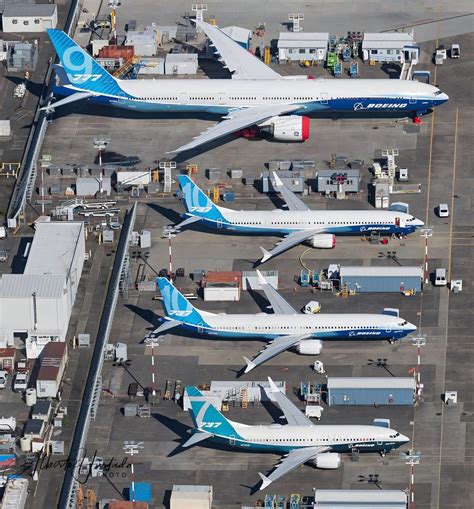
Every day these aircraft remain uncertified, Boeing’s ability to optimize production and deliver consistent volumes is constrained. Fully certifying all MAX variants allows Boeing to run its Renton production lines efficiently, negotiate component pricing from a position of scale, and preserve the cost structure necessary to offer competitive pricing in a fiercely contested market dominated by Airbus.
Matching Global Demand for High-Capacity, Fuel-Efficient Narrowbodies
Airlines are demanding aircraft that fly farther, burn less fuel, and carry more passengers. The MAX 10, in particular, is Boeing’s answer to growing demand for higher-density narrowbodies—a segment where the Airbus A321neo has become a runaway success. Without the MAX 10, Boeing loses the upper end of the narrowbody market entirely, ceding territory where Airbus is already delivering record-breaking orders.
The MAX 7 fills another niche: it offers a right-sized aircraft for high-frequency domestic routes and airports where runway length constraints limit larger variants. Carriers like Southwest have built their operations around the 737, and the MAX 7 is pivotal to maintaining network flexibility.
By aligning with these market realities, Boeing hopes to secure long-term placement of the MAX family across different route profiles, ensuring airlines can standardize training, parts, and maintenance while still optimizing capacity and range.
A Crucial Step in Restoring Public, Regulatory, and Industry Confidence
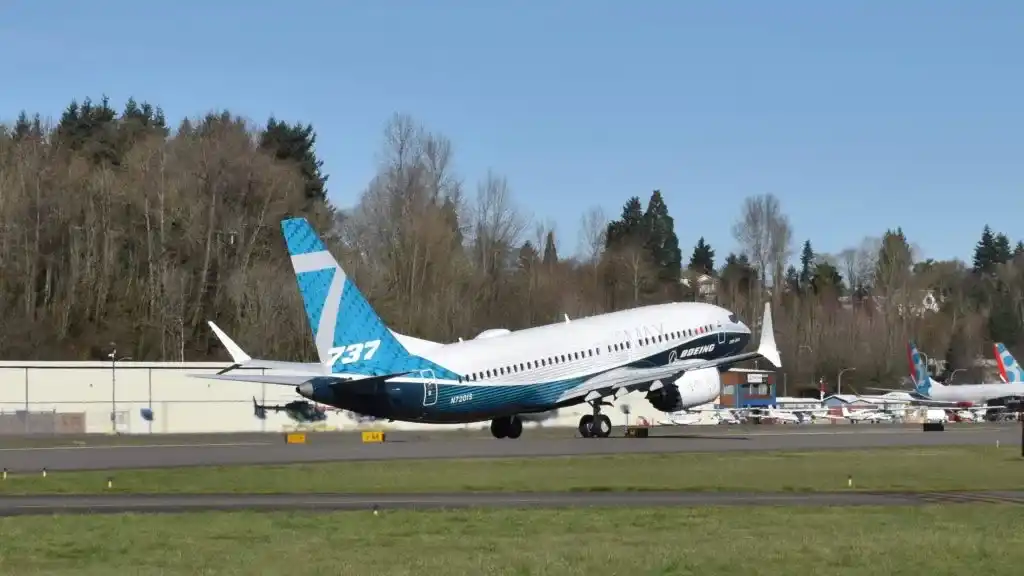
Following the two MAX accidents, Boeing faced a global reckoning. The grounding shook the aviation industry’s trust in certification processes and exposed weaknesses in Boeing’s internal oversight. Regulators worldwide responded with unprecedented scrutiny, demanding deeper evaluation, transparency, and system redesigns.
To rebuild credibility, Boeing introduced extensive changes—revised MCAS software, expanded flight-crew training, updated cockpit documentation, and more rigorous risk-assessment processes. The return of the MAX 8 and MAX 9 to commercial service has slowly rebuilt trust, but confidence will not be fully restored until the remaining variants complete their own certification journeys.
The extended delay of the MAX 7 and MAX 10 due to the engine anti-ice system redesign illustrates this shift in regulatory culture. The overheating risk identified by the FAA in dry-air conditions triggered operational limitations and forced Boeing to redesign the system entirely. Certification will only be granted once authorities verify that the redesign meets every safety requirement.
Successfully certifying the MAX 7 and MAX 10 would signal to regulators, airlines, and passengers that the MAX family is not only safe but the product of a new corporate philosophy—one that prioritizes transparency, compliance, and engineering discipline. Without this achievement, the shadow of the grounding will continue to linger.
Aligning With Evolving Regulatory and Global Market Requirements
Aviation today is governed by a more assertive regulatory regime than at any point in recent memory. Agencies such as the FAA and EASA are no longer willing to rely on historical precedent or manufacturer assurances; they demand rigorous testing and verifiable engineering documentation, especially for aircraft with redesign histories.
For Boeing, this means that every system—whether mechanical, electronic, or software-based—must withstand comprehensive evaluation. The redesigned anti-ice system represents more than a single fix; it is a symbol of how much certification culture has changed. Boeing now has to prove, line by line and component by component, that its designs meet the most conservative interpretations of safety requirements.
The MAX 7 and MAX 10 must pass through this enhanced certification environment to enter service. Delays have been frustrating, but they also represent an unavoidable shift in regulatory expectations. Meeting these standards is essential to operating globally, especially in emerging markets where regulators increasingly cross-reference the FAA and EASA before approving aircraft.
Long-Term Business Strategy and Competitive Positioning
The narrowbody market is expected to dominate commercial aviation for decades, representing the largest share of global aircraft demand. Boeing’s strategic future hinges on its ability to compete with Airbus in this segment. Without a fully certified 737 MAX family, Boeing risks losing not just orders but entire airline relationships that might switch to Airbus for reasons of availability, fleet consistency, and long-term planning.
The MAX 7 and MAX 10 help Boeing maintain a seamless product family that covers a wide spectrum of airline needs. They ensure that operators can remain within the 737 ecosystem, benefiting from common pilot type ratings, shared spare-parts inventories, and simplified maintenance structures. This operational continuity lowers costs for airlines and reinforces Boeing’s competitive position.
Certifying the MAX 7 and MAX 10 also buys Boeing time. The company must eventually produce a clean-sheet narrowbody to replace the 737 series entirely, but such a program requires enormous investment and technological leaps. With full MAX certification, Boeing can maintain revenue streams, satisfy airlines, and secure production stability while planning its next-generation aircraft.
Why Certification Is More Than a Regulatory Checkbox
At its core, Boeing’s urgent push to certify the MAX 7 and MAX 10 is driven by the convergence of revenue imperatives, customer loyalty, production efficiency, and global competition. Certification unlocks billions in aircraft deliveries, preserves Boeing’s access to critical market segments, strengthens airline partnerships, and demonstrates that the company has fully internalized the lessons of the MAX grounding.
Delays threaten not just deadlines but Boeing’s long-term credibility in the eyes of airlines who must choose aircraft based on reliability, availability, and trust. A complete MAX family allows Boeing to stabilize its operations, reassure the market, and compete on equal footing with Airbus. Without certification, the MAX program remains incomplete—and Boeing’s future narrowbody strategy remains exposed.
The fate of the MAX 7 and MAX 10 is far more consequential than two aircraft variants waiting for approval. It represents whether Boeing can fully reemerge as a trusted, disciplined, and competitive force in global aviation. The certification of these models is not the end of the company’s challenges, but it is the threshold that determines how confidently Boeing can shape the next chapter of aircraft design, production, and global airline partnership.