In April 2020, American Airlines made a decision that sent ripples through the aviation world: the early retirement of its fleet of Boeing 757-200 aircraft. Although this iconic narrowbody jet had served the carrier reliably for decades, the airline’s move was not as abrupt as it seemed. The decision reflected a calculated response to a confluence of economic pressures, fleet strategy, and the unprecedented impact of the global pandemic.
The Boeing 757’s Legacy at American Airlines
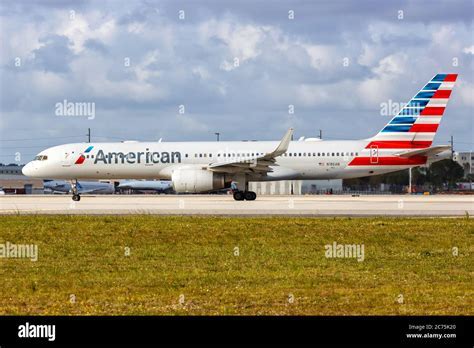
The Boeing 757-200 was introduced into the American Airlines fleet in 1989, following a substantial order placed before the aircraft even received its FAA certification. American’s initial commitment to the type was massive, with orders for both Pratt & Whitney PW2000 and Rolls-Royce RB211-powered variants. At its peak, American Airlines operated 177 Boeing 757-200s, making it one of the largest operators of the type globally.
The 757-200 carved a niche as a versatile workhorse for mainland domestic routes, Hawaiian services, select transatlantic flights, and Latin American destinations. It replaced aging types such as the Airbus A300B4-600R, McDonnell Douglas MD-11, and Boeing 727-200, offering superior range, efficiency, and capacity.
By 2007, the airline operated 142 active 757-200s, with the aircraft accounting for over 10% of all American Airlines flights in 2004. Yet, the winds of change were already blowing, signaling the eventual decline of the 757 within the fleet.
Economic Pressures and Fleet Simplification Strategy
Even before the pandemic, American Airlines had embarked on a mission to modernize and simplify its diverse fleet. The arrival of next-generation aircraft, including the Airbus A321neo, Boeing 737 MAX, and Boeing 787 Dreamliner, laid the groundwork for the phase-out of older, less efficient jets.
One of the core pillars of American’s fleet strategy was to minimize the number of cockpit types. By consolidating operations around the Airbus A320 family and Boeing 737 family, the airline could significantly reduce costs related to pilot training, maintenance, and logistics.
The 757-200, though admired for its performance and versatility, represented an operational outlier. Its cockpit configuration, maintenance requirements, and older airframe technology made it increasingly incompatible with American’s vision of a streamlined, efficient fleet.
The Pandemic as a Catalyst for Retirement
While the retirement of the Boeing 757-200 was inevitable, its timing was accelerated by the COVID-19 pandemic, which devastated global air travel. By March 2020, passenger numbers had plummeted by 96%, and airlines worldwide faced existential threats.
For American Airlines, the crisis provided an unexpected opportunity. With 66% of the global commercial fleet grounded and passenger volumes at historic lows—less than 50 million monthly passengers during the peak of the crisis—the airline could retire older aircraft with minimal disruption to its schedules.
In April 2020, American Airlines announced the retirement of five aircraft types:
- Airbus A330-200 (9 aircraft)
- Boeing 757-200 (34 aircraft)
- Boeing 767-300ER (17 aircraft)
- Embraer E190 (20 aircraft)
- Bombardier CRJ200 (15 aircraft)
The 757-200’s retirement, though accelerated by the pandemic, was consistent with American’s long-term fleet rationalization objectives.
Declining Operational Role of the 757-200
By 2019, the Boeing 757-200 had become a marginal player in American Airlines’ operations. Data revealed that the aircraft accounted for just 1.1% of all flights, a sharp decline from 6.1% in 2014 and 10.6% in the early 2000s.
The diminishing role of the 757 was partly driven by American’s decision to retire Pratt & Whitney-powered variants acquired through its Trans World Airlines (TWA) merger. These aircraft were later absorbed by Delta Air Lines, which continues to leverage the 757 platform extensively.
Moreover, the evolution of passenger expectations and the emergence of new-generation narrowbodies made the 757’s aging cabin, higher fuel consumption, and maintenance demands increasingly untenable.
Competitors Holding onto the Boeing 757-200
Despite American Airlines’ retirement of the 757-200, competitors like Delta Air Lines and United Airlines have maintained significant 757 fleets.
Delta operates:
- 88 Boeing 757-200s
- 16 Boeing 757-300s
United operates:
- 40 Boeing 757-200s
- 21 Boeing 757-300s
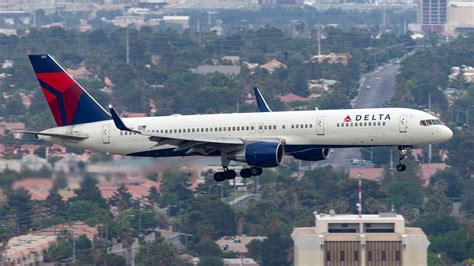
For Delta, the 757 remains indispensable. The aircraft’s unique capabilities, such as lie-flat seating for premium transatlantic routes, robust belly cargo capacity, and high-density configurations for leisure routes like Florida and Las Vegas, underscore its operational flexibility.
Delta offsets the higher operating costs of the aging fleet through its in-house maintenance arm, Delta TechOps, which possesses an extensive inventory of 757 parts. This approach, coupled with reduced capital expenses from fully owned aircraft, sustains Delta’s legacy 757 operations.
United, while still operating 757s, has shown a more cautious approach. The carrier retired “legacy” 757s in 2014, citing the complexities of managing two different engine types. United’s future fleet modernization includes the Airbus A321XLR, anticipated to bridge the gap left by the 757’s eventual phase-out.
Replacements and the Future of American Airlines’ Narrowbody Fleet
To fill the void left by the retired 757-200s, American Airlines has turned to modern, fuel-efficient aircraft:
- Airbus A321neo: 74 in service (+10 acquired from Alaska Airlines), 96 on order
- Airbus A321XLR: 50 on order
- Boeing 737 MAX 8: 77 in service, 23 on order
- Boeing 737 MAX 10: 115 on order
These replacements offer increased seating capacity, lower operating costs, and enhanced range capabilities, especially with the A321XLR, which targets the same “middle market” segment historically served by the 757.
However, challenges persist. Boeing’s delivery delays have cast uncertainty over American’s narrowbody expansion plans. With 138 aircraft on order from Boeing, the airline’s ability to meet post-pandemic demand hinges on the manufacturer’s production reliability.
Conclusion: A Strategic, If Bittersweet, Farewell
The retirement of the Boeing 757-200 from American Airlines marked the end of an era, reflecting both the relentless march of technological progress and the harsh economic realities of the aviation industry.
While the 757-200’s departure may evoke nostalgia among enthusiasts and frequent flyers, the move aligns with American’s overarching goals: fleet simplification, cost efficiency, and readiness for the future of air travel.
The 757’s legacy lives on, not only in the fleets of Delta and United but also in the design philosophies of next-generation aircraft like the A321XLR, which seeks to replicate—and surpass—the operational versatility of Boeing’s “Swiss Army Knife” of the skies.