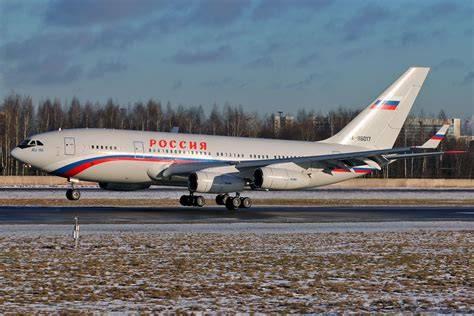
The Ilyushin Il-96 is one of the most unusual aircraft stories in modern aviation. Designed during the final years of the Soviet Union, the four-engine widebody jet was expected to become the foundation of Russia’s long-haul passenger aviation industry. Instead, it became a symbol of a lost era, struggling to compete against more efficient Western aircraft such as the Airbus A330, Boeing 767, and later-generation twin-engine widebodies.
For decades, the Il-96 appeared destined to disappear. Airlines abandoned it because of its high operating costs, limited production numbers, and aging technology. Russia itself shifted toward imported Airbus and Boeing aircraft as its commercial aviation industry declined after the collapse of the Soviet Union.
However, global events after 2022 created a surprising situation. International sanctions against Russia disrupted access to Western-built aircraft, spare parts, and critical aerospace technology. Suddenly, an aircraft that had been considered obsolete gained renewed attention. The Il-96 comeback was not driven by market demand or technological superiority, but by necessity.
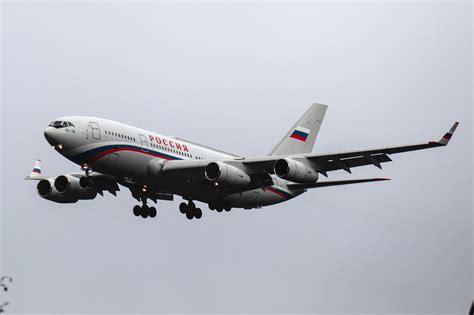
The aircraft’s revival represents a fascinating contradiction. The Il-96 is too inefficient to compete in normal global aviation markets, yet it remains valuable because Russia needs a domestically produced long-range aircraft. Its story highlights the challenges facing countries that attempt to maintain independent aerospace industries in an era dominated by global supply chains.
The Ilyushin Il-96: Russia’s Last Widebody Passenger Aircraft
The Ilyushin Il-96 first entered service in the early 1990s as Russia’s replacement for the older Il-62 long-range aircraft. Developed by the Ilyushin Design Bureau, it represented the Soviet Union’s attempt to create a modern widebody capable of competing with Western aircraft.
The aircraft featured a wide fuselage, advanced aerodynamic design for its era, and a passenger capacity suitable for long-distance routes. Unlike most modern long-haul aircraft, however, the Il-96 used a four-engine configuration, powered by four Aviadvigatel PS-90 engines.
At the time of its development, four engines were common among large passenger aircraft. Aircraft such as the Boeing 747, Airbus A340, and McDonnell Douglas DC-10 demonstrated that four-engine designs could dominate international aviation. But the industry quickly changed.
As engine technology improved, airlines increasingly preferred efficient twin-engine aircraft. Models like the Boeing 777, Airbus A330, and later the Boeing 787 Dreamliner offered similar or better range with significantly lower fuel consumption.
The Il-96 was therefore born into an aviation market that was moving in another direction.
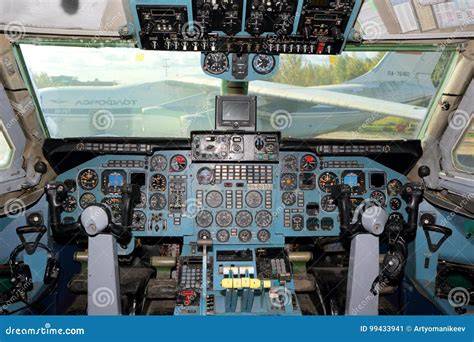
After the Soviet Union collapsed in 1991, Russia’s commercial aviation industry entered a difficult period. Domestic airlines faced financial problems, international competition increased, and Western aircraft became more attractive because of better economics and reliability.
Major Russian airlines, including Aeroflot, gradually transitioned toward Airbus and Boeing fleets. The Il-96 never achieved large-scale commercial success, with only a small number of aircraft produced.
Yet the aircraft never completely disappeared.
Why The Il-96 Survived After The Soviet Aviation Industry Collapsed
Although commercial airlines lost interest in the Il-96, the aircraft continued to serve important government roles. Russia maintained production through government contracts, particularly for VIP transportation and special missions.
The Russian government operates modified Il-96 aircraft through the Rossiya Special Flight Squadron, including aircraft used for transporting senior officials. One highly modified version serves as Russia’s equivalent of a presidential aircraft.
This government support allowed the Il-96 production line to remain technically alive even when commercial demand disappeared.
The aircraft also remained part of Cuba’s aviation history. Cubana de Aviación operated Il-96 aircraft on long-distance international routes, although maintenance challenges and limited access to parts reduced their availability.
Before 2022, the Il-96 was essentially a niche aircraft. It survived not because airlines wanted it, but because governments needed it.
Sanctions Created A New Role For The Il-96
The unexpected revival of the Il-96 began after Russia faced extensive international sanctions following its invasion of Ukraine in 2022.
Before sanctions, Russian airlines depended heavily on imported Airbus and Boeing aircraft. Companies such as Aeroflot operated large fleets of Western-built jets, while Russia’s planned domestic aircraft programs relied heavily on foreign technology.
The problem was that many modern Russian aircraft were not entirely Russian.
The Sukhoi Superjet 100, for example, used many Western components. The MC-21 narrowbody program also depended on foreign technology, including important systems and components. Even some upgraded Soviet-designed aircraft incorporated Western avionics.
Sanctions changed the situation overnight. Russia could no longer easily purchase new Airbus and Boeing aircraft, nor could it freely obtain many replacement parts.
The government responded by accelerating plans to produce domestic aircraft. These plans included the MC-21, SJ-100, Tu-214, and the Il-96.
The Il-96 suddenly gained strategic importance because it was already an existing Russian design capable of long-range operations.
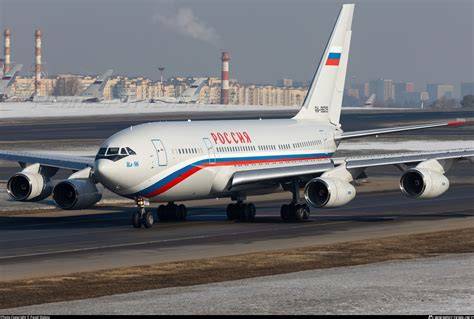
However, the aircraft’s revival was always complicated. The Il-96 was not competitive because of superior economics. It was attractive because Russia had limited alternatives.
The Problem With Reviving An Old Four-Engine Aircraft
The biggest challenge facing the Il-96 is that aviation technology has moved forward dramatically.
Modern long-range aircraft rely on highly efficient engines, lightweight composite materials, and advanced digital systems. Aircraft like the Airbus A350 and Boeing 787 can fly farther while burning much less fuel than older four-engine designs.
The Il-96’s four PS-90 engines create several disadvantages. More engines mean higher maintenance requirements, increased fuel consumption, and additional operational costs.
A Russian aviation engineer summarized the problem by noting that bringing back an old Soviet design means returning to technology that the global aviation industry has already abandoned.
The proposed Il-96-400M upgrade attempted to address these weaknesses. It featured a stretched fuselage, improved systems, upgraded avionics, and increased passenger capacity. The goal was to make the aircraft more competitive.
However, the project faced major obstacles.
The upgraded aircraft relied partly on imported components that became difficult or impossible to obtain after sanctions. Developing domestic replacements required time, money, and industrial capacity that Russia was already struggling to provide.
As a result, Russia began considering a less ambitious approach: producing the older Il-96-300 version instead.
Why Russia Is Returning To The Older Il-96-300
The decision to focus on the older Il-96-300 shows the difficult reality of Russia’s aviation strategy.
The Il-96-400M represented an attempt to modernize the aircraft for the commercial market. The Il-96-300 is closer to the original Soviet-era design and uses technology that Russia already understands.
Although less advanced, it is easier to manufacture without relying on foreign components.
Russia’s broader aircraft production goals have also been reduced. Early announcements suggested the country would produce hundreds of aircraft by 2030, including dozens of Il-96 aircraft. Later plans became much more conservative.
The current production target reportedly includes only a small number of Il-96 aircraft, mainly for government operations rather than airline service.
This change reveals an important point: the Il-96 is not returning as a competitor to modern widebody aircraft. It is returning as a strategic government aircraft.
No Major Airline Demand Exists For The Il-96
Despite the attention surrounding the Il-96 comeback, commercial airlines have shown little interest in operating new examples.
Airlines make fleet decisions based on economics. Fuel efficiency, maintenance costs, reliability, and passenger demand determine whether an aircraft succeeds.
The Il-96 struggles in every category compared with modern alternatives.
A new airline purchasing decision would almost certainly favor aircraft such as the Airbus A330neo, A350, Boeing 787, or 777X if those aircraft were available.
Even countries facing sanctions may have limited interest. Nations such as Iran, Cuba, Venezuela, and North Korea could theoretically consider Russian aircraft, but their aviation strategies often involve acquiring used Western aircraft rather than purchasing new Russian designs.
The Il-96 therefore occupies a very narrow market.
The Il-96 Comeback Is More Political Than Commercial
The unexpected return of the Ilyushin Il-96 is less about aviation economics and more about national independence.
For Russia, maintaining a domestic widebody aircraft capability has symbolic importance. Aircraft used by national leaders represent technological independence and national prestige.
Many countries attempt to operate domestically produced aircraft for government transportation. These aircraft are not always the most economical choices, but they demonstrate industrial capability.
The Il-96 fits this role perfectly.
It allows Russia to maintain a visible long-range aircraft program even while its commercial aviation sector faces serious challenges.
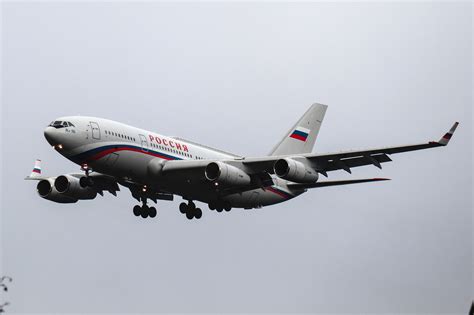
The aircraft’s future will likely involve very limited production rather than a true commercial revival. It may continue serving government agencies, military-related organizations, and specialized operators.
The Future Of The Ilyushin Il-96
The Il-96 has become an aviation survivor. It has outlasted the Soviet Union, survived the collapse of Russia’s commercial aircraft industry, and returned to the spotlight because of geopolitical changes.
However, its comeback should not be misunderstood.
The Il-96 is not experiencing a renaissance because airlines suddenly want four-engine aircraft again. It is surviving because Russia needs a domestically produced long-range aircraft and has limited alternatives.
The aircraft represents both engineering achievement and industrial difficulty. It demonstrates that an existing design can remain valuable decades after its introduction, but it also shows how difficult it is to compete in modern aviation without access to global technology networks.
The Ilyushin Il-96 comeback is therefore not the story of an outdated aircraft defeating modern competitors. Instead, it is the story of an aircraft refusing to disappear because history created a new role for it.
In commercial aviation, efficiency usually determines success. But in the world of geopolitics, technology independence and national prestige can sometimes keep even an old aircraft flying.