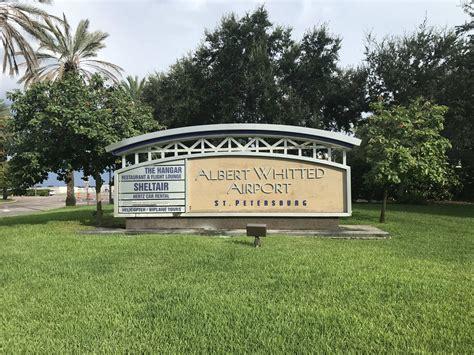
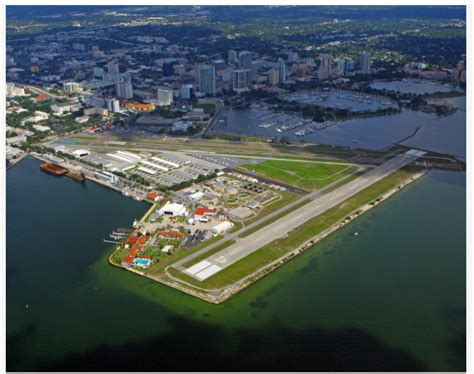
A 3,676-foot runway beside downtown St. Petersburg, Florida, hardly looks like the kind of infrastructure that could become a critical link in hurricane disaster response. Albert Whitted Airport is far too small for the heavy cargo aircraft normally associated with large-scale logistics, and its role in everyday aviation is centered on general aviation rather than scheduled airline service. Yet when hurricanes flood highways, close bridges, damage communications networks, and isolate communities, this compact airport can become an exceptionally useful hurricane relief hub.
The transformation is not the result of a major airport expansion or a sudden increase in cargo operations. Instead, Albert Whitted Airport has become valuable because an established aviation community has been connected to a specialized humanitarian organization, Sol Relief, which can rapidly organize aircraft, pilots, supplies, and volunteers for disaster missions. The airport provides the physical infrastructure, while the organization provides the coordination needed to turn that infrastructure into an emergency logistics network.
That distinction is important. Albert Whitted has not become a major airport in the conventional sense. It does not suddenly handle widebody freighters or enormous quantities of disaster supplies. Its importance comes from doing something that large logistics facilities cannot always do efficiently: putting small, fast aircraft close to communities cut off by a hurricane.
Why Albert Whitted Airport Is Valuable for Hurricane Relief
The first major advantage is location. Albert Whitted Airport, identified by the airport code SPG, sits immediately southeast of downtown St. Petersburg and occupies an unusual position within the Tampa Bay region. It is close to a major population center while also providing convenient access to destinations across Florida and, with appropriate planning and fuel stops, the Caribbean.
The Florida Department of Transportation classifies Albert Whitted as a regional general aviation reliever airport. That designation reflects its normal purpose: serving general aviation, business and corporate flying, flight training, recreational aviation, aerial sightseeing, medical aviation, and other operations that do not require a large commercial airport. The airport’s compact scale is therefore not an accident. It is part of what makes the facility useful to smaller aircraft.
Its primary Runway 07/25 measures 3,676 feet by 75 feet, or approximately 1,120 by 23 meters. The secondary Runway 18/36 is even shorter at 2,864 feet, or about 873 meters. Those dimensions are unsuitable for large commercial jets and heavy freighters, but they work well for the types of aircraft frequently used in emergency aviation.
That limitation becomes an advantage during disaster response. A relief mission does not necessarily require a 100-ton cargo aircraft. A medical team may need to reach an isolated town. Firefighters may need transportation after a highway is blocked. A community may urgently need communications equipment, food, medical supplies, generators, or other high-priority items. A smaller aircraft can carry those materials directly without requiring the infrastructure needed by a large freighter.
How Sol Relief Built a Hurricane Response Network
The airport’s physical characteristics explain only part of the story. The more important development has been the creation of an organization capable of using the airport’s existing aviation resources during a crisis.
Sol Relief emerged from the devastating 2017 hurricane season, when Hurricanes Irma and Maria caused extensive damage across the Caribbean and exposed the difficulty of delivering assistance to communities whose normal transportation systems had been disrupted. St. Petersburg pilot Jennifer Lockwood founded the organization after seeing the challenges faced by affected communities and the potential for local aviation resources to help.
Initially, the concept was relatively straightforward. Local pilots could use their aircraft to transport people and supplies to areas where conventional relief channels were struggling. Over time, however, the operation became considerably more sophisticated. What began with volunteer pilots developed into a structured humanitarian network involving aircraft owners, pilots, mechanics, volunteers, fundraising operations, supply coordination, and reconstruction programs.
According to the Friends of Albert Whitted Airport, the airport community has helped Sol Relief raise more than $2 million and support more than 100 emergency relief flights. The organization’s work has also extended beyond delivering immediate supplies. Its reconstruction efforts have included more than 160 roof repairs, four homes, and two community centers.
This is what changed Albert Whitted’s role. The runway itself did not become larger. The airport did not acquire a fleet of heavy transports. Instead, the people and organizations around it became better prepared to use existing aviation capacity when disaster struck.
Why Small Aircraft Can Be Faster Than Roads After a Hurricane
The real value of a small airport becomes obvious when the surface transportation network begins to fail.
A major hurricane can create a complicated transportation problem within hours. Floodwater can make roads impassable, bridges can close for safety reasons, traffic can become severely congested, and fuel supplies can become difficult to obtain. Even roads that remain technically open may become extremely slow because thousands of people and emergency vehicles are trying to use the same routes.
Aircraft operate differently. A turboprop does not need to follow the road network, cross every damaged bridge, or wait for flooded sections of interstate highways to reopen. If a suitable destination airport or landing facility remains operational, an aircraft can simply fly over the disruption.
Hurricane Ian provided a particularly clear example of this advantage. After the storm struck Southwest Florida, Sol Relief used Albert Whitted as a staging point for aircraft and personnel. According to reporting from St. Pete Catalyst, the organization conducted 38 flights carrying firefighters during the first week after Ian.
The time savings could be dramatic. Sol Relief’s Harris Ambush told the publication that when Interstate 75 was closed, a trip between St. Petersburg and Fort Myers by road could take seven or eight hours, while the same journey by aircraft could take approximately 40 minutes. In an emergency, that difference can affect how quickly firefighters, medical personnel, equipment, and other resources reach communities in need.
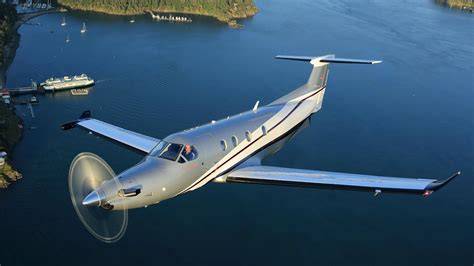
A Pilatus PC-12 illustrates the concept particularly well. Friends of Albert Whitted has highlighted PC-12 turboprops operating from the airport with approximately 1,800 pounds of cargo. That is tiny compared with the payload of a dedicated cargo aircraft, but payload is only one part of disaster logistics. Speed, range, runway performance, flexibility, and the ability to operate from smaller airports can be more important when the objective is to deliver a relatively small amount of critical material quickly.
The Airport’s Greatest Asset May Be Its Aviation Community
The runway is useful, but the airport’s most important disaster-response asset may actually be the people already operating around it.
Albert Whitted has an established ecosystem of pilots, aircraft owners, mechanics, flight schools, an FBO, and aviation businesses. These people normally support general aviation, business flying, training, and other everyday activities. During a major disaster, however, that existing network can become a pool of aviation resources that does not have to be created from scratch.
This matters because disaster relief requires much more than finding an available airplane. Someone has to determine what needs to be transported, identify where it should go, prepare the aircraft, load the supplies, coordinate the flight, communicate with people on the ground, and ensure that the mission fits changing weather and airport conditions.
Friends of Albert Whitted says Sol Relief can expand from a core group of roughly 30 people to more than 400 participants during a major response. That ability to scale is particularly important because hurricanes produce rapidly changing requirements. The first need may be emergency personnel, followed by medical supplies, food, communications equipment, building materials, or financial assistance for affected families.
Funding preparation is another part of the system. Sol Relief raises money before disasters occur so that resources can be deployed quickly afterward. The organization says advance preparation allows relief flights to begin within approximately 24 to 48 hours after a disaster.
That speed is difficult to achieve if an organization has to start fundraising, recruit pilots, locate aircraft, acquire supplies, and establish logistics only after a hurricane makes landfall. Preparation effectively turns a collection of independent aviation resources into an emergency-response capability.
The Hurricane Relief Hub Is Not Without Vulnerabilities
There is an obvious weakness in the Albert Whitted model: the relief hub itself is located in a hurricane-prone coastal city.
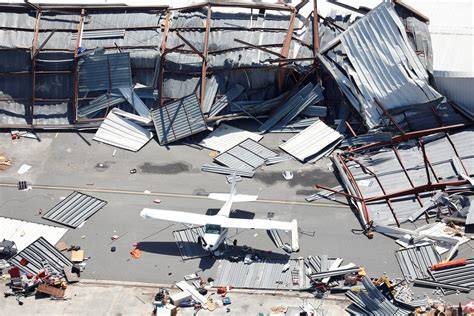
The airport’s experience during Hurricanes Helene and Milton in 2024 demonstrated the problem. Two major hurricanes affected the St. Petersburg area within roughly two weeks, bringing flooding and widespread damage. Albert Whitted was not isolated from those effects. Hangars and aircraft sustained damage, illustrating the uncomfortable reality that the infrastructure intended to support disaster response can itself become a disaster victim.
Yet Sol Relief continued its humanitarian work. Its 2024 annual report recorded more than $140,000 in essential supplies distributed during the response, along with a $46,400 microgrant program supporting 21 families in crisis.
That experience reveals both the strength and the limits of the model. Albert Whitted cannot replace a major seaport, reopen a damaged highway, or move hundreds of tons of food and construction materials. It is not designed to function as a conventional cargo hub.
Instead, its value is highly targeted. It can move relatively small quantities of urgent supplies and specialized personnel during the period when conventional transportation systems may be at their weakest. The airport becomes an emergency connector rather than a bulk logistics center.
Albert Whitted’s Role Across Florida and the Caribbean
The concept has also demonstrated that its usefulness is not restricted to one Florida hurricane.
Sol Relief’s 2023 annual report documented humanitarian operations in Fort Myers, Florida, the Big Bend region, and Abaco in the Bahamas. That geographic reach shows why the combination of a coastal general aviation airport and a coordinated relief organization can be more flexible than its physical size suggests.
For Caribbean communities in particular, aviation can provide an important connection when maritime or surface infrastructure is disrupted. Smaller utility aircraft can carry personnel and supplies to airports that would never be suitable for large cargo jets. They can also support missions where the quantity of cargo is less important than speed and accessibility.
The PC-12 and similar turboprops occupy a useful middle ground. They are faster and more capable over distance than many conventional light aircraft, while requiring substantially less runway and airport infrastructure than large commercial aircraft. That makes them particularly well suited to humanitarian missions built around regional airports.
Why Small General Aviation Airports Matter During Disasters
Albert Whitted demonstrates a broader principle about disaster aviation. Large airports will always be essential because they can receive major cargo aircraft, handle substantial passenger movements, and connect disaster zones with national and international supply chains.
But large airports are only one part of the transportation network.
Small general aviation airports can provide a different capability. They are often closer to population centers, support a large variety of aircraft, and can operate as flexible staging areas for organizations that need to move people or small cargo quickly. Their runways may be too short for heavy freighters, but that same infrastructure can be perfectly adequate for turboprops, business aircraft, helicopters, and other utility aircraft.
The difference is particularly important during the first days after a hurricane. Disaster response is often a race against time. Communities may not need an entire warehouse of supplies immediately; they may need a medical team, firefighters, communications equipment, emergency generators, or a small shipment of critical materials delivered right now.
A small aircraft carrying 1,800 pounds of urgently needed supplies can therefore have an outsized impact compared with its cargo capacity. It is not competing with a 747 freighter. It is solving a different problem.
The Future of Albert Whitted as a Hurricane Relief Hub
Albert Whitted Airport’s transformation since 2017 offers a useful example of how disaster-response capability can emerge without major physical expansion. The airport already had the runway, aircraft, pilots, businesses, and aviation infrastructure. Sol Relief added the organization and humanitarian mission needed to connect those resources.
More than 100 emergency relief flights, over $2 million raised, and extensive reconstruction efforts indicate how far the operation has developed from the informal volunteer response that followed the 2017 hurricanes.
As extreme weather repeatedly disrupts roads, bridges, ports, power systems, and communications infrastructure, this type of decentralized aviation network could become increasingly valuable. The most important lesson is not that every small airport should become a cargo hub. It is that airports designed for general aviation can possess an emergency capability that is easy to overlook until conventional transportation systems stop functioning.
Albert Whitted remains a small airport with short runways. Its aircraft cannot carry the enormous payloads handled by major cargo facilities, and its location also exposes it to the hurricanes it helps communities survive. But its strategic value comes from something different: an established aviation community, compact utility aircraft, rapid mobilization, and an organization prepared to coordinate them.
The runway was there long before the hurricane relief network. What changed was the ability to use that runway as part of a coordinated emergency system. When highways disappear beneath floodwater and bridges become impassable, a 3,676-foot runway can suddenly become a remarkably important connection between people who need help and those capable of delivering it.