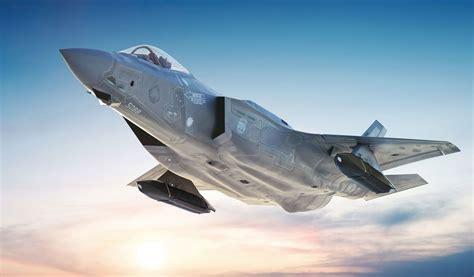
The US Air Force is considering one of its most technologically advanced fighter transitions at a location where nature has already demonstrated just how destructive it can be. Homestead Air Reserve Base (HARB) in southern Florida has emerged as the leading candidate to receive the Lockheed Martin F-35 Lightning II, replacing the 482nd Fighter Wing’s aging fleet of F-16 Fighting Falcons. On paper, the move makes considerable strategic sense. In practice, however, it means placing extremely expensive stealth fighters, specialized facilities, sensitive equipment, and classified mission infrastructure on a coastline with a history of catastrophic hurricane damage.
The proposed transition illustrates a growing reality for modern military planners: airpower infrastructure is now being designed around both strategic competition and climate resilience. The F-35 is dramatically more sophisticated than the F-16, and supporting it requires far more than simply delivering a new aircraft to an existing runway. Secure information systems, mission-planning spaces, advanced simulators, specialized maintenance facilities, protected weapons storage, engine support infrastructure, and resilient electrical systems all become part of the equation. At Homestead, those requirements collide directly with the realities of hurricanes, storm surge, extreme winds, and a vulnerable coastal environment.
The concern is not theoretical. Hurricane Andrew struck South Florida in August 1992 as a Category 5 storm and devastated Homestead’s military installation. Much of the base was severely damaged, forcing the 482nd Fighter Wing to relocate temporarily to MacDill Air Force Base. The event remains a powerful reminder that an airbase can be strategically indispensable while simultaneously being physically vulnerable. More than three decades later, the Air Force is considering putting its newest operational fighter technology there—but this time, it wants the infrastructure to be substantially tougher.
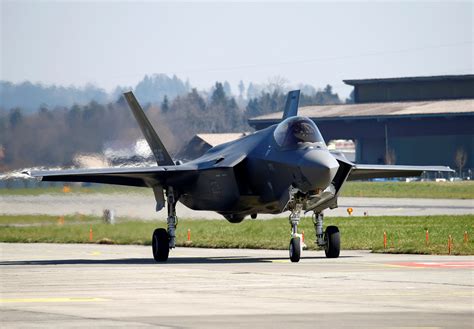
Why Homestead Is the Leading F-35 Candidate
The Air Force announced on May 8 that Homestead was the leading candidate for the 482nd Fighter Wing’s transition from the F-16 to the F-35 Lightning II. The decision is not yet the same as a formal basing announcement, but the choice reflects a broader modernization effort across the Air Reserve Component. Reserve and Air National Guard units are progressively moving away from older fourth-generation fighters as the F-35 becomes the centerpiece of American tactical airpower.
For the 482nd, the transition would represent a profound technological change. The F-16 remains an exceptionally capable fighter, but the F-35 introduces low-observable stealth, advanced sensors, sensor fusion, electronic warfare capabilities, and network-centric operations that fundamentally alter how a squadron operates. The aircraft is designed to detect, identify, share, and engage threats while maintaining a much lower radar signature than conventional fighters. That capability also creates an unusually demanding support ecosystem.
An F-35 base therefore cannot simply be treated as an F-16 base with newer aircraft parked on the ramp. Its mission systems depend on secure digital infrastructure, classified workspaces, specialized maintenance procedures, and sophisticated training equipment. The aircraft’s weapons and internal systems also bring additional security requirements. At Homestead, many of those capabilities would have to be introduced while existing infrastructure is simultaneously upgraded against extreme weather.
The price of modernization consequently extends well beyond the aircraft themselves. Simulators, information-technology networks, secure facilities, maintenance areas, power systems, hangars, and runway infrastructure all have to support the F-35 mission. Some of these facilities are particularly difficult to protect because they contain equipment that cannot simply be moved when a hurricane warning is issued.
Hurricane Andrew Changed the Calculation
Homestead’s history makes the proposed F-35 transition particularly interesting. When Hurricane Andrew tore across South Florida in 1992, the storm caused enormous damage to Homestead and surrounding communities. The base suffered such extensive destruction that normal operations could not continue, demonstrating the vulnerability of military infrastructure to an exceptionally powerful tropical cyclone.
Aircraft themselves present a comparatively manageable problem. When a major hurricane threatens, fighters can be flown to another installation outside the projected path. Pilots can reposition aircraft, and support personnel can relocate essential equipment. A hardened hangar, however, cannot evacuate. Neither can a buried fiber-optic network, a simulator building, or a permanent classified operations facility.
That distinction is central to the Air Force’s challenge. An F-35 could theoretically escape the storm in a matter of hours, while the infrastructure required to operate that F-35 remains exposed. Consequently, the proposed investment at Homestead is not simply about making buildings stronger. It is about ensuring that the base can recover rapidly and continue supporting military operations after a disaster.
The engineering requirements are substantial. Facilities expected to withstand a major hurricane must cope with sustained extreme winds, flying debris, wind-driven rain, power interruptions, and potentially prolonged disruption to surrounding infrastructure. Reinforced construction, impact-resistant glazing, strengthened doors, sealed roofs, protected utilities, and redundant power systems become operational necessities rather than optional upgrades.
Building an F-35 Base That Can Survive a Category 5 Storm
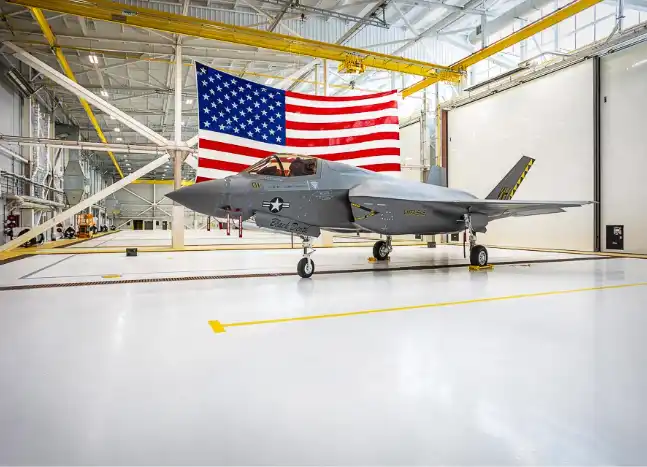
The proposed F-35 infrastructure would have to reflect the lessons learned from earlier storms. Hangars in hurricane-prone areas can incorporate aerodynamic design features intended to reduce wind pressure, while reinforced structural frames provide additional resistance against extreme loads. Rounded or carefully shaped building forms can help reduce vulnerable pressure points, and heavy-duty metal roof systems can provide greater protection than conventional construction.
Windows and other openings are another major concern. Standard glass can become a serious vulnerability when hurricane winds turn debris into high-speed projectiles. Laminated glass and impact-rated polycarbonate systems can reduce the likelihood that exterior openings become penetration points during a storm.
Hangar doors would also require specialized reinforcement. These enormous structures must remain functional despite tremendous wind forces, while sealed roof and wall systems help prevent wind-driven water from penetrating sensitive areas. The goal is not merely to prevent total structural collapse. It is to preserve the equipment inside so that operations can resume without a lengthy reconstruction effort.
The most sensitive F-35 facilities create an even more difficult engineering problem. Classified mission systems and information networks require controlled environments, stable power, and secure communications. Independent backup generators and protected electrical systems can help maintain climate control and critical functions when the commercial grid fails. Underground fiber-optic connections and hardened communications infrastructure can provide additional resilience.
This is particularly important because the F-35 is as much a digital combat system as it is a fighter aircraft. Its value depends heavily on the ability to collect, process, protect, and distribute information. Losing that infrastructure could effectively reduce the operational value of aircraft that physically survived the hurricane.
Why the Air Force Still Wants Homestead
If Homestead is so vulnerable, why not simply base the F-35 somewhere else? The answer lies in geography and the existing military ecosystem surrounding South Florida.
Homestead occupies a strategically valuable position at the southern end of the continental United States. Its location provides access to the Caribbean, Latin America, the Atlantic, and approaches toward the southern hemisphere. It is also close to a remarkable concentration of military aviation infrastructure. Moving the mission elsewhere could eliminate some hurricane exposure, but it would also sacrifice the geographic advantages that make Homestead useful in the first place.
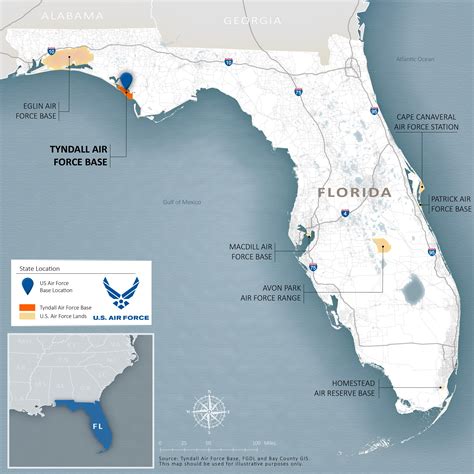
The base is positioned within reach of other major Florida military installations, including Eglin Air Force Base, Tyndall Air Force Base, MacDill Air Force Base, and numerous Navy and Marine Corps facilities. Together, these installations create an unusually dense military aerospace network. Aircraft based at one location can train, deploy, refuel, test weapons, and conduct joint exercises across the wider system.
Eglin is particularly important because of its enormous test and training complex. Tyndall is deeply involved in advanced fighter training, including F-35 and F-22 operations, while MacDill supports aerial refueling and major special operations activities. Further south, Naval Air Station Key West provides another important location for military aviation training.
This interconnected geography is one of the strongest arguments for investing in Homestead rather than abandoning it.
Florida’s Military Infrastructure Is the Real Strategic Asset
Florida’s importance extends well beyond Homestead. The state contains a dense network of military installations operated by the Air Force, Navy, Marine Corps, Coast Guard, and Space Force. Those bases support training, testing, logistics, air defense, special operations, weapons development, and expeditionary missions.
The state’s weather is another advantage. Florida generally provides substantially more opportunities for year-round flying than many northern locations. Fighter units can conduct training missions with fewer weather-related cancellations, helping them meet required flight-hour targets and maintain pilot proficiency.
The enormous military-controlled airspace around Florida is equally valuable. The Eastern Gulf Test and Training Range, extending across a vast area of controlled airspace, gives the Department of Defense room for complex aviation exercises and weapons testing. Different services can conduct activities involving air combat training, electronic warfare, and advanced weapons while operating within a highly established military framework.
For the Air Force, that means Homestead does not exist in isolation. It is one node in a much larger network. The F-35s could potentially train with other advanced fighters, operate alongside Navy and Marine aircraft, receive tanker support, and participate in joint exercises without requiring the creation of an entirely new military ecosystem elsewhere.
The 482nd Fighter Wing Brings More Than F-35s
The strategic value of Homestead also comes from the units already located there. The 482nd Fighter Wing shares the installation with the 367th Fighter Squadron and Special Operations Command South (SOCSOUTH). That combination makes modernization potentially useful to multiple missions rather than a single fighter squadron.
The 482nd has an established operational history. Its F-16s have supported overseas missions and air-policing activities, including NATO-related operations in Europe. Reserve fighter units can provide an important pool of trained personnel and aircraft for contingency operations, giving the Air Force additional capacity without relying entirely on active-duty formations.
The potential arrival of the F-35 would eventually transform that capability. The transition would not happen overnight. Pilots and maintainers would need extensive training, infrastructure would need certification, and the existing F-16 fleet would gradually be phased out. Achieving full F-35 combat capability would therefore take years, making the infrastructure investment a long-term decision rather than a short-term upgrade.
The presence of the 367th Fighter Squadron adds another layer. Although its transition schedule has not been established, future modernization could allow facilities built for the 482nd to support additional F-35 operations. That possibility makes today’s construction investment more valuable over the life of the installation.
Climate Resilience Is Becoming a Defense Requirement
Homestead’s situation reflects a much broader Pentagon challenge. Military bases are often located in strategically advantageous places that are also exposed to environmental hazards. Coastal installations can face hurricanes and storm surge, while other bases confront wildfires, flooding, extreme heat, drought, or rising sea levels.
A 2019 assessment identified Homestead among the Air Force installations facing significant climate-related risks. That recognition helped drive broader resilience planning across Florida. Rather than treating every base as a separate problem, the Department of Defense has increasingly approached resilience as part of maintaining the military infrastructure network as a whole.
The logic is straightforward. A base that cannot operate after a disaster becomes a strategic vulnerability, regardless of how valuable its location may be during peacetime.
For Homestead, resilience therefore becomes inseparable from modernization. If the Air Force is going to operate fifth-generation fighters there for decades, it has little reason to construct facilities that could become unusable after the next major hurricane. Spending more today can potentially prevent much larger operational and reconstruction costs later.
The F-35 Investment Is About More Than Fighters
The most interesting aspect of the Homestead proposal may ultimately be that the F-35 is only part of the story. The aircraft is the visible symbol of modernization, but the real investment is in the secure, resilient infrastructure required to operate fifth-generation airpower.
Modern classified facilities can support intelligence processing, mission planning, communications, and other functions beyond the fighter mission itself. That creates potential benefits for SOCSOUTH and other organizations operating from the installation. Secure digital spaces could support real-time information sharing for missions throughout the Caribbean and Latin America, while hardened communications systems could remain available even when conventional infrastructure is disrupted.
This transforms the project from a simple fighter basing decision into a broader investment in military command-and-control capability.
There is still a fundamental contradiction at the heart of the plan. The same coastal geography that makes Homestead strategically attractive also makes it physically vulnerable. The Air Force cannot eliminate that contradiction, so it is attempting to engineer around it.
Why Homestead Could Become a Model for Future Air Bases
The F-35 transition at Homestead, if approved, could become an important example of how the US military approaches future basing decisions. The Pentagon increasingly needs installations that can perform under pressure from both human adversaries and natural disasters.
A modern airbase cannot simply provide a runway and a collection of hangars. It must maintain secure networks, reliable power, protected facilities, resilient supply chains, and rapid recovery capabilities. For fifth-generation aircraft, these requirements are even more demanding because the aircraft’s combat effectiveness depends so heavily on its digital ecosystem.
That is why Homestead’s hurricane history may actually strengthen the case for modernization rather than eliminate it. The devastation caused by Andrew exposed vulnerabilities that cannot be ignored. A future F-35 installation designed with those lessons in mind could be significantly more resilient than the Cold War-era infrastructure it replaces.
The Air Force is therefore making a calculated bet. It is accepting the cost of building stronger facilities because abandoning Homestead would mean giving up a strategically valuable position within one of America’s most important military aerospace regions.
If the 482nd Fighter Wing ultimately receives the F-35, the transformation will represent more than the retirement of the F-16 in favor of a stealthier fighter. It will demonstrate how the future of American airpower is increasingly tied to resilient infrastructure. The aircraft may be able to outrun a hurricane by flying somewhere safer, but the mission cannot escape with it.
At Homestead, the Air Force is betting that with stronger hangars, hardened utilities, secure communications, resilient power, and modernized facilities, fifth-generation airpower can survive the very environment that once nearly destroyed the base. That is an expensive proposition—but for a strategically positioned installation at the southern edge of the United States, Washington appears willing to make the investment.