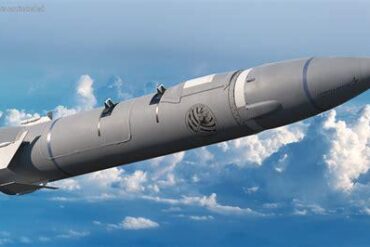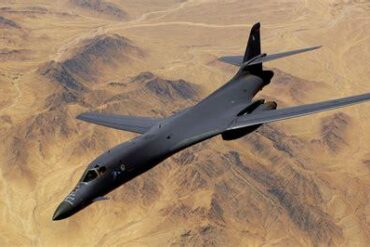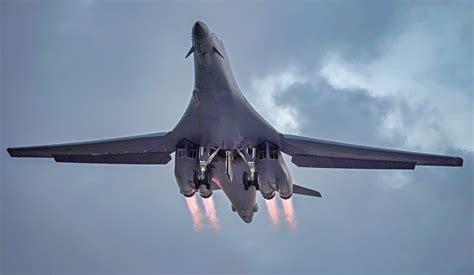
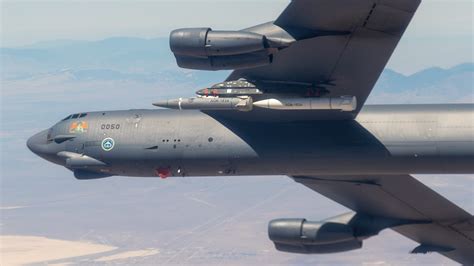
The United States Air Force is quietly reshaping the future of strategic strike warfare, and one of the clearest signals arrived in a blink-and-you-miss-it moment. In late April 2026, a short video released by Edwards Air Force Base showed a Rockwell B-1B Lancer carrying an AGM-183 ARRW hypersonic missile mounted beneath its fuselage. The footage lasted barely two seconds, yet for defense analysts and military planners, it carried enormous implications.
For years, the hypersonic ambitions of the United States appeared trapped between technological setbacks, spiraling costs, and growing competition from China and Russia. The AGM-183A Air-Launched Rapid Response Weapon, better known as ARRW, suffered highly publicized testing problems that raised serious doubts about whether the program would survive. The sudden appearance of the missile mounted on the B-1B suggests the opposite may now be happening. Rather than fading away, the program appears to be evolving into a broader operational capability centered on America’s heavy bomber fleet.
What makes the footage especially important is the aircraft carrying the weapon. Until now, the ARRW had primarily been associated with the aging but reliable Boeing B-52 Stratofortress. The B-1B’s emergence as a hypersonic launch platform signals that the Air Force may be building a far more flexible and survivable strike architecture than previously understood.
The B-1B was originally designed for Cold War nuclear penetration missions against the Soviet Union. Decades later, the bomber is being reinvented yet again, this time as a launch truck for some of the fastest conventional weapons ever created.
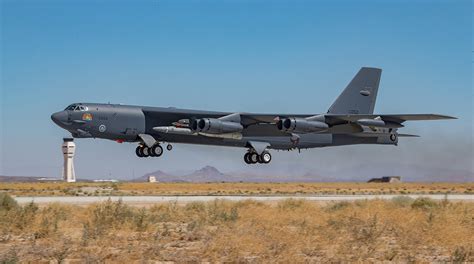
The B-1B Lancer’s Unexpected Return To Strategic Relevance
For much of the past decade, the B-1B existed in an awkward position inside the Air Force inventory. The bomber remained extremely capable, but its future looked uncertain as the stealthy Northrop Grumman B-21 Raider advanced toward operational service. Maintenance burdens, aging airframes, and high operational costs fueled repeated discussions about reducing the fleet.
Yet the geopolitical environment changed faster than expected.
The rise of China’s anti-access and area-denial strategy across the Indo-Pacific forced American planners to reconsider how long-range bombers would operate during a high-end conflict. Modern surface-to-air missile systems, dense radar networks, and long-range anti-ship weapons significantly complicate traditional air operations near contested zones. In response, the Air Force increasingly shifted toward stand-off warfare, where bombers launch devastating strikes from hundreds or even thousands of miles outside enemy defenses.
That strategic shift suddenly made the B-1B extremely valuable again.
Unlike stealth bombers that emphasize survivability through low observability, the Lancer delivers overwhelming payload capacity combined with exceptional speed. With a payload capability exceeding 75,000 pounds, the aircraft can carry more ordnance than any other bomber currently in the American inventory. Its ability to sustain high-speed penetration at low altitude remains impressive even by modern standards.
At sea level, the B-1B can exceed Mach 1.2, allowing it to reposition rapidly across massive operational theaters. That combination of payload and speed makes it uniquely suited for carrying oversized hypersonic weapons.
The Fiscal Year 2026 budget request further reinforced this direction by confirming plans to use the B-1B as a testbed for the new Load Adaptable Modular pylon system. The LAM pylon represents a major upgrade in bomber flexibility. Each mounting point can potentially carry either two 2,000-pound-class weapons or one larger 5,000-pound-class weapon, precisely the size category occupied by the ARRW.
This dramatically increases the bomber’s potential as a hypersonic missile carrier.
Understanding The AGM-183 ARRW Hypersonic Weapon
The AGM-183A ARRW is not simply another cruise missile. It represents a fundamentally different category of strike weapon designed to compress enemy decision-making timelines to near-impossible levels.
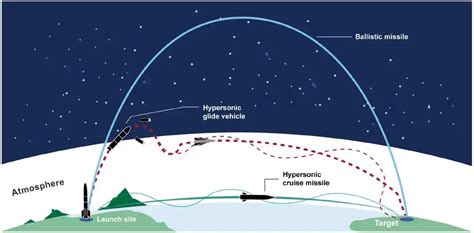
The missile uses a boost-glide architecture. After launch from a bomber, a powerful rocket booster accelerates the weapon to hypersonic velocity. Once sufficient speed and altitude are achieved, the glide vehicle separates and continues toward its target at speeds exceeding Mach 5.
Unlike traditional ballistic missiles, which follow relatively predictable trajectories, hypersonic glide vehicles maneuver throughout flight. This maneuverability complicates radar tracking and interception calculations for defensive systems. Existing missile defenses optimized for ballistic arcs struggle to adapt against weapons capable of abrupt directional changes at extreme speeds.
The operational logic behind the ARRW is brutally simple: strike critical targets before the enemy can react effectively.
Potential targets include:
- Mobile missile launchers
- Hardened command centers
- Integrated air defense nodes
- Strategic radar installations
- Time-sensitive leadership targets
- Naval assets operating in contested zones
The missile’s speed dramatically reduces warning time. Depending on launch distance and trajectory, opposing commanders may have only minutes to determine whether an incoming weapon carries a conventional or nuclear payload.
That uncertainty is one of the most controversial aspects of hypersonic warfare.
The United States insists the ARRW is designed as a conventional weapon. However, adversaries observing a hypersonic launch in real time may not possess enough information to make that distinction. In a crisis involving nuclear powers, the compressed decision window creates dangerous escalation risks.
This concern is not theoretical. Both China and Russia are aggressively pursuing dual-capable hypersonic systems capable of carrying either conventional or nuclear warheads. Military strategists increasingly fear that future conflicts involving hypersonic weapons could generate catastrophic miscalculations.
Why The Air Force Refuses To Abandon Hypersonic Development
Despite repeated testing failures earlier in the decade, the Air Force continues investing heavily in hypersonic research. The Fiscal Year 2027 budget includes approximately $345 million allocated toward ARRW development and associated technologies.
That persistence reflects a broader strategic reality.
American defense planners believe hypersonic weapons are becoming unavoidable components of future great-power warfare. China has already fielded advanced hypersonic glide systems such as the DF-17, while Russia continues showcasing weapons including the Kinzhal and Avangard systems. Whether these capabilities fully match official claims remains debated, but their existence alone alters military planning.
The United States fears falling behind in a weapons category increasingly viewed as essential for strategic deterrence.
Hypersonic weapons offer several operational advantages beyond raw speed. Their maneuverability, unpredictable trajectories, and reduced reaction times allow them to penetrate sophisticated air defense environments that might neutralize slower cruise missiles.
For the Air Force, integrating these weapons onto bombers like the B-1B and B-52 creates a highly flexible launch ecosystem. Bombers can remain airborne for extended periods, reposition dynamically, and threaten multiple target sets without requiring fixed launch infrastructure.
That flexibility matters enormously in the Pacific theater, where vast distances dominate military planning.
A B-1B operating from Guam, Australia, or even the continental United States could theoretically launch hypersonic strikes deep into contested regions without entering heavily defended airspace. This stand-off capability significantly reduces risk to aircrews while preserving offensive reach.
It also complicates enemy planning.
An adversary facing multiple airborne bombers armed with hypersonic weapons must account for rapidly changing launch positions and compressed engagement timelines. The psychological effect alone enhances deterrence.
The Dangerous Escalation Problem Behind Hypersonic Warfare
The growing fascination with hypersonic weapons often focuses on engineering triumphs and battlefield advantages, but the strategic dangers are equally profound.
Military history repeatedly demonstrates that technological revolutions can destabilize deterrence relationships before nations fully understand their consequences. Hypersonics may represent precisely that kind of destabilizing shift.
At Mach 5 or greater, national leaderships may have less than ten minutes to assess incoming threats. In some cases, warning times could shrink to five minutes or less. That leaves almost no margin for deliberation, verification, or diplomatic communication.
The danger intensifies when nuclear-capable states cannot immediately determine whether an incoming hypersonic missile carries a conventional or nuclear payload.
During the Cold War, ballistic missile warning systems already generated terrifying close calls. Hypersonic weapons compress timelines even further while adding maneuverability that complicates tracking and identification. In a rapidly escalating conflict, leaders could feel pressured into launching retaliatory strikes before confirming the nature of an attack.
This is why hypersonics are simultaneously viewed as revolutionary deterrence tools and deeply destabilizing weapons.
The Pentagon nevertheless sees continued development as strategically necessary. American officials argue that refusing to pursue hypersonic systems would effectively concede technological advantage to rival powers already fielding similar capabilities.
That strategic logic explains why programs like ARRW continue receiving support despite technical setbacks and political scrutiny.
Why The B-1B Remains Critical Until The B-21 Arrives
The Air Force’s continued reliance on the B-1B also reflects practical realities surrounding the transition to the B-21 Raider.
Although the B-21 is expected to become the future backbone of America’s bomber fleet, meaningful operational scale remains years away. Early production has begun, but building sufficient numbers to replace aging aircraft will take time.
The Air Force cannot afford a bomber capacity gap during that transition.
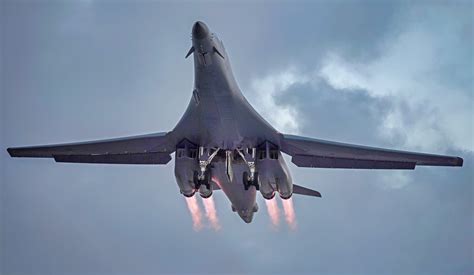
The B-1B therefore remains essential as a bridge platform capable of maintaining global strike readiness while newer systems mature. Even critics who emphasize the bomber’s maintenance challenges acknowledge its extraordinary operational utility.
The aircraft’s history demonstrates that versatility clearly.
Introduced into operational service during the 1980s, the B-1B evolved from a nuclear penetrator into the backbone of America’s conventional long-range strike force. During Operation Desert Fox in 1998, the bomber conducted precision strikes against Iraqi military infrastructure and suspected weapons programs. In the decades that followed, it became heavily involved in operations across the Middle East.
More recently, the aircraft reportedly participated in missions associated with Operation Epic Fury targeting Iranian-linked missile infrastructure and command facilities.
The bomber’s endurance, payload, and speed consistently made it one of the most flexible combat aircraft in the American arsenal.
Adding hypersonic weapons extends that relevance even further.
Instead of directly penetrating dense enemy defenses, future B-1Bs may operate as long-range arsenal platforms launching waves of advanced stand-off munitions from safer distances. That operational model aligns perfectly with modern Indo-Pacific strategy, where survivability increasingly depends on striking without entering hostile engagement envelopes.
The Future Of The B-1B In America’s Hypersonic Strategy
The B-1B Lancer is approaching the final phase of its operational life, yet the aircraft may still play one of its most strategically important roles.
The integration of hypersonic weapons transforms the bomber from a legacy Cold War platform into a launch system for next-generation warfare. That transformation highlights a broader shift occurring inside the Air Force itself. Rather than relying exclusively on stealth penetration, the service is embracing layered strike architectures built around speed, stand-off range, networked targeting, and distributed operations.
In that environment, the B-1B becomes more than just an aging bomber. It becomes a critical node inside America’s evolving deterrence structure.
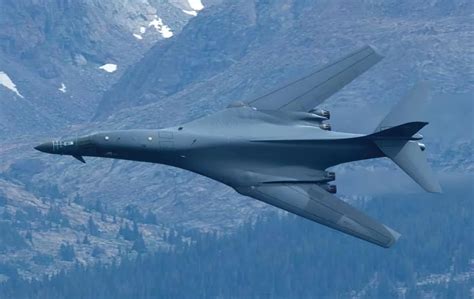
The brief Edwards Air Force Base footage may ultimately be remembered as an early glimpse into a much larger transition underway inside the US military. Hypersonic weapons remain controversial, expensive, and technologically demanding. Yet the determination to operationalize them has clearly not disappeared.
Instead, it is accelerating.
The B-1B’s ability to carry large numbers of oversized weapons, rapidly deploy across global theaters, and operate as a stand-off strike platform ensures the aircraft still has a significant role to play before retirement finally arrives. As the Air Force prepares for a future dominated by peer competition, the aging Lancer may unexpectedly become one of the most important bombers of the hypersonic age.