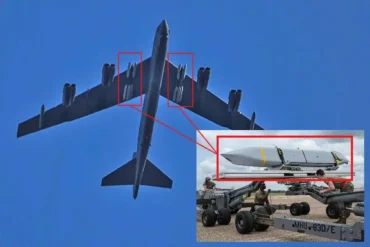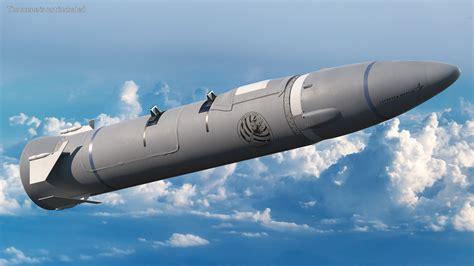
The AGM-183 ARRW (Air-Launched Rapid Response Weapon) once stood as a bold statement of American military innovation—a hypersonic missile designed to redefine air-to-ground strike capabilities. Developed by Lockheed Martin for the United States Air Force, the weapon promised blistering speeds beyond Mach 7, a futuristic boost-glide delivery system, and devastating precision. Yet by 2024, the program was abandoned, leaving behind a trail of technological lessons, political ambitions, and a race the U.S. sought but failed to win—at least with this prototype.
Genesis of the AGM-183A: From Concept to Contract
The narrative of the AGM-183A began in August 2018, when the U.S. Air Force committed a hefty $480 million to Lockheed Martin, targeting the creation of an air-launched hypersonic platform. At the time, the U.S. was falling behind China and Russia in the rapidly evolving field of hypersonic weaponry, and a renewed strategic focus on boost-glide vehicles placed the ARRW at the core of American aspirations.
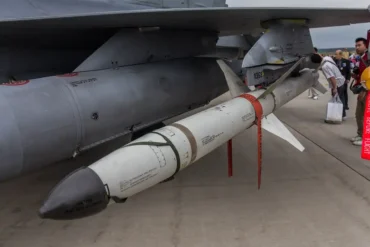
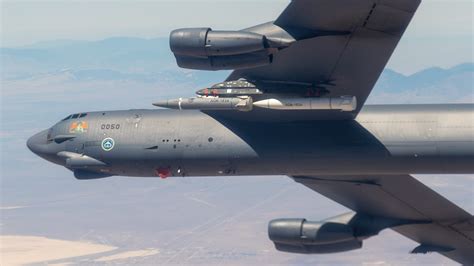
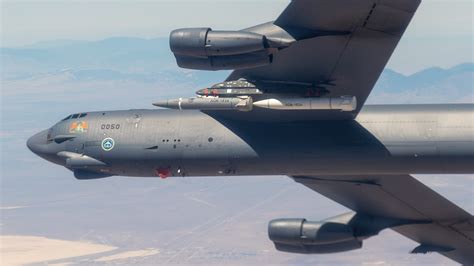
By June 2019, the first visible milestone emerged with a captive carry flight test from a B-52 Stratofortress, demonstrating that the airframe could accommodate the 22-foot-long missile. This crucial test marked the beginning of an intense sprint in defense innovation, further accelerated by the Trump Administration’s 2020 defense budget, which proposed a 23% increase in hypersonic development funding.
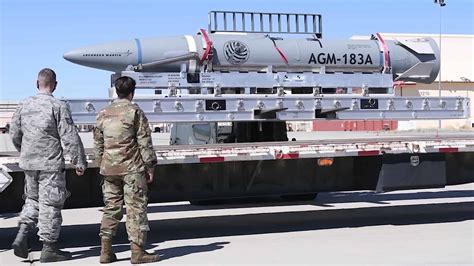
Momentum surged again in February 2020, when senior defense officials, including Under Secretary Michael D. Griffin, declared the U.S. “close at hand” to fielding a hypersonic weapon. It was around this time that President Donald Trump made the now-infamous remark referencing a “Super-Duper Missile” that was allegedly 17 times faster than any other U.S. missile—a statement many analysts linked to the AGM-183A, despite its real-world speed projections being closer to Mach 7–8.
Boost-Glide Engineering: Inside the Missile’s Mechanism
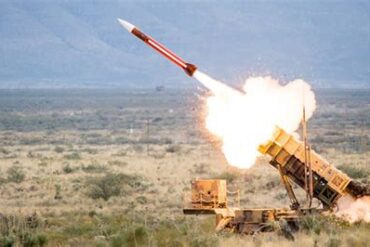
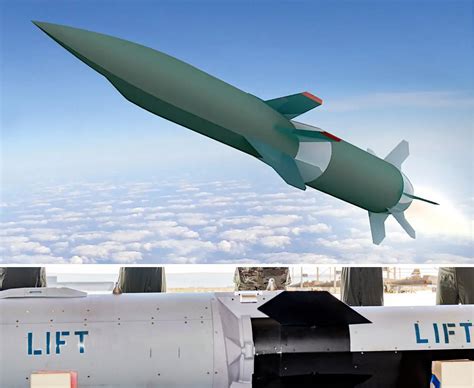
The AGM-183A represented a complex leap in missile architecture. Rather than following a traditional ballistic path, the ARRW used a two-phase process: a solid-fueled rocket booster launched the missile into the upper atmosphere at hypersonic speeds, after which the glide vehicle separated and navigated aerodynamically toward its target.
Theoretically, this design delivered multiple advantages:
- High maneuverability during glide phase
- Reduced detection due to low trajectory
- Extreme velocity, complicating interception
Initial ambitions claimed speeds up to Mach 20 (15,000 mph). However, defense insiders and independent analyses considered such numbers aspirational, settling estimates closer to Mach 7+, which remained sufficiently formidable. The missile’s operational range was planned at 1,000 miles (1,600 km), giving it global reach when paired with long-range launch platforms.
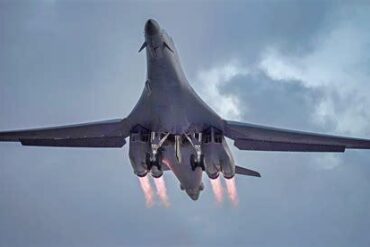
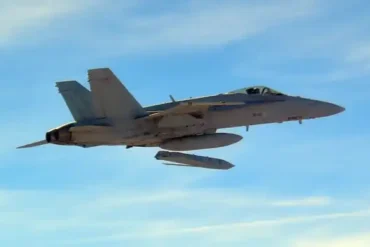
The ARRW was designed to be carried by multiple aircraft, including the B-1B Lancer, B-52H Stratofortress, F-15E Strike Eagle, and the future B-21 Raider. Notably, the B-1B could potentially carry up to 31 hypersonic weapons, leveraging both Common Strategic Rotary Launchers and external pylons.
The Troublesome Path of Testing
Despite promising engineering, the AGM-183 program faced a fraught and ultimately fatal testing record. Of the missile’s numerous test flights, many ended in failure, often before the glide vehicle even had the chance to perform.
- April 2021: A highly anticipated test at Point Mugu Sea Range failed to launch.
- July 2021: The second flight test also failed, this time due to rocket motor ignition failure.
- December 2021: The third test again ended in failure.
Congress responded with skepticism. In March 2022, the House moved to cut procurement funding in half, redirecting the remainder toward continued research and development. This was a clear signal: ARRW needed results.
Finally, on May 14, 2022, the missile completed its first successful flight test. Launched from a B-52H, the booster ignited properly, and the missile achieved speeds over Mach 5, officially qualifying as hypersonic.
Two more successful tests followed:
- July 12, 2022: Another successful boost and separation.
- December 9, 2022: The first All-Up-Round (AUR) test from Edwards AFB. Unfortunately, sensor failure prevented confirmation of terminal performance.
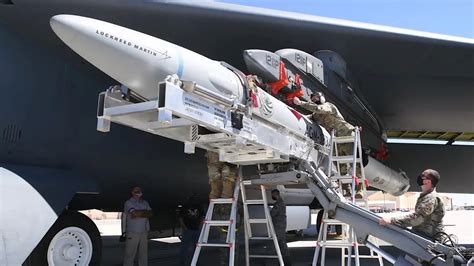
But the pattern of instability continued. On March 13, 2023, another test failed. Although two final tests in August and October 2023 were described by the Air Force as providing “valuable new insights,” concrete proof of consistent success remained elusive. Even a seemingly complete end-to-end launch from Andersen AFB on March 17, 2024 left key performance details undisclosed.
Fiscal Dead-End: The Cancellation of ARRW
The decisive blow came on March 29, 2023, when Andrew Hunter, Assistant Secretary of the Air Force for Acquisition, formally informed Congress that the AGM-183A program would not proceed. The only remaining activities would be two final AUR test flights, purely to harvest data for future hypersonic initiatives.
The Fiscal Year 2025 budget confirmed the program’s demise. Released on March 11, 2024, it allocated no funds for either continued development or procurement. Despite Lockheed Martin’s readiness to enter low-rate production—announced as recently as November 2023—the program had already run out of time and congressional patience.
The estimated price tag also played a role. The Congressional Budget Office noted that a 300-unit production run would cost $5.3 billion total, while a limited 100-unit run would raise the per-unit cost to $18 million, pushing the ARRW dangerously close to being economically unjustifiable.
Strategic Implications and Legacy
Despite its cancellation, the ARRW effort leaves behind a trove of knowledge crucial to the next generation of U.S. hypersonic systems. It confirmed several hard realities:
- Hypersonic glide vehicles are far more complex than initially expected.
- Test infrastructure, such as range sensors and tracking systems, must evolve to keep up with the speed of these platforms.
- Software integration, target acquisition, and onboard data systems must be hardened to withstand thermal and dynamic stress at hypersonic velocities.
Moreover, the ARRW revealed the tension between political urgency and engineering readiness. Pressures to demonstrate parity with rivals like China’s DF-ZF or Russia’s Avangard pushed the program faster than its technology could stabilize.
The Air Force has shifted its focus to other systems, such as the Hypersonic Attack Cruise Missile (HACM) and developments under DARPA’s Hypersonic Air-breathing Weapon Concept (HAWC)—platforms that promise sustained flight and greater control compared to ARRW’s ballistic-like glide model.
Conclusion: ARRW’s End Marks a Turning Point
The AGM-183 ARRW represents more than just a cancelled missile. It is a cautionary tale of ambition clashing with reality in the high-stakes world of next-generation warfare. While it may not have delivered a deployable weapon, it did deliver invaluable experience, bridging the conceptual gap between Cold War-era speed fantasies and the grim technical truths of 21st-century missile dynamics.
Its legacy now lives on—not in arsenals, but in blueprints, telemetry logs, failed launches, and the renewed understanding that hypersonic supremacy is not about rushing ahead, but about staying the course with eyes wide open to complexity, cost, and consequence.