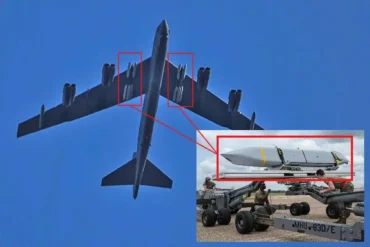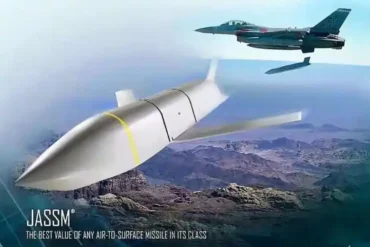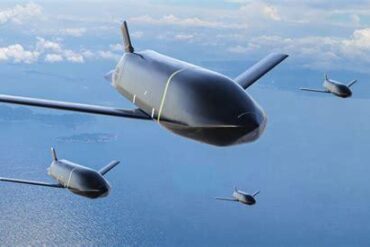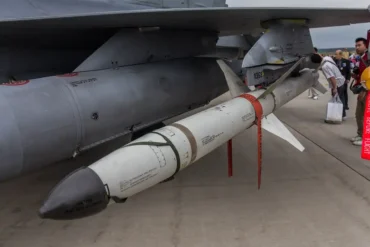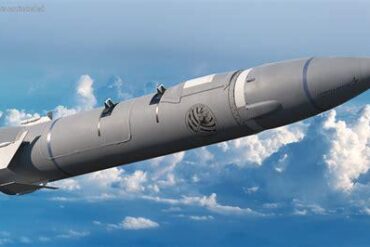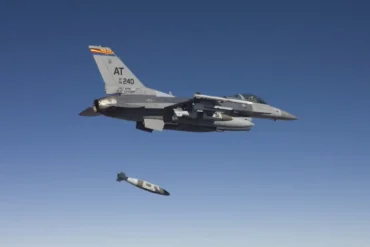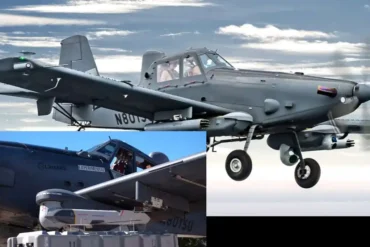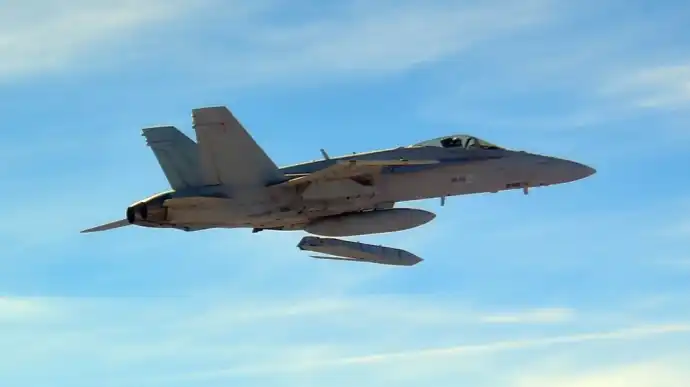
The F/A-18 Hornet and its advanced variants have been integrated with the AGM-158 JASSM (Joint Air-to-Surface Standoff Missile), a cutting-edge long-range cruise missile designed for precision strikes against high-value targets. This combination enhances the Hornet’s offensive capabilities, allowing it to engage enemy defenses without entering heavily fortified airspace.
JASSM Capabilities
The AGM-158 JASSM is a stealthy, air-launched cruise missile built for deep penetration strikes. It provides the F/A-18 with an exceptional ability to engage strategic assets from standoff distances.
Range and Precision
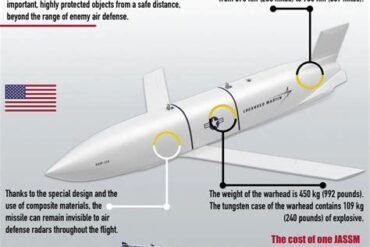
The JASSM is engineered for high-precision targeting with a maximum range exceeding 360 km. Its low-observable (stealth) design ensures minimal radar cross-section, allowing it to bypass enemy air defenses effectively.
Warhead and Destructive Power
The missile carries a 1,000-pound (450 kg) penetrating blast-fragmentation warhead, optimized to destroy hardened structures, including bunkers, communication centers, and heavily fortified enemy installations. The warhead ensures maximum lethality while minimizing collateral damage.
Countries Operating F/A-18 with JASSM
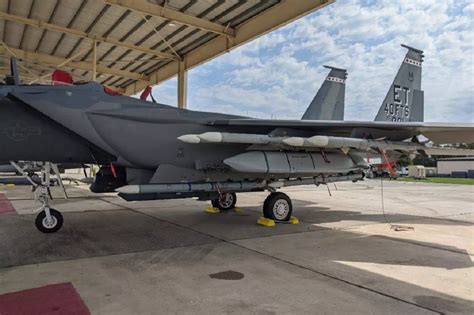
Several nations have integrated the JASSM with their F/A-18 fleets, enhancing their strategic strike capabilities.
Australia’s JASSM Integration
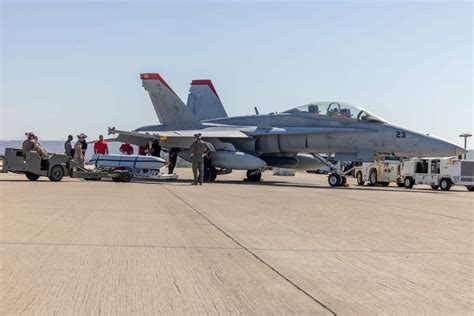
In 2006, Australia signed a $300 million contract to equip its F/A-18 Hornets with the JASSM. By 2009, these missiles were fully operational, significantly enhancing Australia’s ability to neutralize high-value enemy targets from extended distances.
- Objective: To conduct precision strikes against strategic military targets while remaining beyond the reach of enemy air defense systems.
- Future Plans: The JASSM is expected to be integrated into F-35 fighters, further strengthening Australia’s offensive reach.
Finland’s Mid-Life Upgrade (MLU 2) Program
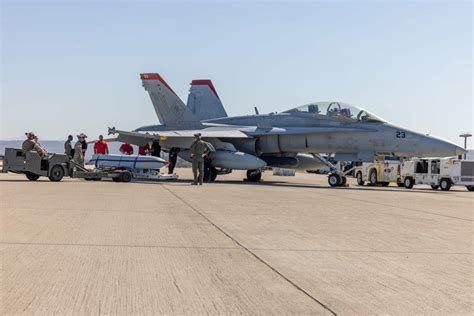
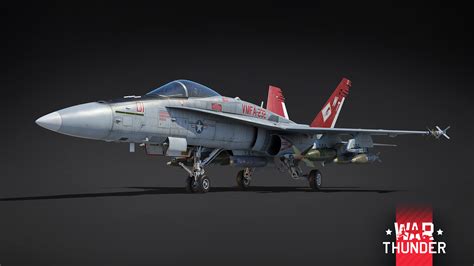
Finland began testing the JASSM on its F/A-18C Hornets in 2018 at the U.S. Naval Air Weapons Station China Lake. The trials validated the missile’s long-range strike capability, proving its effectiveness in real-world combat scenarios.
- Testing Focus: Ensuring that mission-planning systems and avionics were fully compatible with the JASSM.
- Operational Outcome: The successful trials confirmed that Finnish Air Force F/A-18Cs could launch and guide the JASSM accurately to pre-designated targets.
Technical Integration
Integrating the JASSM into the F/A-18 Hornet requires substantial hardware and software modifications to ensure seamless compatibility.
Mission Systems and Weapon Interfaces
The Hornet’s avionics and mission systems must be updated to support JASSM targeting and launch protocols. For example:
- Finland’s MLU 2 program introduced significant avionics enhancements, enabling real-time communication between the missile and aircraft systems.
- Software upgrades allow for mid-flight targeting adjustments, ensuring precision strikes even in dynamic battle conditions.
Multirole Flexibility
The F/A-18 Hornet features nine external hardpoints, allowing it to carry JASSM alongside air-to-air and air-to-ground munitions. This ensures that the aircraft retains its multirole versatility, capable of both air superiority and long-range strike missions.
Advanced F/A-18 Upgrades Related to JASSM
Boeing’s “Silent Hornet”
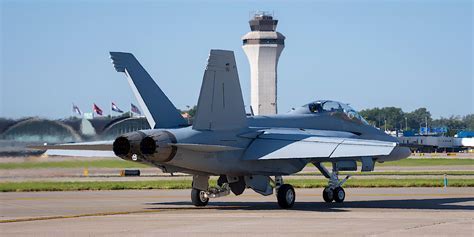
Boeing has proposed a stealth-enhanced variant of the F/A-18, known as the Silent Hornet, to further enhance its JASSM compatibility.
- Features include enclosed weapon bays and conformal fuel tanks, reducing radar cross-section.
- Extended range capabilities allow for deeper penetration into enemy airspace.
Engine Enhancements
The F414 engines powering the F/A-18 have been upgraded for improved acceleration and fuel efficiency. This enhancement increases the aircraft’s ability to deploy JASSM at higher speeds, improving mission effectiveness.
Performance in Combat Exercises
Operational exercises have demonstrated that JASSM-equipped F/A-18s provide a significant battlefield advantage.
Fire-and-Forget Capability
The JASSM employs advanced guidance systems, allowing for fire-and-forget operations. This means pilots can launch the missile and immediately maneuver to evade enemy retaliation.
Real-World Tests
- Finnish Air Force trials emphasized the JASSM’s ability to engage targets from standoff distances, reinforcing its strategic effectiveness.
- Simulated combat scenarios showed that F/A-18 pilots could strike targets deep inside enemy territory without exposing themselves to air defense systems.
Conclusion
The integration of the AGM-158 JASSM with the F/A-18 Hornet significantly enhances its precision strike capability. With successful implementations in Australia and Finland, the Hornet-JASSM combination is a proven asset for modern air forces, enabling long-range, low-risk engagements against high-value targets.
FAQ
1. What makes JASSM a valuable addition to the F/A-18 Hornet?
The JASSM provides the F/A-18 with stealth capabilities, long-range precision, and a high-explosive warhead, making it ideal for destroying enemy infrastructure while avoiding radar detection.
2. Which countries currently operate the F/A-18 with JASSM?
Australia and Finland have successfully integrated the JASSM into their F/A-18 fleets, with Australia utilizing it for long-range deterrence and Finland validating its performance through extensive testing.
3. How does the F/A-18 support JASSM compared to other aircraft?
The F/A-18 Hornet features a multirole design with advanced avionics, allowing it to deploy JASSM effectively while carrying additional air-to-air and air-to-ground munitions. This ensures combat versatility and enhances mission success rates.