In an age when time has become the ultimate luxury, traditional private jets—while fast and convenient—are no longer sufficient for elite travelers demanding both exclusivity and unprecedented speed. Imagine reducing a 15-hour transpacific flight to under three hours. The hypersonic private jet is poised to turn this science-fiction fantasy into a transformative reality, redefining the very fabric of global travel.
At the forefront of this radical shift is a concept known as “The Paradoxal”, a sleek, visionary aircraft proposed by Charles Bombardier, the grandson of the legendary Canadian aerospace pioneer. Far beyond incremental improvements in jet performance, the Paradoxal aims to pierce the stratosphere, offering a private aviation experience that borders on space tourism, all while shattering the boundaries of current flight durations.
From Los Angeles to Sydney in Less Than 3 Hours
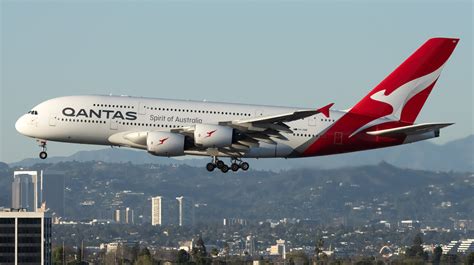
Consider the present benchmark: Qantas Flight QF12, operated by an Airbus A380, takes off from Los Angeles International Airport (LAX) at 23:40 and touches down in Sydney nearly 15 hours later. Despite the A380’s engineering marvel and in-flight luxury, even the most optimized private jet from Paramount Business Jets—featuring aircraft like the Gulfstream G700 or Dassault Falcon 10X—can only save travelers an hour or two on this route.
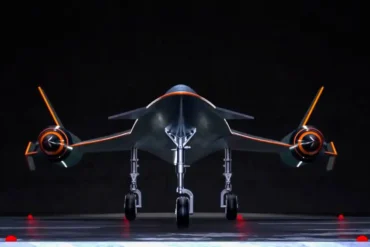
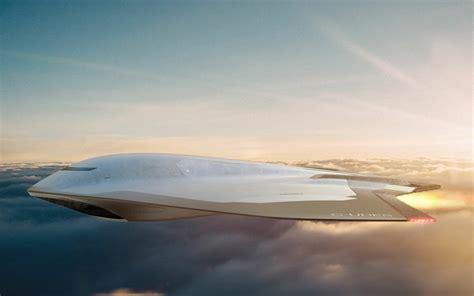
Enter the Paradoxal. This futuristic jet doesn’t aim to shave off a few hours; it aims to obliterate current travel times entirely. Leveraging blended-wing-body (BWB) design, hypersonic propulsion, and near-space cruising altitudes, the Paradoxal promises to fly passengers from Los Angeles to Sydney in under three hours. That’s a speed well beyond Mach 5, entering the rarefied world of hypersonic flight.
Engineering the Impossible: Hypersonic Propulsion and Thermodynamic Challenges
To reach such velocities, the Paradoxal incorporates a two-stage propulsion system centered on Rim-Rotor Rotary Ramjet Engines (R4Es). Initially, these engines push the aircraft to Mach 3.0 while ascending to 60,000 feet using air-breathing propulsion. At this point, liquid oxygen is injected into the engine system, transforming it into a rocket engine, thereby accelerating the aircraft to hypersonic speeds beyond Mach 5.0.
However, hypersonic travel isn’t just about speed. At velocities five times the speed of sound, air friction becomes a violent thermal adversary. To mitigate extreme heat buildup, the jet relies on a technology originally tested by NASA—the Long Penetration Mode (LPM). This system channels compressed air along the aircraft’s leading edges, cooling surfaces and managing thermal expansion during high-speed cruise.
This innovation is further enhanced by retractable fins that deploy or hide based on atmospheric resistance levels, especially during ascent and descent phases, when the aircraft’s surfaces are most vulnerable.
Design and Interior: A Flying Wing Reimagined for the Ultra-Wealthy
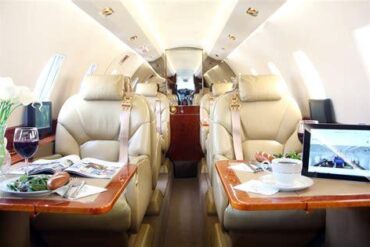
Beyond propulsion, the Paradoxal features a blended-wing-body—a stark departure from conventional tube-and-wing architecture. This design provides not only aerodynamic advantages but also allows for a revolutionized passenger experience. The expansive interior would abandon the traditional aisle-and-seat layout in favor of theater-style seating, offering panoramic views of both Earth and the edge of space.
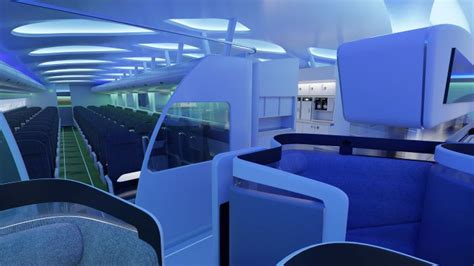
This reconfiguration isn’t merely aesthetic. The large open area provides space for g-force mitigation technology, including reclining seats and intelligent harness systems to manage the powerful acceleration and deceleration forces of hypersonic travel. Although the precise configuration is yet to be finalized, the goal is clear: make hypersonic speed compatible with civilian comfort.
Still, as NASA aerospace engineer Rebecca Farr points out, the most efficient suborbital G-flight paths may not be comfortable for everyone. “That would be a problem for trajectory analysts to solve,” she admits. Comfort and safety must evolve hand-in-hand with speed.
A Fusion of Global Innovation
The Paradoxal is more than a Canadian concept. It draws upon international aerospace expertise, from Université de Sherbrooke in Quebec to NASA laboratories in the United States. This cross-border collaboration has enabled the jet to integrate cutting-edge materials science, cryogenic propulsion systems, and flight dynamic simulations into a cohesive vision of next-generation air travel.
Much like other advanced concepts from Bombardier’s vast portfolio—of which there are reportedly hundreds—The Paradoxal is not intended for immediate production. Instead, it serves as an inspirational framework, inviting the aerospace industry to leap beyond sonic ceilings and innovate without compromise.
A New Class of Aircraft: Hypersonic Private Jets vs. Ultra-Long-Range Jets
Let’s compare the Paradoxal with the most capable private jets currently available:
- Gulfstream G700: Max speed Mach 0.925, range ~7,500 NM
- Dassault Falcon 10X: Max speed Mach 0.925, range ~7,500 NM
- Bombardier Global 8000: Max speed Mach 0.94, range ~8,000 NM
- Boeing BBJ 787: Max speed Mach 0.85, range ~9,945 NM
- Paradoxal Hypersonic Jet: Hypothetical max speed Mach 5.5+, range limited only by thermal and fuel constraints
While today’s ultra-long-range jets stretch their legs across the globe, none can collapse the physical boundaries of time the way a hypersonic vehicle can. If realized, the Paradoxal wouldn’t merely compete—it would render existing benchmarks obsolete.
Passenger Experience at the Edge of Space
Flying at hypersonic speed is more than transportation—it’s an aesthetic and visceral experience. As the jet reaches the stratosphere, passengers would glimpse the curvature of Earth, a view historically reserved for astronauts. The aircraft’s panoramic windows and upward-tilted seating would allow for breathtaking visuals of the starscape, merging the thrill of suborbital flight with the indulgence of private aviation.
This introduces a novel paradigm in luxury travel: not merely arriving first, but arriving transformed. The psychological and emotional impact of seeing Earth from this height may well become the most elite feature of all.
Challenges Ahead: Regulation, Trajectory, and Feasibility
Despite the promise, hurdles remain. Hypersonic flight paths, especially those entering near-space altitudes, would require new air traffic control frameworks, cross-border agreements, and revised aviation regulations. Current infrastructure—from airport design to international aviation law—is built around subsonic assumptions.
Furthermore, material fatigue at extreme temperatures, safety during emergency scenarios, and sound pollution from sonic booms represent major engineering and policy challenges. These factors will likely keep the Paradoxal in the conceptual phase for years, if not decades.
Nevertheless, if history has shown us anything, it’s that visionary ideas often begin as improbable sketches. Concorde, once dismissed as unrealistic, changed air travel for decades. The Paradoxal, with its elegant silhouette and thermodynamic genius, may well become the Concorde of the 21st century—only exponentially faster.
Conclusion: The Paradoxal as a Symbol of a New Era
The hypersonic private jet is not merely an advancement in aviation technology—it is a statement about the future of mobility, luxury, and time. The Paradoxal may never carry passengers in its current form, but it already serves a vital purpose: provoking thought, sparking ambition, and inviting us to question what’s possible.
In a world where global business, political diplomacy, and personal indulgence demand faster-than-ever mobility, hypersonic private jets stand not as fantasies, but as inevitable evolutions. From LA to Sydney in three hours? It’s no longer a matter of if—but when.