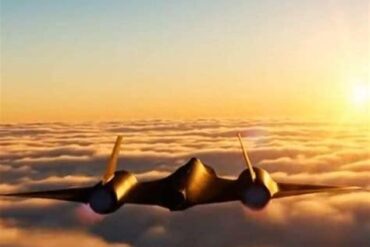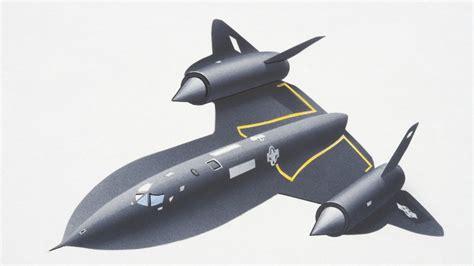
Few aircraft command as much reverence as the SR-71 Blackbird, a marvel of aeronautical engineering that shattered expectations and records alike. Developed during the height of the Cold War, this jet was designed for one specific purpose: strategic reconnaissance at speeds and altitudes that no adversary could match. With its sleek, titanium-clad body and aggressive silhouette, the SR-71 didn’t just look fast—it defined supersonic surveillance.
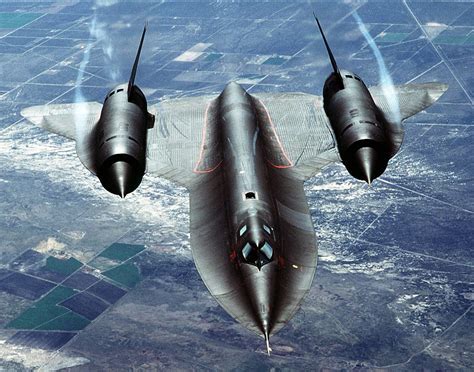
Built by Lockheed Martin’s legendary Skunk Works division, the SR-71’s entire philosophy centered on velocity and altitude. Yet, in the midst of its Mach 3 headlines and awe-inspiring acceleration, lies a seldom-discussed question: How slow can the world’s fastest jet actually fly? This is not a trivial curiosity. Understanding this lower threshold is critical to grasping the full operational envelope of the Blackbird.
Speed Demon with a Hidden Skill: Flying Slowly
At its core, the SR-71 Blackbird was optimized for high-speed, high-altitude missions. It typically cruised at Mach 3.2, translating to about 2,300 mph. At this velocity, it could outrun missiles and interceptors, rendering most threats obsolete. But despite its reputation for blistering speed, the aircraft had to slow down significantly for safe landings, refueling, or surveillance operations at lower altitudes.
A well-documented anecdote involving U.S. Air Force Major Brian Shul and Reconnaissance Systems Officer Walt Watson reveals that during a ceremonial flyover request in England, they managed to fly the SR-71 at just 160 knots (184 mph). While this figure might not seem impressive compared to its record-breaking speeds, it’s a remarkable display of control, considering the Blackbird’s aerodynamic profile and powerplant configuration.
Lockheed Martin’s Cold War Masterpiece
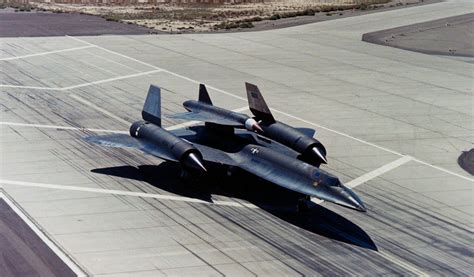
Lockheed Martin’s development of the SR-71 was cloaked in secrecy and urgency. The jet was born in a world where reconnaissance satellites were in their infancy, and real-time intelligence gathering was both perilous and essential. First flown on December 22, 1964, the Blackbird was the successor to the A-12 Oxcart, an even more classified program.
The team at Skunk Works, led by Clarence “Kelly” Johnson, was tasked with building an aircraft that could fly higher and faster than anything else while evading radar detection. The project pushed the boundaries of metallurgy, with over 85% of the airframe constructed from titanium. Traditional aluminum couldn’t withstand the heat generated at Mach 3—surface temperatures reached 600°F or higher.
Unlike most jets, the SR-71 expanded during flight due to extreme thermal expansion. This is why the Blackbird leaked fuel on the ground—it wasn’t fully sealed until it reached operating temperatures.
The Heart of the Beast: Pratt & Whitney J-58 Engines
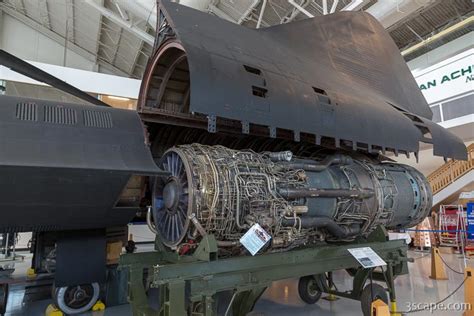
The SR-71’s propulsion system is a technological marvel. Its twin Pratt & Whitney J-58 engines were not just powerhouses; they were adaptive, versatile, and finely tuned for high-speed performance. Each J-58 engine could operate in two distinct modes:
- Turbojet mode for low-speed operation such as takeoff, climb, and landing.
- Ramjet-like mode during high-speed cruise, where the engine bypassed the compressor to allow air to flow directly into the afterburner.
These engines produced 34,000 pounds of thrust each, enabling the aircraft to maintain speeds over Mach 3. Unlike traditional engines that lose efficiency at extreme speeds, the J-58 grew more effective the faster it went.
Still, it’s a testament to Lockheed’s design that the SR-71 could also function at slow speeds. Operating at 160 knots was an engineering triumph, demanding careful throttle control, precise manipulation of flight surfaces, and coordinated engine management. Slowing down an aircraft built to blaze through the stratosphere without stalling or compromising stability required an extraordinary degree of skill from its pilots.
Aerodynamics That Challenge Slow-Speed Flight
The SR-71’s form followed function. Its long, pointed nose, chined fuselage, and swept-back delta wings were designed for supersonic cruise, not subsonic maneuvering. These aerodynamic features reduced drag and optimized airflow at high speeds but made low-speed operations inherently unstable.
Moreover, the aircraft’s massive forward momentum and weight distribution, paired with limited flap surface area, meant that slowing down too much could lead to critical stall conditions. Pilots were trained extensively in simulators to prepare for approach and landing procedures, where they had to balance altitude, speed, and engine thrust with surgical precision.
The SR-71’s Speed Legacy: Not Just About Going Fast
Though most attention remains fixed on the Blackbird’s record-setting velocity—like its 1976 record of 2,193.167 mph, still unbeaten by any air-breathing manned aircraft—the lower end of the speed envelope is equally impressive. The ability to operate at vastly different airspeeds gave the SR-71 operational flexibility unmatched by its contemporaries.
From its slow crawl during in-flight refueling operations to calibrated descents into airbases with runways designed to withstand the jet’s intense braking requirements, the SR-71 had to be just as agile and responsive in slow-speed regimes as it was at full throttle.
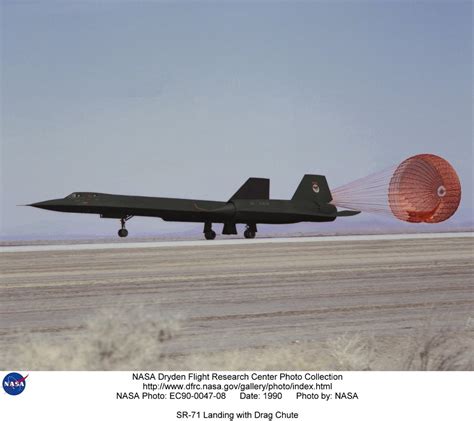
The aircraft deployed a drag chute upon landing to assist with deceleration. It also required long runways with specially trained ground crews and maintenance protocols. Every aspect of its operation—fast or slow—was a choreography of precision, power, and planning.
Slow Flight in High-Stakes Situations
There were missions where the SR-71 had to lower its speed intentionally. While high-speed flight offered protection, specific intelligence-gathering missions demanded slower, lower-altitude flight profiles to capture detailed imagery or avoid radar detection via terrain masking. During these scenarios, the SR-71 demonstrated its capability to remain airborne at speeds typically outside its optimal range, further validating the depth of its design.
Despite the risks, pilots maintained control even during these non-standard configurations. This versatility made the SR-71 more than a speed machine—it was an adaptable reconnaissance platform, able to adjust to real-time mission demands with confidence.
A Speed Spectrum Like No Other
No other aircraft before or since has encompassed such a wide speed spectrum. From 160 knots to over 2,100 mph, the Blackbird’s flight regime proves that being the fastest doesn’t mean sacrificing control at the slowest speeds. In a sense, the SR-71’s legacy isn’t just that it could go fast—it’s that it could do everything in between without compromise.
As a Cold War icon, a symbol of innovation, and an eternal benchmark for aviation excellence, the SR-71 continues to captivate both enthusiasts and engineers alike. From the thunder of its afterburners igniting over Edwards Air Force Base to the delicate ballet of its touchdown on a sun-soaked runway, the Blackbird proved one thing with certainty: true greatness lies in mastering every phase of flight—not just the flashy parts.
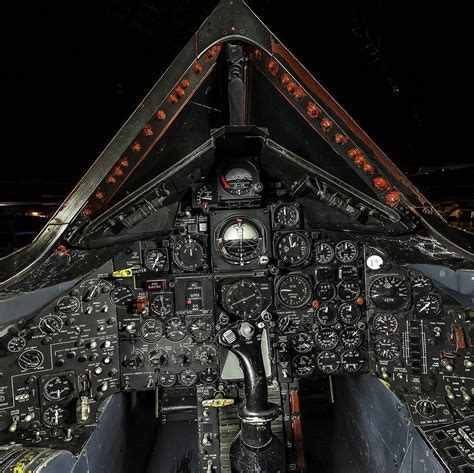
Conclusion: When Speed Isn’t Everything
In the story of the SR-71 Blackbird, it’s tempting to focus solely on its Mach 3+ exploits and uncatchable prowess. But its real brilliance shines through in the quieter, slower moments—when it showed it could defy expectations even when decelerating. The Blackbird’s ability to fly as slow as 160 knots may not be as flashy as its world records, but it is a profound statement of engineering mastery.
From skimming the edge of space to gliding over cheering airshow crowds, the SR-71 was more than just fast. It was complete.