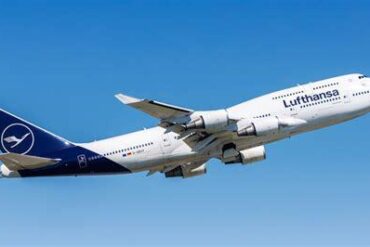
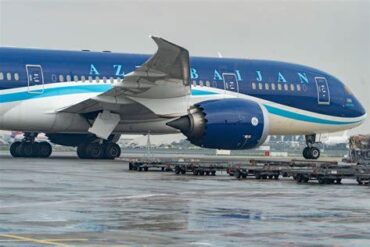
The Boeing 747-8 is more than just a marvel of aeronautical engineering—it’s a speed demon cloaked in elegance. While its iconic humpback silhouette is globally recognized, fewer people realize just how fast this widebody giant truly is. Designed at the crossroads of maximum payload capacity and long-haul efficiency, the 747-8 pushes the boundaries of subsonic speed in commercial aviation.
The Queen’s Final Form: A Pinnacle of Aerodynamic Power
When the 747-8 entered service, it wasn’t just a stretch of the beloved 747-400—it was a refined, technologically optimized powerhouse. The aircraft boasts a cruise speed of Mach 0.86, equivalent to 659 mph (1,061 km/h). This is not only the fastest cruise speed of any Boeing commercial aircraft but also rivals the pace of many military transport aircraft. Its sheer size—76.3 meters (250 ft 2 in) in length—doesn’t seem to hinder its speed; instead, it leverages its size through optimized wing design and state-of-the-art engines.
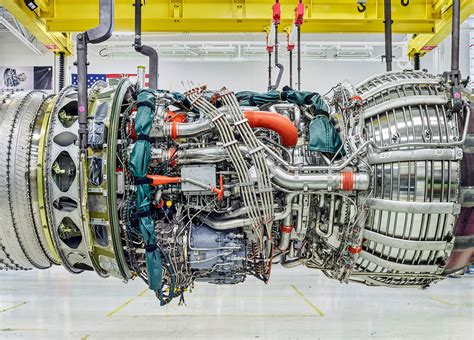
Boeing equipped the 747-8 with General Electric GEnx-2B67 engines, which generate 66,500 pounds of thrust each. These engines are a variant of those powering the 787 Dreamliner but fine-tuned for a heavier, high-capacity airframe. Advanced composite materials, refined winglets, and a smoother nose profile collectively contribute to superior aerodynamics, enabling the aircraft to maintain high cruising speeds efficiently over long distances.
Engineered for Long-Haul Dominance
The 747-8 isn’t just about speed; it’s about sustained high-speed performance over intercontinental distances. Its range of 13,650 km (7,370 nautical miles) means it can fly from Hong Kong to New York or Frankfurt to Buenos Aires without stopping. The ability to cover such great distances at nearly 90% the speed of sound gives airlines an edge in scheduling and turnaround.
The key to this long-range capability lies not only in raw thrust but also in fuel efficiency and aerodynamic refinement. Boeing reduced drag through redesigned wingtips and implemented more fuel-efficient engines, giving the aircraft a 16% improvement in fuel economy compared to its predecessor, the 747-400.
Test Pilot Insights: Power Meets Grace
Veteran Boeing test pilots like Curt Gottshall and Kirk Vining have described the 747-8 as “surprisingly nimble” despite its massive footprint. Vining recounted flying the aircraft through high-speed and low-speed performance tests, including full aerodynamic stalls. Remarkably, he noted that the plane “stalls at full aft stick even better than a Cessna 172,” which is widely regarded as one of the easiest aircraft to fly.
The aircraft’s fly-by-wire ailerons, which help smooth out vibrations and provide crisp, responsive control, play a crucial role in this handling. Even at top speed, the 747-8 responds predictably and gracefully—a critical advantage for pilots navigating congested airspace or making last-minute course corrections.
Freighter Might: The 747-8F’s Speed Advantage
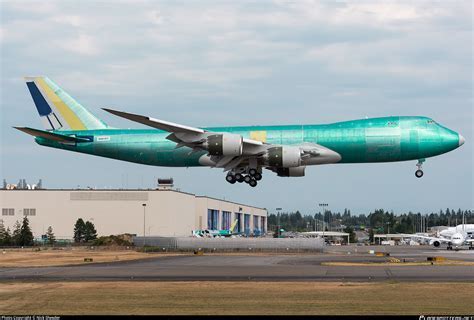
The 747-8F, or Freighter version, pushes the performance envelope even further. Designed to haul massive amounts of cargo at blistering speed, it competes with the likes of the Antonov An-124 and Lockheed C-5M Galaxy, yet it is far more widely deployed.
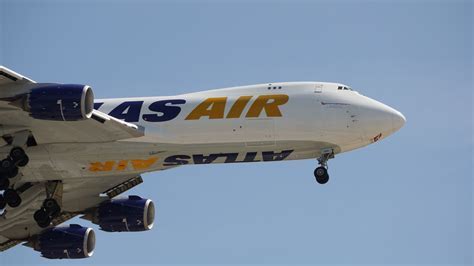
Its cavernous cargo bay—measuring 6,225 ft³ (175 m³)—allows it to transport a staggering amount of freight while still cruising near Mach 0.86. Unlike the Airbus A380, which was never developed as a freighter, the 747-8F found its niche in global logistics operations. Operators like Atlas Air, UPS, and Cargolux continue to exploit its speed advantage to meet just-in-time delivery schedules worldwide.
Why Speed Still Matters in the Jet Age
In an era where fuel efficiency and environmental sustainability dominate airline priorities, speed has not been entirely sidelined. There are critical sectors where high-speed, long-range transport is essential—particularly in time-sensitive logistics and government operations.
Speed is also a branding asset. For decades, the 747 was synonymous with elite, long-haul air travel, and flying aboard the fastest subsonic jet reinforced the premium experience. Even today, that mystique continues in private and VIP variants, including the Boeing Business Jet (BBJ) 747-8, used by heads of state and billionaires.
Legacy in the Skies: A 55-Year Reign
The Boeing 747’s production line, which ran from 1968 to 2023, is one of the longest in aviation history. Over 1,573 units were delivered. Of those, about 350 still fly today, either in cargo, military, or limited passenger configurations. The aircraft’s speed and power have helped extend its operational lifespan, especially in specialized sectors.
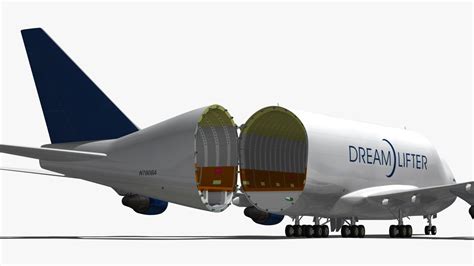
One prominent example is the Dreamlifter, a modified 747-400 used to carry oversized components for the 787 Dreamliner. Though based on an older platform, it remains vital due to the unparalleled volume and speed combination it offers.
Military Marvels: From Air Force One to Doomsday Planes
The 747’s speed and range make it ideal for strategic government missions. The VC-25B, the next generation of Air Force One, is based on the 747-8I. Though it won’t enter service until around 2026, its selection as the presidential transport aircraft underscores Boeing’s continued confidence in the platform.
Another little-known use is the E-4B Nightwatch, known as the National Airborne Operations Center (NAOC). This nuclear-hardened command post, based on the 747-200 but soon to be replaced by newer 747-8-based platforms, operates in scenarios where speed, altitude, and survivability are paramount. The USAF has allocated $13 billion to develop the next-generation airborne command fleet, a testament to the aircraft’s unmatched operational capabilities.
The End of an Era—but Not the End of Speed
Though Boeing officially ended 747 production in 2023, the legacy of the 747-8—especially its speed and power—will live on for decades. No other aircraft blends such an enormous payload, global range, and high-speed cruise performance quite like the Queen of the Skies.
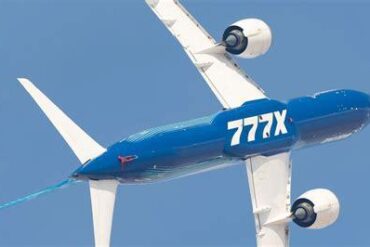
While newer aircraft like the 777X and 787 Dreamliner offer better fuel economy and operational efficiency, they do not match the raw velocity and lifting power of the 747-8. That makes the aircraft not just an icon of the past, but a continuing asset of the future.
In aviation’s relentless march forward, the 747-8 stands as a magnificent monument to speed, scale, and engineering ingenuity—a jet that flies not just through clouds, but through history.