Understanding How Fast a Boeing 747 Flies
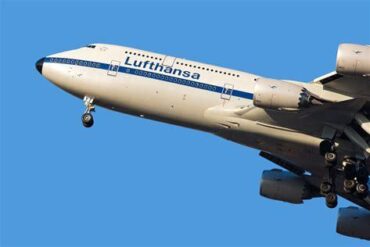
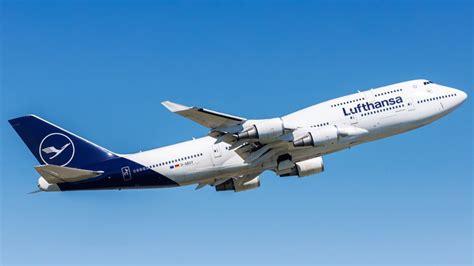
The Boeing 747, known globally as the “Queen of the Skies,” is an enduring symbol of long-haul international travel and cutting-edge aeronautical engineering. Designed to move hundreds of passengers across continents in record time, the Boeing 747’s performance metrics—particularly its speed—remain one of its most defining features.
As one of the fastest wide-body commercial aircraft ever created, the 747’s operational speed capabilities surpass many expectations. This aircraft doesn’t just transport people; it shrinks distances. But how fast does a 747 fly, and what enables its high-speed performance?
Cruise, Takeoff, and Landing Speeds: The 747’s Flight Envelope
In terms of cruise speed, the Boeing 747 maintains an average velocity of 660 mph (Mach 0.86). This speed allows it to cover thousands of miles over oceans and continents without sacrificing stability or efficiency. During takeoff, the aircraft typically accelerates to 160 knots (184 mph) before liftoff. As it prepares to land, the 747 slows to a landing speed ranging between 145 to 150 knots (166–172 mph) depending on weight and configuration.
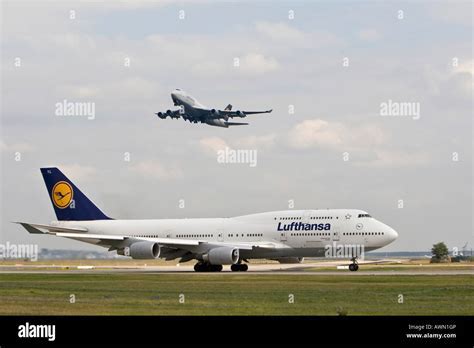
These speeds are not just impressive—they are the result of meticulous engineering, aerodynamic finesse, and engine power. Each phase of flight—from rotation to cruise to final approach—has been finely tuned to optimize performance and ensure passenger safety and comfort.
The Engineering Behind the 747’s Velocity
Advanced Jet Engines: The Powerhouse of the 747
A central factor in the 747’s speed is its engine system, specifically the GEnx turbofan engine, which powers newer variants like the Boeing 747-8 Intercontinental and 747-8 Freighter. Derived from the 787 Dreamliner’s propulsion architecture, the GEnx engine is one of the most efficient, clean, and quiet engines ever developed.
Key features of the GEnx include:
-
A high bypass ratio, improving fuel economy
-
Composite fan blades and cases, reducing weight
-
Advanced turbine cooling technology
These features allow the aircraft to cruise efficiently over long distances at near-supersonic speeds while minimizing environmental impact.
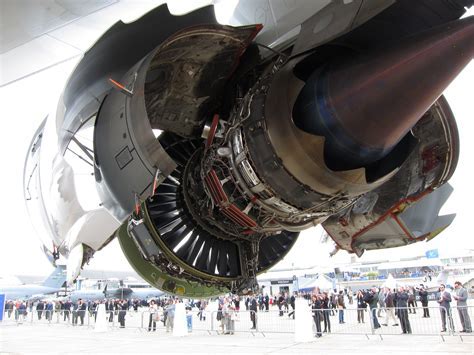
The engines also contribute to the aircraft’s climb rate and altitude ceiling, which are critical in leveraging another component of its speed performance: jet streams.
Riding the Jet Streams: Nature-Assisted Speed Boosts
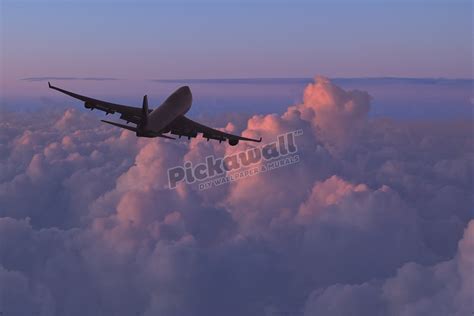
The Boeing 747’s cruising altitude—typically between 33,000 and 41,000 feet—places it in optimal position to exploit jet streams. These high-altitude air currents, flowing from west to east at speeds exceeding 200 mph, can dramatically reduce flight time and fuel burn when navigated properly.
Airline dispatchers and flight crews use meteorological data and sophisticated route planning tools to guide the aircraft into these air corridors. The strategic use of jet streams enables the 747 to sometimes achieve ground speeds over 700 mph, depending on atmospheric conditions.
This natural energy boost underscores how both engineering and environmental awareness play a role in maximizing the 747’s real-world performance.
Aerodynamic Design: Speed in Structure
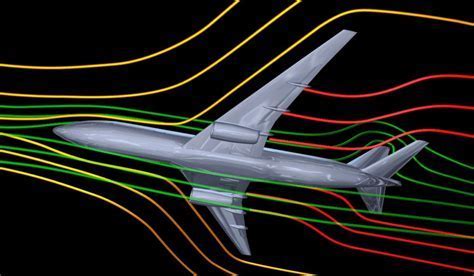
Perhaps one of the most underappreciated aspects of the 747’s speed lies in its aerodynamic profile. From its sharply swept wings to its supercritical airfoils, the aircraft is designed for minimal drag and maximal lift.
The 37.5-degree sweep angle of the wings reduces drag at transonic speeds, while the high aspect ratio improves fuel efficiency and lift. The wings also incorporate a supercritical airfoil, which delays the onset of shock waves near the speed of sound, helping the aircraft maintain its cruise velocity without turbulence-induced inefficiencies.
Additionally, the 747’s massive but smoothly contoured fuselage enhances laminar airflow, reducing drag and enabling smoother, faster flight.
Comparative Performance: How the 747 Stacks Up
Against other commercial aircraft, the 747 remains a formidable force:
-
Faster than the Airbus A380, which cruises around 634 mph
-
Comparable in cruise speed to the McDonnell Douglas DC-10 and the Lockheed L-1011 TriStar, though with greater range
-
Outpaced only by supersonic aircraft like the Concorde (Mach 2.04), which no longer operates in commercial service
Yet the 747’s value lies not only in speed, but in its ability to balance velocity with passenger comfort, range, cargo capacity, and economy—a holistic performance metric that few aircraft match.
Frequently Asked Questions
Can a Boeing 747 fly faster than the speed of sound?
No, the Boeing 747 is not capable of supersonic flight. While some variants such as the 747-100 came close—especially during military testing or special conditions—they were never designed to exceed Mach 1. Air Force One and similar adaptations may reach high subsonic speeds, but structural and engine limitations prevent them from breaking the sound barrier.
What is the lowest speed a Boeing 747 can maintain in flight?
The minimum speed at which a Boeing 747 can safely fly depends on weight, flap configuration, and altitude. Typically, it can maintain controlled flight at around 140–160 knots during landing approach. Below that, stall conditions may develop if proper lift cannot be maintained.
How far can a 747 glide if all engines fail?
In the extremely rare event of complete engine failure, a 747-200 can glide up to 150 kilometers (93 miles) from 33,000 feet. This is due to its high lift-to-drag ratio and aerodynamic efficiency. However, successful gliding depends on pilot response, weather, terrain, and aircraft configuration.
Conclusion
The Boeing 747’s speed is not merely a number—it is the result of decades of engineering innovation, advanced aerodynamic research, and strategic design. With takeoff speeds exceeding 180 mph, cruising speeds of 660 mph, and landing velocities nearing 170 mph, this aircraft remains a benchmark in commercial aviation.
Its ability to leverage natural phenomena like jet streams, combined with state-of-the-art engines and wing design, allows the 747 to cover great distances in less time—all while offering comfort and stability to hundreds of passengers.
In the modern age of aviation, where speed, efficiency, and sustainability intertwine, the Boeing 747 continues to soar as a marvel of human ingenuity and a testament to what flight can achieve.