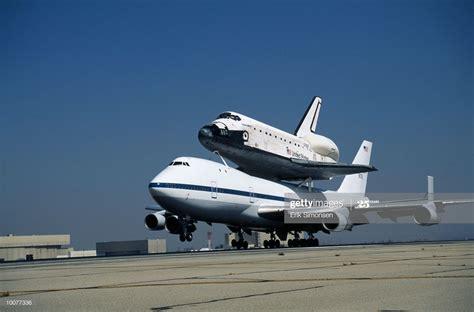
When NASA engineered the Space Shuttle, one of the marvels of modern aerospace, the agency also faced a profound logistical challenge: how to transport a spacecraft weighing approximately 100 tons across vast stretches of the continental United States. Launch sites, testing facilities, and landing zones were spread across the country, yet the Shuttle was not designed to be flown from airport to airport. Instead, it needed a reliable, reusable airborne transport solution—a carrier aircraft capable of hauling the Shuttle securely, efficiently, and safely. NASA sought not only muscle but also a platform whose physical design could shoulder the weight and aerodynamic complexity of the orbiter.
Two Titans: The Boeing 747 and Lockheed C-5 Galaxy
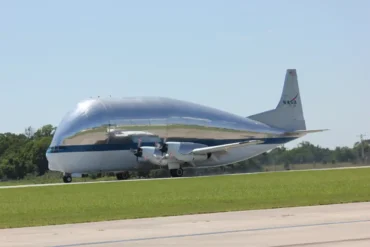
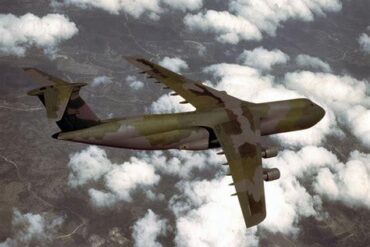
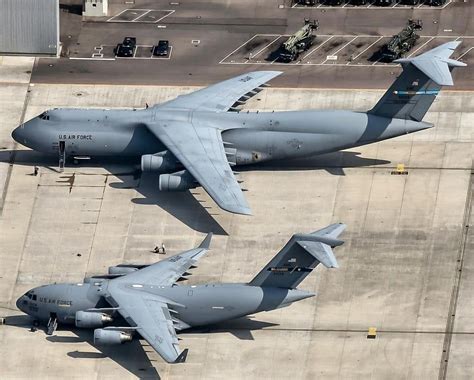
NASA’s shortlist featured two engineering giants: the Lockheed C-5 Galaxy and the Boeing 747. Each brought incredible credentials to the table. The C-5, a military transport beast, featured a high-wing design, rugged structure, and unparalleled cargo space. The 747, on the other hand, had already become a staple in commercial aviation with its massive intercontinental range and structural reliability. However, this wasn’t just a competition of raw power—it was about design compatibility, modification feasibility, and operational practicality.
Why Boeing 747’s Design Was Superior
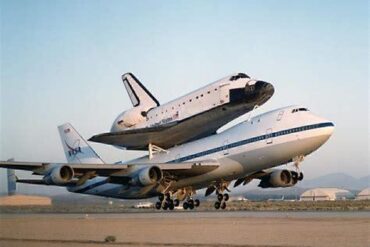
The Boeing 747’s low-wing configuration became the decisive factor. With wings mounted beneath the fuselage, the 747 offered a flat and clear top surface—a critical requirement for mounting the Shuttle externally. In contrast, the C-5 Galaxy’s high-wing configuration complicated the addition of large external loads on top. NASA engineers foresaw the stability and aerodynamic control issues that could arise with the Shuttle awkwardly perched atop a high-wing aircraft.
Moreover, the Boeing 747-100, first flown in 1969, was a commercial workhorse with proven durability. Its design permitted the kind of rigorous retrofitting needed to support a piggyback configuration. The massive 747 already boasted a gross taxi weight of 713,000 pounds, powered by four Pratt & Whitney JT9D engines, each delivering 48,600 pounds of thrust. Its combination of payload capacity, thrust-to-weight ratio, and airframe adaptability sealed the deal.
Modifying the Queen of the Skies: Birth of NASA 905
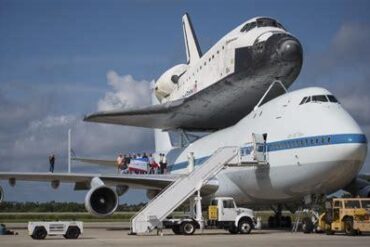
The first aircraft to become a Shuttle Carrier Aircraft (SCA) was a former American Airlines Boeing 747-123, bought in 1974 for $15.6 million and rechristened NASA 905. The transformation was extensive:
- Three giant mounting struts were affixed to the upper fuselage to secure the Shuttle orbiter.
- The internal fuselage was structurally reinforced to bear the extreme load of both the Shuttle and additional support hardware.
- Two vertical stabilizers were bolted onto the tail to compensate for disrupted airflow and maintain directional stability.
- Additional instrumentation was installed to monitor Shuttle power and system integrity during ferry flights.
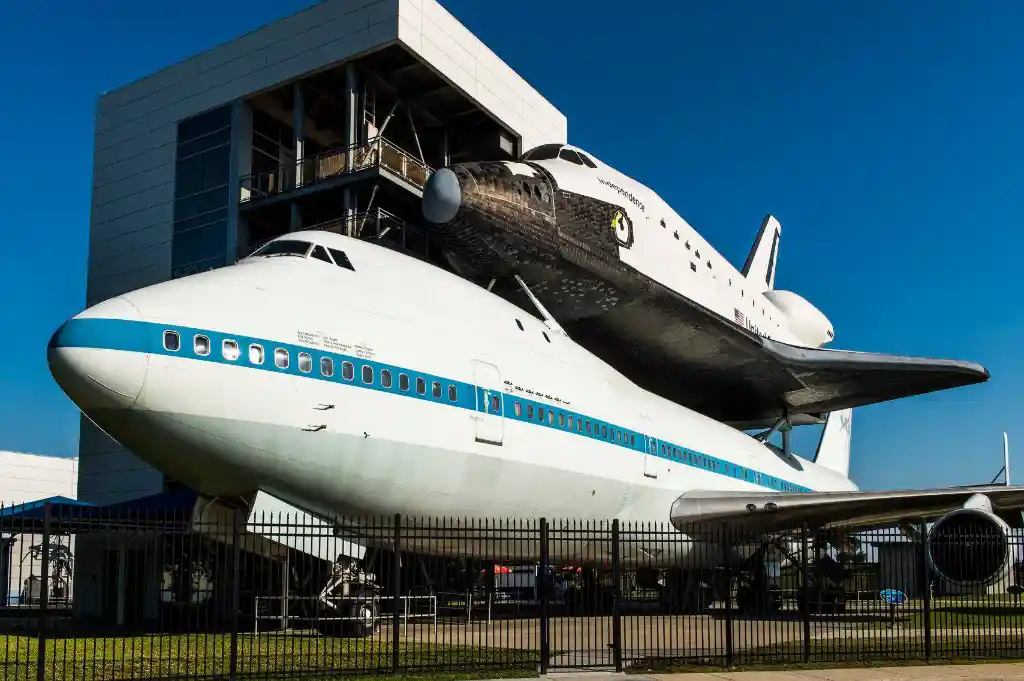
These changes were not cosmetic but deeply functional. Every aspect of the 747 had to work in harmony with the aerodynamics and delicate surfaces of the orbiter. Even the thermal protection tiles on the Shuttle required NASA to account for airflow and heat dynamics. A test program using the Approach and Landing Tests (ALT) in 1977 demonstrated just how transformative the modifications were. In fact, these early missions included a dramatic crew escape system with pyrotechnic ejection pods, underscoring the high-stakes nature of these missions.
Logistics on the Ground: Mate-Demate Devices
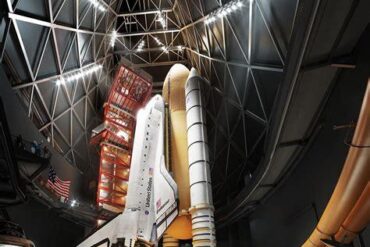
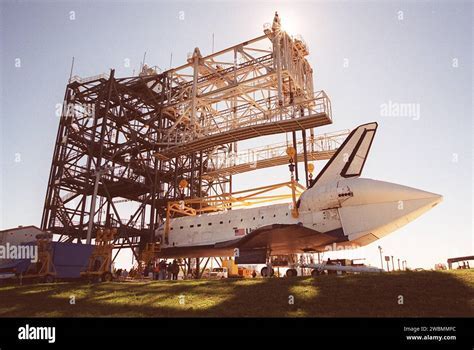
Flying the Shuttle was only part of the problem. Ground operations demanded extraordinary equipment known as Mate-Demate Devices (MDDs). These were towering gantry structures designed to lift the orbiter dozens of feet into the air. Once hoisted, the 747 could be driven beneath the Shuttle and mated via the strut system. Only a few of these MDDs were ever built—one of the most famous residing at Edwards Air Force Base in California.
NASA 911: Reinforcement and Redundancy
By 1989, NASA had accumulated extensive experience with its original SCA, but mission frequency and reliability concerns prompted the acquisition of a second aircraft. This time, it was a 747-100SR-46, purchased from Japan Air Lines, and renamed NASA 911. Though this model had originally been built for short-range, high-density Japanese routes, it featured structural enhancements and thicker skins, making it particularly suitable for heavy-duty shuttle ferrying.
NASA 911 was outfitted with the same modifications as its predecessor and took its maiden ferry flight in 1990. From that point on, the two SCAs shared the shuttle transport load, ensuring redundancy and operational flexibility. NASA 905 remained the primary workhorse, but NASA 911 provided critical support for schedule-heavy periods.
Operational Legacy: Hauling the Fleet
For over three decades, the SCAs played a central role in transporting space shuttle orbiters across the United States. From ferrying Enterprise during the ALT phase to moving Columbia, Atlantis, Endeavour, and Discovery between test centers, launch sites, and landing zones, these aircraft were iconic symbols of American spaceflight logistics.
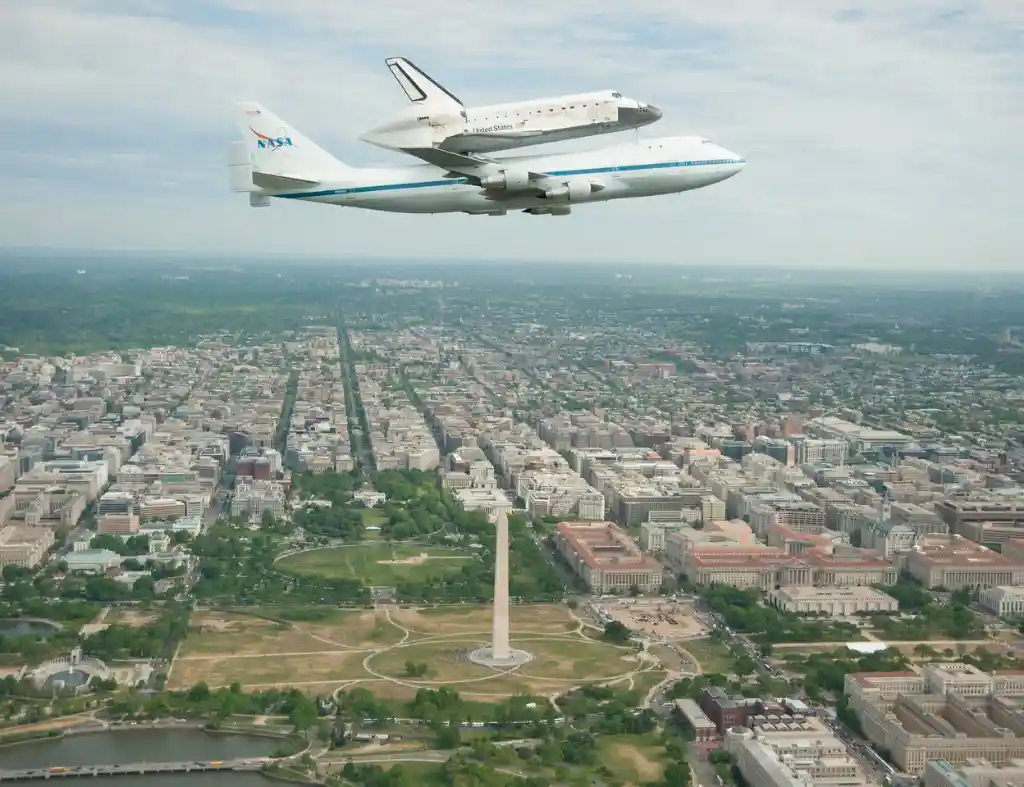
Perhaps most emotionally resonant were their farewell flights following the retirement of the Space Shuttle Program. In April 2012, NASA 905 completed its final mission, delivering Space Shuttle Discovery to the Smithsonian’s National Air and Space Museum. The aircraft performed a low-altitude celebratory loop over Washington, D.C., passing over landmarks at just 1,500 feet, a moment that captivated the nation.
Museum Pieces and Aviation Heritage
Both SCAs eventually retired to public display, preserving their legacy for generations. NASA 911 retired in February 2012 and today rests at the Joe Davies Heritage Airpark in Palmdale, California. NASA 905, having completed its swan song later that year, became the centerpiece of a magnificent exhibit at the Space Center Houston, where it now stands with a replica Shuttle mounted atop it.
This exhibit not only memorializes a pivotal chapter in human spaceflight but also educates visitors about the intersection of aeronautics and astronautics, celebrating the engineers who reimagined a commercial jetliner into a space shuttle taxi.
Conclusion: A Masterstroke of Adaptation
NASA’s decision to choose the Boeing 747 over the Lockheed C-5 Galaxy was not merely a question of thrust or payload. It was a strategic choice rooted in structural compatibility, aerodynamic feasibility, and logistical adaptability. The 747’s proven engineering, versatile design, and commercial reliability made it the ideal candidate for transformation into a Shuttle Carrier Aircraft.
Through ingenuity, precision, and a willingness to push aerospace boundaries, NASA transformed a civilian airliner into a tool of space exploration. The 747’s unique silhouette—flying with a Space Shuttle on its back—remains one of the most iconic images in the history of space travel, symbolizing partnership between innovation and necessity, between Earth and the stars.