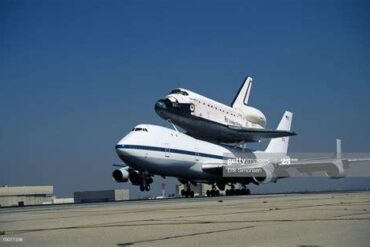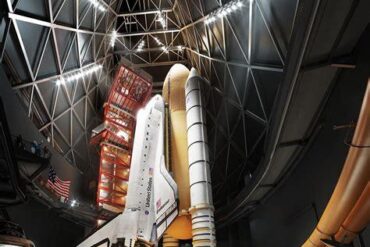
From the moment it first launched in 1981, the NASA Space Shuttle represented one of the most ambitious engineering projects ever undertaken. Designed as a reusable spacecraft capable of dramatically reducing the cost of access to orbit, the shuttle became the centerpiece of America’s crewed space program for three decades. Yet despite completing 135 missions and becoming an icon of space exploration, the program ended in 2011. The decision puzzled many observers because no immediate successor existed. However, the retirement of the shuttle was driven by powerful realities involving cost, turnaround time, and safety, all of which made continuing the program increasingly difficult to justify.
The Space Shuttle was initially envisioned during the late 1960s, a period characterized by extraordinary optimism about humanity’s future in space. Engineers and planners imagined a transportation system that would function almost like commercial aviation. Instead of expensive disposable rockets, reusable spacecraft would fly frequently and cheaply, potentially making orbital hotels and routine space travel achievable. NASA expected launch costs to plunge dramatically compared to the Apollo era, creating a sustainable pathway toward large-scale exploration.
The reality turned out to be very different. While the shuttle succeeded in becoming reusable, reusability alone did not deliver affordability. Every mission required extensive inspections, repairs, and preparation. The dream of inexpensive access to space gradually gave way to a far more expensive and labor-intensive operation.
By the time the Space Shuttle fleet entered service, mission costs had reached hundreds of millions of dollars. Early projections suggested launch expenses might be as low as $350,000 per flight. Instead, actual costs often approached $450 million per mission, making the shuttle one of the most expensive transportation systems ever developed. Maintaining orbiters, external tanks, solid rocket boosters, and thousands of supporting personnel consumed enormous resources.
After every mission, engineers needed to inspect nearly every component of the spacecraft. Heat-resistant tiles covering the orbiter’s surface required individual examination because even minor damage could become catastrophic during atmospheric re-entry. Rather than operating like an airplane, the shuttle demanded intensive servicing more comparable to rebuilding a race car after every competition.
Another major disappointment involved flight frequency. NASA originally envisioned an extraordinary schedule approaching 95 launches annually, equivalent to a mission every four days. Such a pace would have transformed space transportation and significantly lowered costs through repetition and efficiency. However, these expectations proved unrealistic.
The fastest turnaround between shuttle missions was approximately 54 days, and after the Space Shuttle Challenger disaster in 1986, preparation periods became even longer. The quickest post-Challenger turnaround stretched to 88 days. Complex inspections, safety procedures, and hardware replacements prevented the rapid launch cadence that engineers had once imagined. Without high flight rates, the economics of the reusable system simply failed to deliver on their promise.
Safety concerns ultimately became the greatest challenge facing the Space Shuttle program. Despite the relatively small number of fatalities throughout the history of spaceflight, the shuttle accounted for a disproportionate share of them. Fourteen astronauts lost their lives in the Challenger and Columbia disasters, tragedies that exposed fundamental vulnerabilities within the spacecraft’s design.
One controversial decision made during development involved abandoning the comprehensive risk analysis methods employed during the Apollo program. Some assessments were considered excessively pessimistic, leading managers to place greater confidence in assumptions that the shuttle would operate with airline-like reliability. Unfortunately, spaceflight proved far less forgiving than commercial aviation.
The absence of robust escape systems represented another weakness. Unlike some earlier spacecraft, the shuttle lacked comprehensive crew escape mechanisms during most stages of flight. Engineers believed such measures were unnecessary because the vehicle was expected to be exceptionally reliable. This assumption would later be challenged by catastrophic accidents.
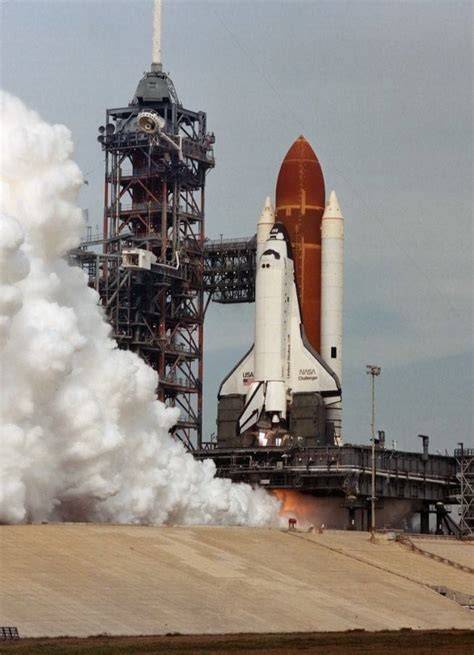
The vulnerability of the shuttle’s thermal protection system became tragically apparent during the Columbia disaster in 2003. Thousands of silica and reinforced carbon-carbon tiles protected the orbiter from temperatures generated during re-entry. The technology itself was ingenious, allowing astronauts and payloads to return safely to Earth. Yet these tiles were extremely fragile, and damage occurred frequently.
During Columbia’s launch, foam insulation struck the leading edge of the wing, creating a breach that allowed superheated gases to penetrate the spacecraft during re-entry. The resulting structural failure destroyed the orbiter and claimed the lives of seven astronauts. Investigations revealed that similar foam strikes had occurred before, highlighting how recurring risks had gradually become accepted as normal operational realities.
The Columbia accident fundamentally changed perceptions of the Space Shuttle. Continuing operations would require expensive modifications while still relying on a design originating in the 1970s. As NASA began shifting toward future exploration goals involving the Moon and eventually Mars, investing billions to maintain an aging system became increasingly difficult to defend.
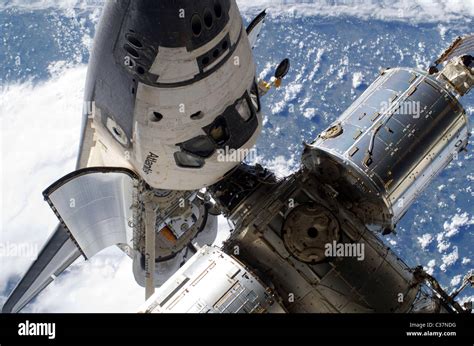
Although the Space Shuttle was undeniably one of history’s greatest engineering achievements, it never fully delivered on its original promises. It launched satellites, helped construct the International Space Station, deployed scientific observatories, and inspired generations around the world. Yet the combination of high operating costs, slow mission preparation, and inherent safety vulnerabilities ultimately sealed its fate.
NASA’s decision to retire the Space Shuttle was not a rejection of its accomplishments. Rather, it reflected the lessons learned from three decades of remarkable successes and heartbreaking tragedies. The program demonstrated both the extraordinary possibilities of reusable spacecraft and the immense challenges involved in making them practical, affordable, and safe. Those lessons continue to shape the next generation of space vehicles, ensuring that the legacy of the Space Shuttle lives on far beyond its final flight.