The idea of humanity expanding beyond Earth and raising generations in orbit has long fueled both scientific ambition and science-fiction dreams. Yet emerging research suggests a sobering reality: humans born in space may face profound biological challenges that could permanently separate them from life on Earth. What once seemed like a distant philosophical question is rapidly becoming a scientific concern grounded in experimental evidence.
The Hidden Danger of Growing Up Without Gravity
Life on Earth has evolved under one constant force—gravity. From the earliest stages of embryonic development, gravity plays a subtle but essential role in shaping the human body. In a microgravity environment like the International Space Station (ISS), that guiding force disappears, leaving biological systems to develop under unfamiliar conditions.
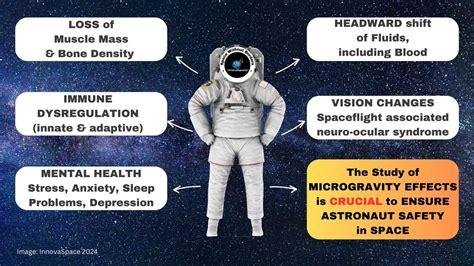
Astronauts already experience measurable effects after relatively short stays in orbit. Bone density decreases, muscles weaken, and the vestibular system—the mechanism responsible for balance and spatial orientation—becomes disrupted. If these effects occur in fully developed adults, the implications for a developing human body are far more serious. A child born in space would not simply adapt differently; they might develop in ways fundamentally incompatible with Earth’s environment.
NASA’s Jellyfish Experiment: A Surprising Proxy for Human Biology
In 1991, NASA conducted a revealing experiment that offered a glimpse into this uncertain future. Instead of risking human subjects, researchers turned to an unlikely stand-in: jellyfish, specifically the species Aurelia Ephyra. While seemingly primitive, jellyfish share a critical biological feature with humans—the ability to sense orientation through gravity.
Approximately 2,500 jellyfish polyps were sent into space aboard a shuttle, where they were carefully nurtured in a controlled aquatic environment. Over the course of just over a week, these organisms thrived, multiplying into nearly 60,000 individuals. On the surface, the experiment appeared to be a success.
However, the real test came upon their return to Earth.
Disorientation on Earth: When “Up” No Longer Exists
Once reintroduced to Earth’s gravity, a striking phenomenon emerged. A significant portion of the space-born jellyfish exhibited severe disorientation, struggling to swim properly or maintain directional control. In essence, they could not distinguish up from down.
This condition closely resembles vertigo in humans, where the brain receives conflicting signals about spatial orientation. For the jellyfish, the issue wasn’t structural damage—their bodies appeared normal—but rather a failure to correctly interpret gravitational cues.
The implications are unsettling. If a simple organism cannot recalibrate after being born in microgravity, what would happen to a human nervous system developed entirely without gravity’s influence?
The Inner Ear Connection: A Shared Biological Mechanism
The answer lies in a fascinating biological parallel. Jellyfish rely on tiny crystals of calcium sulfate to detect gravity, while humans use calcium carbonate structures within the inner ear. These crystals interact with sensory hairs, sending signals to the brain about orientation and movement.
In the space-born jellyfish, these crystals still formed—but without consistent gravitational input during development, the system failed to function correctly. The brain, in effect, lacked the training data needed to interpret the signals.
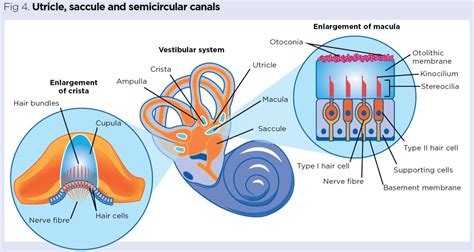
For humans, this raises a critical concern. A child born in space might develop a structurally normal vestibular system that simply doesn’t work under Earth’s gravity. The result could be lifelong disorientation, impaired movement, or an inability to function in a gravitational environment.
A Statistical Warning: Small Percentages, Massive Implications
Not every jellyfish in the experiment was affected. Approximately 18% displayed severe orientation issues, while others adapted more successfully. At first glance, this might seem reassuring—but in the context of human space colonization, even a small failure rate carries enormous ethical and logistical consequences.
Imagine a generation of space-born humans where a significant minority cannot safely visit Earth. The divide between Earth-born and space-born populations would not just be cultural—it would be biological. Gravity itself could become a barrier separating branches of humanity.
The Future of Space Colonization: A Biological Divide
The dream of space colonization is far from dead, but it is becoming more complex. These findings suggest that long-term habitation in microgravity may require artificial gravity environments, such as rotating space stations, to ensure healthy human development.
Without such measures, the risks extend beyond inconvenience. They touch on fundamental questions about identity, mobility, and what it means to be human in different gravitational contexts. A person born in space may not simply be an Earth human living elsewhere—they could represent an entirely new adaptation of humanity.
The romance of life among the stars remains powerful, but reality insists on caution. Biology, shaped over billions of years under Earth’s pull, does not easily rewrite itself. And as NASA’s experiment quietly revealed, the absence of gravity may leave a mark that no return journey can erase.