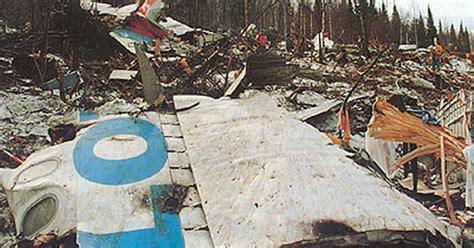
On March 23, 1994, a routine international passenger flight from Moscow’s Sheremetyevo International Airport to Kai Tak Airport in Hong Kong ended in tragedy when Aeroflot Flight 593 crashed into the Kuznetsk Alatau mountain range in Kemerovo Oblast, Russia. All 75 people on board perished in the accident, which later investigations attributed not to mechanical failure, but to a deeply disturbing case of human error and regulatory oversight. The accident would become one of the most haunting reminders of the crucial importance of cockpit discipline, pilot training, and adherence to international aviation protocols.
The Aircraft and Crew of Flight 593
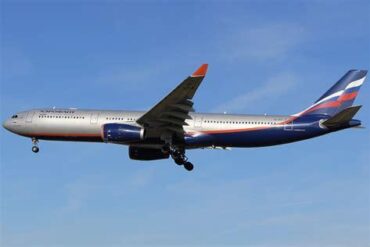
The aircraft involved was a leased Airbus A310-304, registered F-OGQS. Delivered to Aeroflot – Russian International Airlines in late 1992, the plane had only a few years of service and was powered by General Electric CF6-80C2A2 engines. It had flown under serial number 596 and originally bore the test registration F-WWCS before being transferred to Aeroflot. By the time of the crash, it was one of five Airbus A310s in the fleet, used primarily on routes to Southeast Asia and the Russian Far East.
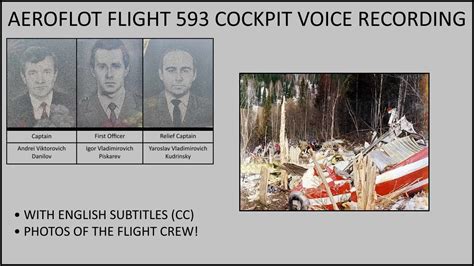
Commanding the flight was Captain Andrey Viktorovich Danilov, 40, with over 9,500 flight hours, including nearly 950 on the A310. The First Officer, Igor Vasilyevich Piskaryov, 33, had accumulated 5,885 hours, 440 of which were on the A310. Also aboard was Relief Captain Yaroslav Vladimirovich Kudrinsky, 39, with nearly 9,000 total hours and considerable experience in Soviet-built aircraft including the Yakovlev Yak-40, Antonov An-12, and Ilyushin Il-76.
The flight also carried nine flight attendants and 63 passengers, most of whom were Russian nationals, including around 30 airline employees and their families. The remaining passengers were mostly businesspeople from Hong Kong and Taiwan exploring commercial opportunities in Russia.
A Sequence of Catastrophic Decisions
The tragic series of events unfolded not due to mechanical failure but a disturbing violation of cockpit protocol. Relief Captain Kudrinsky had brought his two children — 15-year-old Eldar and 13-year-old Yana — into the cockpit during the flight. This act, while a clear breach of regulations, escalated into catastrophe when Kudrinsky allowed his son to sit in the pilot’s seat.
At 00:51, Eldar applied sustained pressure to the control column, unknowingly overriding the autopilot’s control of the ailerons. The aircraft’s flight computer partially disengaged, transferring lateral control to manual. This action illuminated a silent indicator light, but the crew, accustomed to Soviet systems that provided audible warnings, failed to recognize the danger.
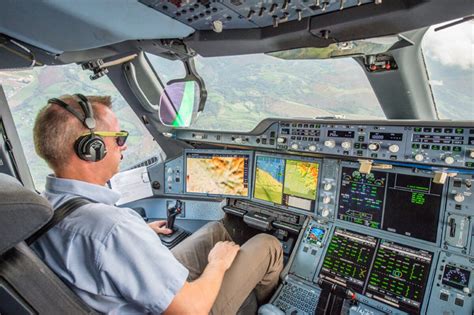
As the aircraft began an unintended right turn, the flight path indicator showed a confusing 180-degree arc — a pattern typically associated with a holding maneuver. This misled the pilots, who delayed intervention for critical seconds. As the bank angle exceeded 45 degrees, reaching close to 90 degrees, the aircraft began a rapid descent, a condition the A310 was never designed to withstand.
Desperate Attempts and a Doomed Descent
The autopilot, now overwhelmed, disengaged completely, pitching the aircraft nose-up in a final effort to compensate. The result was a deep stall, followed by a nosedive. With g-forces reduced, the pilots were able to regain their seats and attempt recovery. First Officer Piskaryov managed to level the aircraft briefly but over-corrected, initiating a near-vertical climb that led to a second stall.
Kudrinsky intervened again, managing to pull the aircraft into a more stable attitude. But during recovery, aggressive control inputs caused the plane to enter a flat spin. Although the pilots regained partial control and leveled the wings once more, they were unaware of their dangerously low altitude.
At 00:58, the aircraft crashed in a flat attitude with landing gear up and all passengers secured in their seats. The descent rate at impact was estimated at 70 meters per second, or about 250 km/h (160 mph). No distress call was made.
Investigation and Revelations
Initial reactions from Aeroflot included denials that children had been present in the cockpit. This stance collapsed when the Moscow-based magazine Obozrevatel published a detailed transcript of the cockpit voice recorder (CVR) in late September 1994. The Associated Press and The New York Times confirmed that the transcript showed the pilots had come painfully close to saving the aircraft, but the presence of the children and unfamiliarity with Western avionics contributed fatally.
Experts highlighted the pilots’ difficulty in interpreting the Airbus’s systems, especially under stress. Unlike their previous Soviet aircraft experience, the Airbus A310’s systems lacked audible alarms for certain conditions. The warning light indicating the partial disengagement of the autopilot was silent, a design difference that proved crucial.
It was also determined that if the crew had released the yoke after the initial stall, the aircraft’s natural aerodynamics might have stabilized the flight. Instead, persistent overcorrection and delayed responses sealed their fate. Importantly, the flight data and cockpit voice recorders showed no evidence of mechanical failure.
Aftermath and Cultural Legacy
The wreckage was discovered two days later, on a remote hillside 20 km east of Mezhdurechensk. Russian families laid flowers at the site, while families of Hong Kong and Taiwanese victims left traditional messages on paper. The tragedy reverberated deeply through both the aviation industry and public consciousness.
In the wake of the crash, cockpit access protocols were re-examined worldwide, and the case became a key reference in discussions of CRM (Crew Resource Management) and cockpit discipline. Aeroflot’s denial and subsequent admission further damaged public trust, prompting a wave of institutional scrutiny.
The event entered popular culture, most notably through its depiction in the television series Mayday (Air Crash Investigation) in the episode titled “Kid in the Cockpit”, and in the novel “Airframe” by Michael Crichton, which drew inspiration from both Aeroflot Flight 593 and China Eastern Flight 583. The incident was also featured in a Mentour Pilot documentary on YouTube.
Lessons from Aeroflot Flight 593
The crash of Aeroflot Flight 593 is a stark reminder that aviation disasters are often not the result of a single failure, but a chain of human errors, each one small and avoidable. The introduction of unauthorized individuals into the cockpit, compounded by a lack of proper monitoring of the autopilot system, escalated into an irreversible catastrophe.
From a systems perspective, the case underscores the importance of clear, unmistakable warning interfaces, especially in environments where cross-cultural or cross-system transitions are involved. The lack of an audible warning for partial autopilot disengagement was a critical oversight, though it did not absolve the crew of responsibility.
The flight also highlights the risks inherent in transitional periods within airlines, such as Aeroflot’s early 1990s adoption of Western aircraft and procedures while retaining Soviet-era crew practices. The cultural and procedural mismatch became a fatal vulnerability.
Enduring Impact on Aviation Safety
The tragedy of Aeroflot Flight 593 led to more than just mourning — it catalyzed changes. Airlines began to take cockpit security and protocol enforcement more seriously, not only from a safety standpoint but also as a matter of public trust. Flight crew training was updated to emphasize the importance of CRM, situational awareness, and understanding automated systems.
While no lives can be reclaimed, the lessons of Flight 593 have left an indelible mark on aviation safety culture. Its story, horrifying as it is, continues to be studied as a case of what can go wrong when confidence, protocol breaches, and system unfamiliarity combine.
Aeroflot Flight 593 serves as a chilling but essential reminder that human factors are as critical as mechanical ones in the safe operation of modern aircraft. The voices on that cockpit voice recorder — of both trained pilots and a boy tragically out of his depth — continue to echo through every training simulator and safety briefing, urging vigilance, professionalism, and respect for the rules that keep aviation safe.