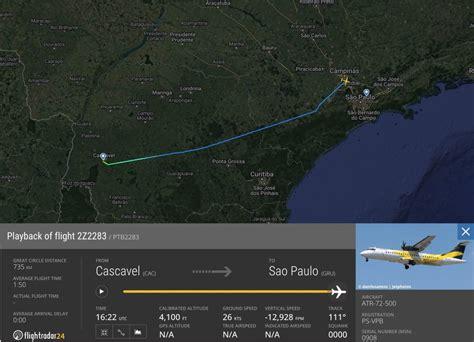
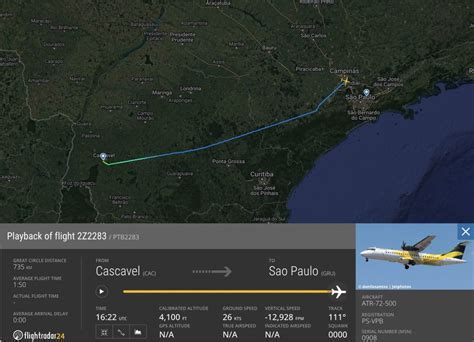
On 9 August 2024, Voepass Flight 2283, a scheduled domestic ATR 72-500 turboprop flight from Cascavel (CAC) to Guarulhos International Airport (GRU), descended into tragedy in the skies over São Paulo state. At precisely 13:21 BRT, while cruising at 17,000 feet, the aircraft experienced a critical aerodynamic stall, entered a flat spin, and crashed in the residential region of Vinhedo, killing all 62 occupants aboard. This event not only plunged Brazil into mourning but also exposed deep-seated regulatory and operational weaknesses that would later come under harsh scrutiny.
The Flight Path and Catastrophic Descent
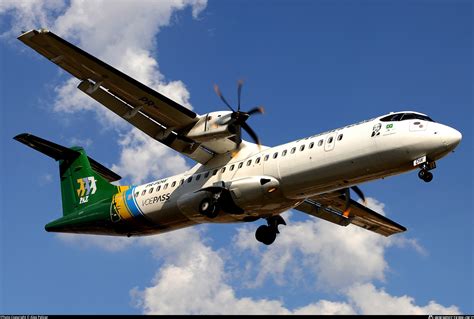
Flight 2283 departed Cascavel on time with 58 passengers and 4 crew members, including Captain Danilo Santos Romano, a senior aviator with over 9,000 flight hours, and First Officer Humberto Alencar e Silva, a rising professional with commendable experience on the ATR platform. The aircraft, tail number PR-TPQ, had been acquired by Voepass in 2022, and although 14 years old, it was reportedly airworthy and cleared for commercial operation.
Cruising uneventfully through the first phase of the flight, the aircraft entered an area covered under a SIGMET warning. Meteorological bulletins had forecast severe icing conditions between 12,000 and 21,000 feet. This segment of airspace, notorious for its convective instability during southern Brazil’s winter months, presented an imminent hazard.
ADS-B data later revealed a rapid and uncontrolled descent, with rates exceeding 18,000 feet per minute, indicative of a full aerodynamic stall and flat spin. Eyewitnesses on the ground and subsequent video footage confirmed the aircraft spiraling nose-up, wings level in a harrowing flat spin — a nearly unrecoverable condition for the ATR-72.
Severe Icing and De-Icing System Failure
The preliminary report from CENIPA (Brazil’s Aeronautical Accident Investigation and Prevention Center), released on 6 September 2024, established that the aircraft encountered significant ice accumulation. The de-icing systems, which include pneumatic boots and propeller anti-icing systems, either malfunctioned or failed to activate correctly. This resulted in airfoil contamination, drastically reducing lift and destabilizing the aircraft’s control surfaces.
Multiple stall warnings were recorded before the spin began. However, no emergency was declared by the flight crew. CENIPA analysts noted that the flight recorders captured cockpit confusion as the pilots fought to understand and counteract the aircraft’s unresponsive behavior.
The Final Minutes Over Vinhedo
As the aircraft spiraled downward, it penetrated the lower cloud deck and was briefly visible to civilians. Home security footage and mobile recordings from Vinhedo’s gated residential area show the aircraft in a flat spin before it struck a wooded parcel near high-value properties.
Despite the high population density, no ground casualties were reported. However, the impact was so violent that all remains were charred, complicating forensic identification. The Federal Police worked in tandem with São Paulo’s forensic science units, using dental records and DNA to confirm the identities of all 62 victims.
Among the deceased were two children, three university professors, a medical team, and several staff members from Paraná State University, returning from an academic event. In an unusual twist, ten passengers who were scheduled for the flight missed boarding due to being mistakenly directed to the wrong gate at Cascavel Airport, a procedural error that saved their lives.
Public Mourning and Government Response
Within hours of the crash, President Luiz Inácio Lula da Silva declared three days of national mourning, with the Brazilian flag flown at half-mast across all federal institutions. State governors, municipal authorities, and congressional leaders offered condolences in coordinated statements.
Voepass CEO Marcelo Feltrim released a solemn address vowing full cooperation with investigations, while also addressing unfounded conspiracy claims that speculated the presence of a controversial figure aboard. These claims were quickly debunked by federal investigators.

International Investigation and Suspension of License
Given the international manufacturing background of the ATR 72-500 — a product of Franco-Italian consortium ATR, powered by Pratt & Whitney Canada PW127F engines — the investigation was joined by experts from the Bureau d’Enquêtes et d’Analyses (BEA) of France and the Transportation Safety Board (TSB) of Canada.
Both Flight Data Recorder (FDR) and Cockpit Voice Recorder (CVR) were recovered from the wreckage. Although extensively fire-damaged, data recovery was successful due to robust black box casing and prompt extraction by search teams.
On 11 March 2025, after months of internal auditing and preliminary findings, Brazil’s ANAC (National Civil Aviation Agency) issued a suspension of Voepass’s Air Operator Certificate (AOC). This drastic move cited systemic safety violations, inadequate crew training protocols, and maintenance irregularities. The airline, a significant regional connector in Brazil’s aviation network, ceased operations indefinitely pending a complete audit.
Human and Institutional Toll
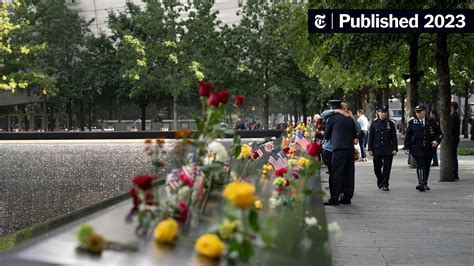
The loss extended beyond the families of victims. The Paraná academic community was shaken, losing members deeply embedded in educational reform and rural healthcare initiatives. Memorials were held in Curitiba, São Paulo, and Cascavel, each drawing thousands of mourners. Candlelight vigils along major city boulevards illustrated the profound emotional impact of the tragedy.
Institutionally, the crash prompted a reevaluation of regional airline operations. Industry insiders began raising concerns about aging aircraft fleets, outdated icing certification envelopes, and deficient training in extreme weather response. The ATR 72-500’s historical sensitivity to ice buildup — a known issue since the Roselawn crash of 1994 — reignited calls for further design and software improvements.
Awaiting Final Report and Federal Criminological Study
CENIPA has committed to delivering a final report by late 2025. In parallel, the Federal Police’s Department of Forensic Sciences is conducting an independent criminological study to determine whether negligence, corporate malfeasance, or criminal liability played a role in the chain of events.
Authorities are also evaluating flight dispatcher training, meteorological alert dissemination, and pilot compliance with icing protocols. While no sabotage or intentional wrongdoing has been identified, regulatory bodies are expected to overhaul current safety oversight mechanisms, particularly in relation to icing hazard management.
Conclusion: A Flight That Changed Brazilian Aviation
Voepass Flight 2283 is now etched into Brazil’s aviation history as a turning point. It laid bare the intersection of weather, mechanical vulnerability, and human factors — an intersection all too familiar in the annals of global aviation disasters. For the Brazilian aviation sector, the tragedy serves not just as a moment of grief but as a call to rebuild institutional trust and reinforce a culture of safety over expedience.
In honoring those who perished, Brazil must channel its collective resolve into transforming lessons learned into lasting regulatory reform. The skies, unforgiving as they are, demand nothing less.