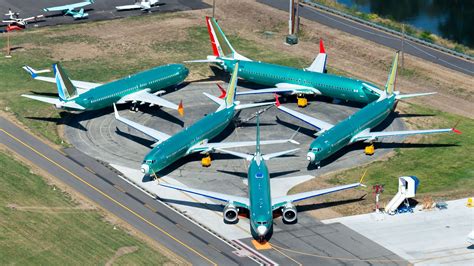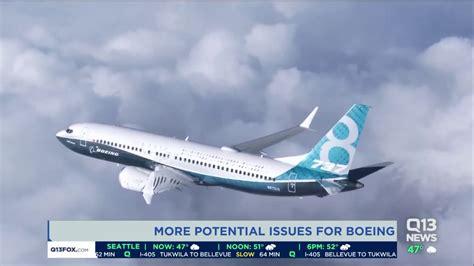
The Boeing 737 MAX disasters remain one of the most devastating and consequential aviation failures in recent history. At the core of the global scrutiny lies a single, haunting question: Did a design flaw truly cause the deaths of 346 people across two tragic crashes? As investigations and whistleblower accounts continue to unearth deeper systemic problems, the answer is proving to be far more complex—and damning—than a mere software bug.
The Genesis of the Boeing 737 MAX and Its Design Compromises
To understand the roots of the Boeing 737 MAX crises, one must examine the genesis of the aircraft itself. Rather than building a clean-sheet design to counter Airbus’ successful A320neo series, Boeing opted to retrofit the existing 737 airframe—a platform initially designed in the 1960s. The decision was driven by cost savings and speed-to-market priorities, but it introduced aerodynamic instability when larger, fuel-efficient LEAP-1B engines were mounted farther forward on the wing.
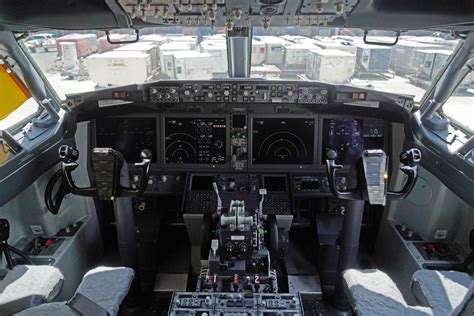
This design alteration changed the aircraft’s pitch characteristics, especially during steep climbs. To compensate, Boeing engineers introduced the Maneuvering Characteristics Augmentation System (MCAS), a software-driven solution intended to push the aircraft’s nose down if a high angle of attack (AOA) was detected.
MCAS: A Software Solution to an Aerodynamic Problem
The MCAS was inherently flawed. It relied on input from a single AOA sensor, despite industry norms favoring redundant sensor arrays to ensure fail-safe operation. If that sensor malfunctioned—as it did on Lion Air Flight 610 and Ethiopian Airlines Flight 302—the system would erroneously push the nose down repeatedly. In both crashes, the pilots struggled to regain control against the MCAS’s aggressive commands.
Crucially, Boeing failed to disclose the presence of MCAS to pilots and airlines. It was absent from flight manuals, and no simulator training was required. The assumption was that the system would be invisible in normal operations. But when it malfunctioned, the results were catastrophic.
A Corporate Culture Shift That Favored Speed Over Safety
Many aviation analysts argue that the design flaw alone doesn’t fully explain the 737 MAX’s fatal shortcomings. Instead, it’s the organizational transformation at Boeing, particularly after its 1997 merger with McDonnell Douglas, that underpinned many of the company’s missteps. Engineering excellence took a backseat to financial performance. Executive leadership imposed tight deadlines and budget constraints, often pressuring engineers to deliver on timelines rather than pursue the safest technical solution.
This cultural shift eroded the traditional safeguards that had previously made Boeing synonymous with aviation reliability. Whistleblower accounts, internal emails, and Congressional hearings have since revealed a pattern of under-communication, corner-cutting, and internal suppression of safety concerns.
Regulatory Gaps: The FAA and Delegated Oversight
The U.S. Federal Aviation Administration (FAA) allowed Boeing to self-certify many aspects of the MAX through the Organization Designation Authorization (ODA) system. While standard in many aerospace projects, ODA requires a balance of autonomy and accountability. In the case of the MAX, the balance tipped too far toward autonomy.
FAA inspectors later admitted they were unaware of the full authority MCAS held over flight controls. Moreover, Boeing deliberately minimized MCAS’s risk classification, thus avoiding broader scrutiny. After the crashes, global regulators temporarily grounded the aircraft, forcing Boeing into a years-long crisis.
Pilot Training: A Dangerous Assumption of Similarity
Another pivotal error was Boeing’s classification of the MAX as just another variant of the 737 family, allowing airlines to avoid expensive simulator sessions. This decision was rooted in Boeing’s marketing promise: no need for costly retraining, a key selling point for cost-conscious carriers.
But this assumption left flight crews unaware of how to handle MCAS in emergency conditions. The limited training materials provided did not address how to disable or counteract the software. In both crashes, pilots were caught off guard, responding with outdated procedures not tailored for the unique threats posed by MCAS.
Beyond MCAS: The Alaska Airlines Door Plug Incident
The MCAS software was ultimately revised to require input from two AOA sensors, reducing the risk of a single-point failure. But as recent events have shown, design fixes are not enough.
In January 2024, a door plug panel on an Alaska Airlines Boeing 737 MAX 9 blew out mid-flight. Fortunately, no one was injured, but the incident raised grave concerns. Investigators discovered that four critical bolts were missing—a blatant manufacturing oversight rather than a design flaw.
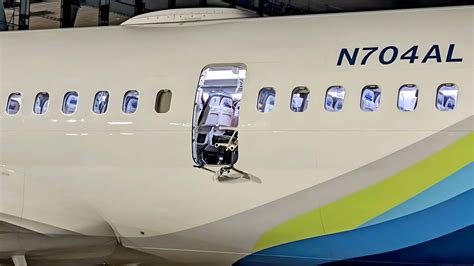
The FAA swiftly grounded affected aircraft and required fleet-wide inspections. What emerged was a chilling realization: even if MCAS was resolved, Boeing’s production quality control had slipped to dangerous levels. This incident confirmed what whistleblowers like Ed Pierson, a former senior Boeing manager, had long warned: the culture of haste and pressure permeated Boeing’s assembly lines.
Industry Voices Speak Out: Loss of Trust in Boeing
Numerous aviation professionals, regulators, and insiders have expressed concerns about Boeing’s trajectory. Ed Pierson told the Los Angeles Times:
“I would absolutely not fly a MAX airplane. I’ve worked in the factory where they were built, and I saw the pressure employees were under to rush the planes out the door.”
Jennifer Homendy, Chair of the National Transportation Safety Board (NTSB), also criticized Boeing for incomplete disclosure and sluggish responses to safety lapses. After the Alaska incident, she reinforced that Boeing’s problems were no longer isolated to MCAS—they had become systemic.

Comparative Insight: Boeing 737 MAX vs Airbus A320neo
To assess whether the 737 MAX was uniquely vulnerable, we must compare it to its nearest competitor, the Airbus A320neo. Both aircraft aimed for fuel efficiency, but Airbus achieved it by integrating larger engines into an airframe supported by fly-by-wire architecture and triple-redundant sensors. Airbus built the A320neo on a platform inherently adaptable to software-controlled flight dynamics.
Boeing, by contrast, bolted modern engines onto a legacy airframe, necessitating software like MCAS to compensate for aerodynamic instability. The result was a patched solution dependent on minimal sensor input and no pilot training backup.
Aircraft like the Airbus A220 and Embraer E2 series further illustrate the value of clean-sheet design and digital-native systems. These aircraft incorporate layered safety redundancies from inception, avoiding the retrofitting risks Boeing faced.
Is the Boeing 737 MAX Still Unsafe?
Today, the updated MAX includes MCAS revisions and sensor redundancy. Yet, recent manufacturing flaws have raised new alarms. The core question has shifted: Is the Boeing 737 MAX unsafe by design, or unsafe by how it’s built?
The Alaska Airlines incident revealed that oversight in the production line—not the blueprint—was to blame. However, even these lapses trace back to a culture of expedited delivery, outsourced manufacturing, and poor internal communication. Boeing has been forced to halt production increases and undergo stricter FAA supervision.
The Real Flaw: Systemic, Not Just Structural
Ultimately, yes—a design flaw did contribute to the Boeing 737 MAX tragedies. But what made the situation catastrophic was Boeing’s systemic failure to prioritize safety across every level: design, documentation, training, production, and communication. A well-designed airplane, poorly built, is still dangerous. A poorly designed system, hidden from pilots, is even more so.
Final Take: Can Boeing Restore Its Legacy?
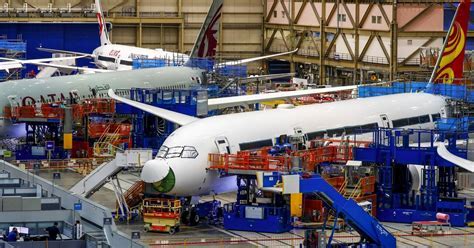
The aviation industry thrives on trust. Once, Boeing was a global benchmark for engineering excellence. Today, that legacy is tarnished by avoidable tragedy, corporate short-sightedness, and broken processes. As the company scrambles to reassure regulators and passengers, it must recognize that software patches and policy memos aren’t enough.
What’s required is a cultural transformation—an industry-wide reckoning with how decisions are made, how whistleblowers are treated, and how much risk is acceptable when human lives are at stake. Until that transformation occurs, the Boeing 737 MAX will remain a symbol—not just of design failure, but of what happens when safety takes a backseat to speed.