The Boeing 777X was conceived as the future of long-haul aviation, combining the proven foundation of the 777 family with new composite wings, advanced aerodynamics, and the most powerful commercial jet engine ever built. At the center of this ambitious project sits the General Electric GE9X, an engine designed to redefine efficiency, durability, and performance for the world’s largest twin-engine airliner.
Yet despite its groundbreaking technology, the GE9X has repeatedly found itself at the heart of delays that have pushed the 777X program years behind schedule. Among various technical setbacks, one engineering flaw stood out because it grounded the entire flight-test fleet and forced a major redesign of a critical structural component. The issue was not related to exotic ceramic materials or revolutionary combustion systems. Instead, it emerged from a component whose job seemed deceptively straightforward: the thrust link.
Understanding how a titanium structural element evolved into one of the most significant obstacles facing Boeing’s flagship widebody reveals the immense engineering challenges involved in pushing modern jet engines to unprecedented levels of performance.
The GE9X: The Most Ambitious Commercial Jet Engine Ever Built
The GE9X represents the culmination of decades of development that began with the legendary GE90 engine family. Rather than introducing a radically different architecture, General Electric chose an evolutionary path that leveraged proven concepts while dramatically advancing materials science, thermal efficiency, and aerodynamic performance.
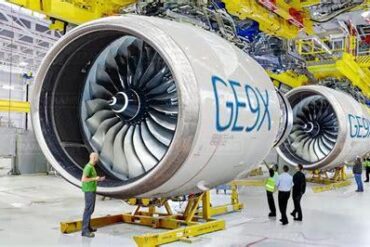
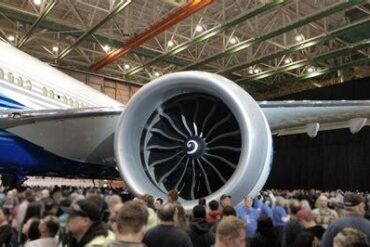
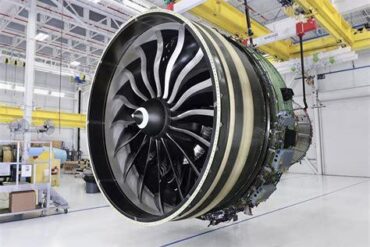
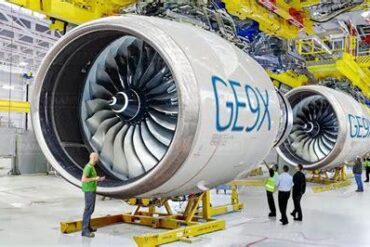
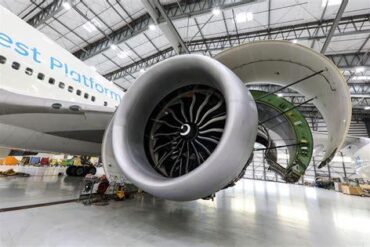
The engine’s sheer size immediately captures attention. With a 134-inch fan diameter, the GE9X is the largest commercial aircraft engine ever constructed. Its fan is so large that it exceeds the diameter of many regional jet fuselages. During testing, the engine generated an astonishing 134,300 pounds of thrust, establishing a world record for commercial aviation powerplants.
However, raw thrust was never the primary objective. Engineers focused on improving efficiency and durability while reducing operating costs. The production versions of the GE9X will operate significantly below their maximum capability, producing approximately 110,000 pounds of thrust in airline service. This substantial performance margin is intended to reduce stress on engine components and improve long-term reliability.
The GE9X also pushes boundaries in terms of pressure ratios. The engine achieves an overall pressure ratio of approximately 60:1, a dramatic increase over the GE90’s 40:1 ratio. Such compression levels enable exceptional fuel efficiency but create extraordinary thermal and mechanical stresses throughout the engine.
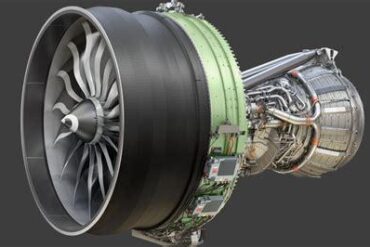
Its advanced construction incorporates extensive use of ceramic matrix composites (CMCs), materials capable of surviving temperatures that would damage traditional metallic components. More than sixty-five CMC parts are integrated into the engine, making it one of the most advanced applications of these materials in commercial aviation history.
By combining these technologies, General Electric promised fuel consumption reductions approaching ten percent compared with earlier-generation engines, a figure capable of saving airlines millions of dollars annually.
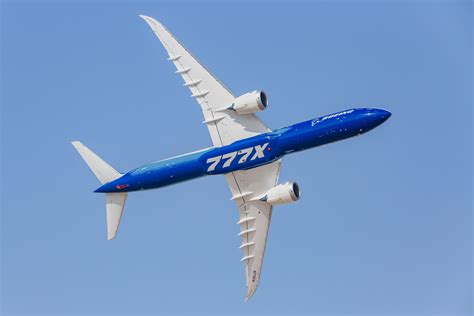
Why the GE9X Became Essential to the Boeing 777X
Unlike previous Boeing widebody programs that offered multiple engine choices, the 777X was designed exclusively around the GE9X. This decision reflected the aircraft’s demanding performance requirements.
The 777X features a larger composite wing, increased passenger capacity, improved cargo volume, and enhanced range. Achieving these objectives required an engine capable of delivering exceptional efficiency while maintaining enough thrust to support ultra-long-haul missions.
Major customers such as Emirates and Qatar Airways played a significant role in shaping the aircraft’s requirements. These airlines operate some of the world’s longest and most demanding routes, often departing from extremely hot environments while carrying full passenger and cargo loads.
For such operators, fuel efficiency alone is insufficient. Engine durability becomes equally important. Every additional hour an engine remains installed on an aircraft without requiring removal for maintenance translates into significant operational savings.
The GE9X was therefore marketed not only as a powerful engine but also as one engineered for exceptional on-wing time, the industry term describing how long an engine can remain in service before major maintenance becomes necessary.
That promise would soon be tested during certification.
Early Warning Signs During Certification Testing
The first major concerns emerged in 2019 during certification activities. Engineers detected unexpectedly high exhaust gas temperatures affecting portions of the compressor system.
Specifically, elevated temperatures caused accelerated deterioration in second-stage compressor stator vanes. These components help direct airflow through the compressor and are essential for maintaining efficiency and stability.
While the issue did not represent an immediate safety threat, it indicated that thermal behavior inside the engine differed from original design expectations. Because modern turbofan engines operate with extremely narrow tolerances, even relatively small deviations can have significant consequences over time.
General Electric responded by redesigning variable stator vane lever arms and conducting additional testing to verify the solution. Although the problem was eventually addressed, it delayed key milestones and contributed to postponements in the 777X flight-test schedule.
The incident also highlighted an important reality. The GE9X was operating at technological limits rarely explored in commercial aviation. Every increase in efficiency created new engineering challenges that required careful validation.
The 2022 Engine Shutdown That Raised Serious Questions
A more concerning event occurred in October 2022 when a Boeing 777-9 test aircraft experienced an in-flight engine shutdown.
Engine shutdowns during testing are not unheard of, but they always attract intense scrutiny because certification programs are specifically designed to identify and eliminate risks before aircraft enter airline service.
Following the event, Boeing and General Electric grounded the entire 777X test fleet while investigators examined the affected engine.
Using borescope inspections and detailed component analysis, engineers traced the problem to internal temperature-related issues. The findings indicated that additional design refinements were necessary before testing could continue.
The grounding lasted approximately two months, with flights resuming in early 2023 after modifications had been implemented.
Although the issue was eventually resolved, it reinforced concerns about the complexity of the GE9X. The engine’s combination of extremely high temperatures, record-setting pressure ratios, and advanced materials delivered exceptional efficiency but also reduced the margin for unexpected behavior.
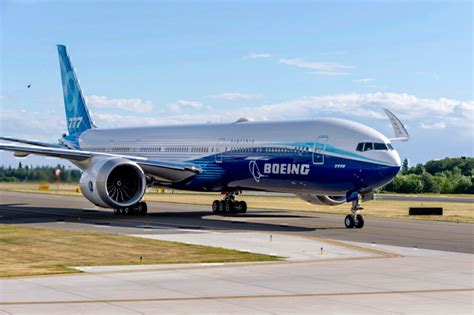
The Thrust Link Failure That Grounded the Entire Fleet
The most significant engineering flaw emerged in August 2024.
Following a routine post-flight inspection of test aircraft WH003, technicians discovered that a thrust link inside one GE9X engine had severed.
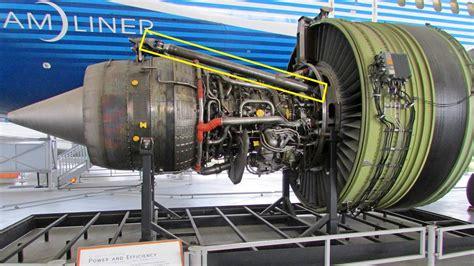
At first glance, the thrust link appears relatively simple compared with turbine blades, compressors, or combustion systems. In reality, it performs one of the most critical structural functions within the engine installation.
The thrust link transfers engine-generated forces into the aircraft’s pylon and wing structure. Every pound of thrust produced by the engine ultimately passes through this component.
Because the GE9X can generate more than one hundred thousand pounds of thrust, the loads involved are enormous.
The discovery immediately triggered broader inspections across the test fleet. Engineers soon found cracking in thrust links installed on two additional aircraft.
The implications were serious enough that Boeing and General Electric halted all flight testing.
Unlike efficiency-related concerns, a compromised thrust link directly affects structural integrity. Such a component must reliably withstand repeated loading cycles throughout tens of thousands of flight hours.
The issue therefore represented a fundamental engineering challenge rather than a routine performance adjustment.
The Hidden Engineering Problem: Excessive Vibration and Fatigue
Subsequent investigations revealed that the root cause involved a combination of vibration and fatigue.
Engineers determined that under specific operating conditions, interactions between the thrust links and their associated bolts generated vibration levels beyond anticipated limits.
These vibrations produced cyclic stresses that exceeded the fatigue tolerance of the affected components.
Fatigue is one of the most challenging phenomena in aerospace engineering because it develops gradually over time. Components can appear structurally sound for thousands of cycles before microscopic cracks begin to form.
Once cracks emerge, they can grow with each subsequent load cycle until failure eventually occurs.
In the case of the GE9X thrust links, the problem was particularly concerning because the component operates within an environment characterized by enormous thrust loads, vibration, thermal expansion, and changing aerodynamic forces.
The discovery demonstrated that even highly sophisticated computer simulations and ground testing cannot always predict every interaction that occurs during real-world flight operations.
The flaw was not caused by inadequate materials or manufacturing defects. Instead, it reflected an unexpected interaction between structural dynamics and operational loading conditions.
That distinction is important because it illustrates how modern aerospace engineering increasingly involves managing complex systems rather than simply strengthening individual parts.
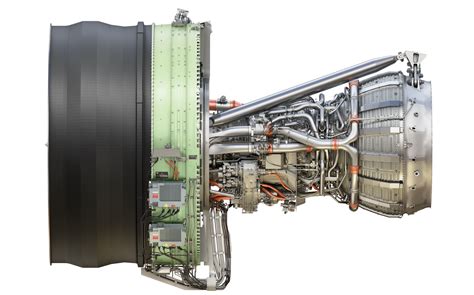
Redesigning a Critical Structural Component
Once the root cause became clear, General Electric initiated a comprehensive redesign effort.
The challenge extended beyond merely replacing damaged components. Engineers needed to develop a solution capable of eliminating the vibration-induced fatigue mechanism while preserving overall engine performance and certification requirements.
The redesign involved modifications to both the thrust link and associated attachment hardware. Extensive analysis and testing followed to validate the new configuration.
Because the affected component forms part of the engine’s primary load path, certification authorities required substantial evidence demonstrating long-term durability and safety.
Retrofitting the updated design across the test fleet consumed valuable time. The situation was further complicated by labor disruptions affecting Boeing during 2024, creating additional delays throughout the broader program.
Only after the redesigned thrust links were installed and validated could flight testing resume.
The episode became one of the most significant contributors to schedule slippage during the latter stages of 777X development.
Why Advanced Engines Are Increasingly Difficult to Certify
The GE9X’s struggles reflect broader trends across the aerospace industry.
Modern jet engines pursue incremental efficiency gains through increasingly aggressive operating conditions. Higher temperatures improve thermal efficiency. Higher pressure ratios extract more useful energy from fuel. Lighter materials reduce weight and operating costs.
Each improvement appears beneficial in isolation.
Collectively, however, these advances create systems operating closer to engineering limits than ever before.
The GE9X illustrates this reality perfectly. Its ceramic matrix composites withstand temperatures that conventional alloys cannot tolerate. Its compressor achieves pressure levels unprecedented in commercial aviation. Its fan system delivers extraordinary bypass efficiency.
Yet every innovation introduces new interactions requiring validation.
As a result, certification programs have become significantly longer and more complex than those of previous generations.
The original Boeing 747 entered service less than four years after launch. By contrast, the 777X is expected to require approximately fourteen years from announcement to commercial operation.
Much of that difference reflects the growing sophistication—and complexity—of modern aerospace technology.
The Latest Mid-Seal Cracking Issue
Even after the thrust link redesign, engineers continued identifying areas requiring attention.
In early 2026, inspections revealed cracking within the GE9X’s mid-seal assembly.
Unlike the thrust link problem, this issue has not halted certification activities. Nevertheless, it remains significant because it highlights ongoing durability challenges within the engine.
General Electric has continued developing corrective measures while maintaining that certification schedules remain achievable.
The presence of another durability-related concern has attracted industry attention because long-term reliability constitutes one of the GE9X’s primary selling points.
Airlines purchasing hundreds of aircraft expect engines capable of delivering years of efficient operation with minimal unscheduled maintenance.
Every additional issue therefore receives close scrutiny from customers and regulators alike.
Why Airlines Continue Supporting the GE9X Despite Delays
Despite years of development challenges, major airlines have largely maintained confidence in the program.
Emirates, Qatar Airways, Lufthansa, British Airways, Cathay Pacific, Singapore Airlines, and numerous other operators continue holding substantial 777X orders.
This confidence reflects several factors.
First, airlines have access to detailed technical data unavailable to the public. Their continued commitment suggests that performance and reliability projections remain compelling.
Second, the 777-9 occupies a unique position within the market. It offers greater passenger capacity and cargo volume than the Airbus A350-1000 while maintaining the economics of a twin-engine aircraft.
Third, General Electric possesses an extensive track record of developing durable high-thrust engines. Previous generations of GE-powered widebodies established strong reputations for reliability in demanding environments.
For carriers operating long-haul networks, the potential rewards remain significant.
If the GE9X achieves its promised fuel efficiency and on-wing time targets, airlines could realize substantial operating cost advantages over competing aircraft.
The Future of the Boeing 777X Depends on the GE9X
The Boeing 777X is far more than a stretched version of the existing 777. It represents a comprehensive modernization effort built around advanced aerodynamics, composite structures, and a next-generation propulsion system.
At the center of that vision stands the GE9X.
The thrust link failure that grounded the test fleet serves as a reminder that even seemingly straightforward components can become critical vulnerabilities when operating within highly optimized systems. The flaw emerged not because engineers overlooked a basic design principle but because the engine’s unprecedented performance created operating conditions that revealed previously unseen structural behaviors.
After years of redesigns, inspections, and validation efforts, the GE9X remains one of the most technologically ambitious engines ever developed. Its record-breaking size, extraordinary pressure ratios, and extensive use of advanced materials position it as a landmark achievement in commercial aviation engineering.
Whether the engine ultimately fulfills its promise will become clear only after years of airline service. For now, the thrust link episode stands as one of the most important engineering lessons of the 777X era—a demonstration that in modern aerospace design, success depends not only on revolutionary technologies but also on ensuring that every component, from the largest fan blade to a single titanium structural link, performs flawlessly under the most demanding conditions imaginable.