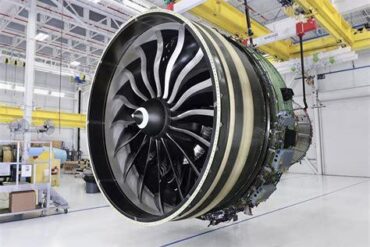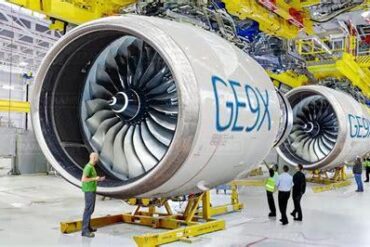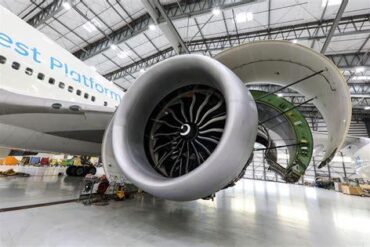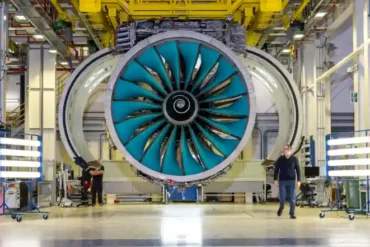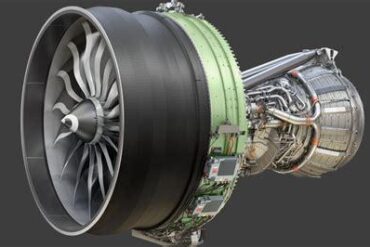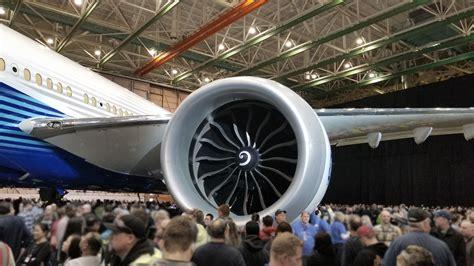
The GE9X engine, the most powerful commercial jet engine ever certified, has officially transitioned from years of development and rigorous testing to full-scale production. This marks a transformative milestone not only for GE Aerospace, but for the entire aviation industry as it ushers in the next generation of wide-body flight with Boeing’s upcoming 777X aircraft. With unmatched thrust, advanced materials, and breakthrough environmental performance, the GE9X is redefining what is technologically possible in modern jet propulsion.
A New Era of Jet Propulsion Begins
After more than a decade of research, engineering, and over 17,000 hours of testing, the GE9X has proven its readiness for the real world. At the heart of this transition is GE Aerospace’s high-performance assembly line in Durham, North Carolina, which is now actively producing the engines in close coordination with Boeing’s 777X production at Everett, Washington.
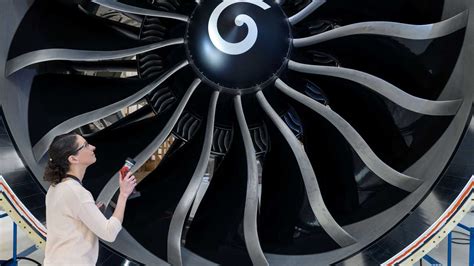
The GE9X is a leap forward in size and capability. With a fan diameter of 3.4 meters (134 inches), it surpasses anything previously installed on a twin-engine aircraft. This massive fan size allows the GE9X to deliver up to 134,000 pounds of thrust, while maintaining extraordinary fuel efficiency and low noise emissions.
Each engine undergoes a critical phase of testing at GE’s Peebles, Ohio, facility, where it faces some of the harshest test regimes ever devised. One such trial, the dust ingestion test, involves cycling the engine through 1,600 artificial takeoff and landing cycles simulating desert environments. The GE9X not only survived this ordeal—it emerged with its hot section in serviceable condition after 1,500 cycles, prompting testers to extend the test for another 100 cycles.
Endurance, Power, and Unmatched Testing Milestones
To achieve certification, GE Aerospace subjected the GE9X to over 27,000 test cycles, establishing a robust foundation of reliability and performance before any unit ever reaches a commercial runway. As Tyler-Blair Sheppard, GE Aerospace’s GE9X marketing lead, notes: “We’ve run the heck out of the engine,” adding that customer reactions to the test data, particularly the dust endurance results, have been overwhelmingly positive.
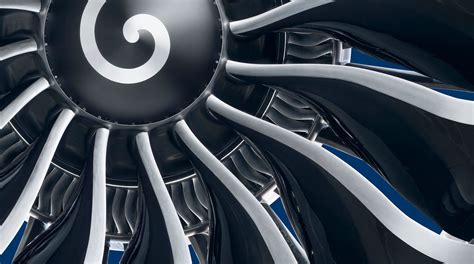
The durability of the engine’s hot section—which includes components exposed to the highest temperatures, such as the combustor and turbines—was especially impressive. “It looked great and was in serviceable condition,” Sheppard said. This durability is a direct result of cutting-edge materials like ceramic matrix composites (CMCs) and additive-manufactured components, which are built to withstand greater heat and stress while reducing weight.
Environmental Responsibility Embedded in Design
The GE9X is not merely a behemoth of power—it is also a blueprint for sustainable aviation. The engine’s emissions performance surpasses global standards by a wide margin. NOx emissions are 55% lower than current regulatory limits, making the GE9X a leader in environmental stewardship among large commercial jet engines.
Noise emissions have also been dramatically reduced thanks to an improved fan blade design and an ultra-high bypass ratio. These features not only contribute to passenger comfort but also to airport community acceptance, a growing concern in today’s environmentally conscious climate.
The GE9X’s fuel burn is 10% lower than the GE90, its predecessor on earlier Boeing 777 models. This reduction translates directly into lower operating costs for airlines and reduced carbon output per seat mile. All this makes the engine a key player in the long-term strategy to decarbonize commercial aviation.
GE Aerospace’s Commitment to Global Support and MRO
GE Aerospace is backing the GE9X program with more than $1 billion in investments to expand its maintenance, repair, and overhaul (MRO) network. This includes enhancements to global facilities, training programs for technicians, and logistical support capabilities designed to minimize downtime for operators.
A cornerstone of this initiative is the GE Lease Pool Programme, which allows airlines immediate access to replacement engines, minimizing disruption in the event of an unscheduled maintenance event. This aligns with GE’s broader objective to ensure that every GE9X engine in operation is supported by a rapid, responsive, and robust infrastructure.
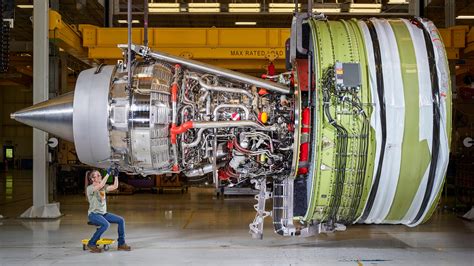
“When issues occur, we’ll be fully set up to support our customers and get them flying again as soon as possible,” said Sheppard. The level of preparedness reflects GE Aerospace’s strategic shift toward becoming not just a manufacturer, but a complete service provider for the GE9X fleet over its entire lifecycle.
Preparing for ETOPS and Entry into Commercial Service
Another key development expected later this year is the Extended-range Twin-engine Operational Performance Standards (ETOPS) approval. This certification is vital for long-haul flights over remote areas, where immediate diversion airports may be unavailable. ETOPS approval will enable the 777X, powered by GE9X engines, to fly ultra-long-haul routes with confidence and compliance.
The collaboration between GE Aerospace and Boeing is a model of industrial synchronization. As Cristina Seda-Hoelle, head of GE Aerospace’s GE9X programme, noted, “We’ve started building and we’ll be aligning production with Boeing’s production of the 777X.” This just-in-time manufacturing approach ensures that each aircraft is mated with its engines without delay, preserving supply chain efficiency and delivery schedules.
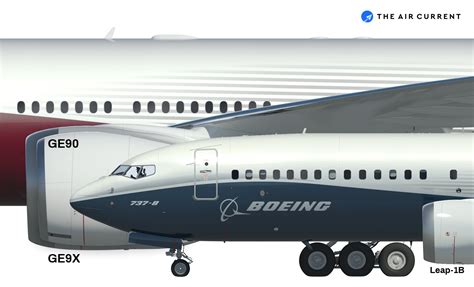
With Boeing’s 777X expected to redefine long-range travel through superior efficiency, size, and passenger comfort, the role of the GE9X cannot be overstated. As the sole engine selected for this next-generation aircraft, the GE9X is set to power commercial aviation’s future for decades to come.
A Technological Marvel That Pushes Boundaries
In the words of Seda-Hoelle: “The GE9X engine is an absolute beast of modern engineering. This isn’t just cool – it’s a game changer that pushes the boundaries of technology.” Her sentiments are echoed by the broader aerospace community, where the GE9X is seen not merely as an engine but as a platform for future innovation.
Its incorporation of next-gen materials, digital twins, predictive analytics, and state-of-the-art testing protocols will set the standard for all future propulsion systems. From fuel efficiency to durability, and from emissions reduction to maintenance predictability, the GE9X is not just a product of today—it’s the foundation of tomorrow’s flight.
With full-scale production underway, the GE9X’s entry into commercial service represents more than the launch of a new engine. It signifies a giant leap forward in aerospace engineering, redefining what is possible for long-haul aviation. As the Boeing 777X prepares for its global debut, it will carry with it the crown jewel of jet propulsion—the GE9X.