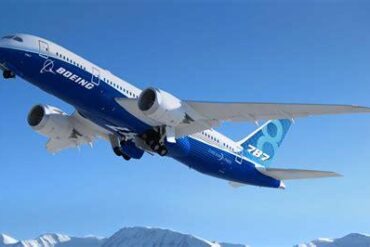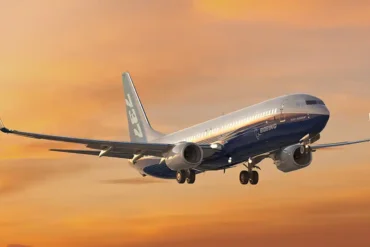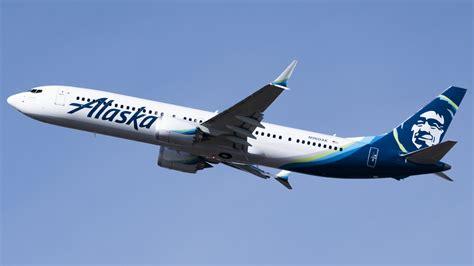
The Boeing 737 MAX 9 is one of the most scrutinized aircraft in the modern aviation era—not just for its safety controversies but also for its notoriously long takeoff roll. At maximum takeoff weight (MTOW), the aircraft requires an astounding 8,500 feet (2,600 meters) of runway just to leave the ground. This performance quirk isn’t just a number; it’s the result of a complex interplay between airframe geometry, thrust limitations, operational safety margins, and legacy design choices. For airlines, pilots, and airports, understanding the cause behind this extended run is critical to ensuring safe and efficient operations.
The Core Problem: A Heavy Jet With Modest Engines
The 737 MAX 9 pushes the envelope of what the classic 737 design was originally meant to achieve. Introduced to replace the 737-900, it stretches the fuselage to 138 ft 4 in (42.16 m) and supports a MTOW of 194,700 lbs (88,300 kg)—12,000 lbs more than the MAX 8 and 17,000 lbs more than the MAX 7.
Yet it uses the same engines as its smaller siblings: the CFM International LEAP-1B, generating a maximum of 29,317 lbf of thrust. With this massive weight and only moderate engine upgrades, the MAX 9 ends up with a low thrust-to-weight ratio of 0.15, far below what would be ideal for short-field performance.
This mismatch in propulsion and mass means the aircraft needs significantly more time and runway distance to reach rotation speed. For context, the original 737-100 was designed with a MTOW of just 93,500 lbs (42,411 kg)—less than half of the MAX 9. As the design evolved, Boeing opted for length and capacity rather than redesigning the wing or engine system, introducing a design bottleneck that shows itself most clearly during takeoff.
Tail Strike Concerns Limit Rotation Angles
Another unique factor limiting the aircraft’s takeoff performance is the high risk of tail strikes. Because of the stretched fuselage, pilots have a limited pitch angle before the aircraft’s tail risks contact with the runway. Unlike more modern airframes with higher gear and redesigned fuselages, the 737 MAX 9 maintains a lower pitch ceiling, which forces pilots to execute shallower rotations, lengthening the time before lift-off.
The risk isn’t hypothetical. In February 2023, two Alaska Airlines aircraft—a 737 MAX 9 and a 737-900ER—suffered tail strikes minutes apart in Seattle. A software bug had under-reported the aircraft’s weights by 20,000–30,000 lbs, misleading the pilots into attempting takeoffs with incorrect configurations. Both aircraft had to return immediately, leading to a 22-minute ground stop until the issue was identified.
Comparing Its Predecessor: The 737-900ER
The 737-900ER, which the MAX 9 replaces, shared similar struggles with takeoff roll performance. Although its standard takeoff run was 7,546 ft (2,300 m), that figure could balloon to 9,840 ft (3,000 m) in hot-and-high environments or when approaching MTOW.
The -900ER used the CFM56-7B27B engines, with a better thrust-to-weight ratio of 0.3, but this was undermined by a flatter aft pressure bulkhead, which Boeing implemented to squeeze in an extra row of seats. This modification shifted weight rearward, often forcing operators to leave rear cargo holds empty to maintain proper weight balance.
Moreover, the -900ER had the highest wing loading among all 737s—meaning the aircraft needed to achieve a higher speed before generating enough lift to rotate safely, especially when dealing with thinner air at higher elevations or temperatures.
The Wing Loading Dilemma
Wing loading, the ratio of an aircraft’s weight to its wing area, plays a critical role in takeoff performance. Higher wing loading increases the required rotation speed, lengthening the takeoff roll. The 737 MAX 9, though not as wing-loaded as the -900ER, still carries a hefty fuselage and must rely on wings designed for much lighter variants. As a result, the aircraft’s ability to generate lift without excessive speed is inherently limited.
While Boeing has added aerodynamic tweaks—such as Advanced Technology (AT) winglets—these are more beneficial at cruising altitudes and do little to improve takeoff acceleration. The aircraft’s high cruising speed of Mach 0.79 and range of 3,300 nautical miles mean performance is optimized for long-haul efficiency, not short-field prowess.
Airbus A321neo: A Worthy Adversary
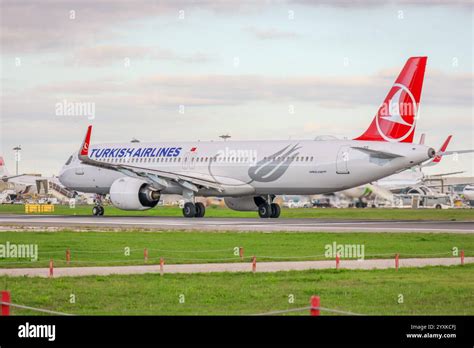
When comparing the 737 MAX 9 to its main rival, the Airbus A321neo, the MAX 9 seems to fall short in crucial performance areas. The A321neo and its variants (LR and XLR) are slightly heavier, with MTOWs of 206,100 lbs and above. However, they are powered by either the LEAP-1A or Pratt & Whitney PW1100G-JM, which deliver up to 33,110 lbf of thrust, giving these jets a better thrust-to-weight ratio of 0.16.
While exact takeoff distances for the A321neo family are difficult to pin down, their more powerful engines, taller gear, and optimized wing design suggest that they do not suffer from the same elongated takeoff rolls. Airbus also employs fly-by-wire technology, allowing for more precise control during rotation and landing, reducing tail strike risks significantly.
The Role of Airport Conditions
Airport elevation, runway temperature, and wind conditions drastically affect takeoff performance. At sea level with cool air, aircraft engines perform more efficiently, requiring shorter takeoff rolls. However, the MAX 9’s base performance is already long enough that hot-and-high airports like Denver or Mexico City can stretch its runway requirements to the brink.
Runway slope and surface type also come into play. A downward slope can reduce takeoff roll, while wet or icy conditions may increase the required distance by hundreds of feet. Pilots must calculate takeoff performance using these variables to ensure compliance with FAA and ICAO regulations.
Safety, Certification, and Public Perception
The 737 MAX 9’s takeoff challenges add to a broader narrative that Boeing has faced post-grounding. The aircraft entered service in 2018, but following the grounding of the MAX series in 2019, its public trust took a hit. Matters weren’t helped when Alaska Airlines Flight 1282 in January 2024 suffered a door plug blowout mid-air, leading to rapid decompression.
While not directly linked to takeoff performance, the event once again put Boeing under scrutiny, prompting temporary FAA grounding of affected units and renewed focus on production quality. These incidents compound the difficulties Boeing faces in convincing airlines and regulators of the aircraft’s overall reliability.
What This Means for Operators
Airlines operating the 737 MAX 9 must adopt tailored operational procedures. These include:
- Selecting departure airports with longer runways.
- Avoiding high-density altitude operations near MTOW.
- Implementing conservative weight and balance protocols.
- Training pilots thoroughly on tail strike avoidance techniques.
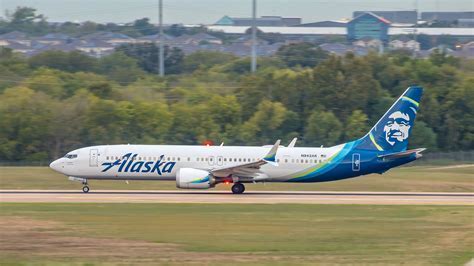
Some carriers, like Alaska Airlines and United, have already adapted their operations to the MAX 9’s limitations. However, for new entrants or those operating in terrain-constrained regions, the long takeoff roll is a logistical challenge.
A Look Ahead: The Boeing 737 MAX 10
With Boeing gearing up for certification of the 737 MAX 10, expected to enter service by the end of the year, similar challenges are anticipated. The MAX 10 will stretch the airframe further to 143 ft 8 in (43.79 m) and carry an MTOW of 197,900 lbs (89,800 kg)—even heavier than the MAX 9. Yet it will also use the same LEAP-1B engines, almost certainly requiring an even longer takeoff roll and tighter margins for pitch control.
Unless Boeing introduces structural or propulsion innovations, the MAX 10 may inherit, if not amplify, the takeoff performance drawbacks of the MAX 9.
Conclusion
The Boeing 737 MAX 9’s extended takeoff roll is no accident. It is the cumulative result of a design evolution that pushed the 737 platform to its physical limits without fully addressing the corresponding aerodynamic and propulsion needs. With a low thrust-to-weight ratio, tail strike concerns, legacy wing design, and limited pitch control, the aircraft is bound by physics as much as by certification rules.
While it continues to serve effectively in many fleets, the MAX 9 is a prime example of how far one can stretch a legacy airframe before compromises start to show on the runway. For Boeing, the MAX 9’s takeoff length is a reminder that modern efficiency must also consider fundamental aerodynamic principles—not just cabin capacity and range.