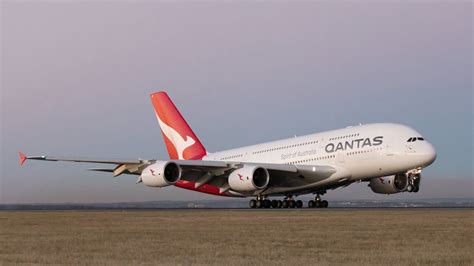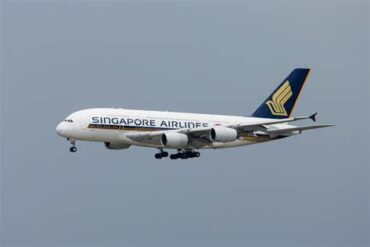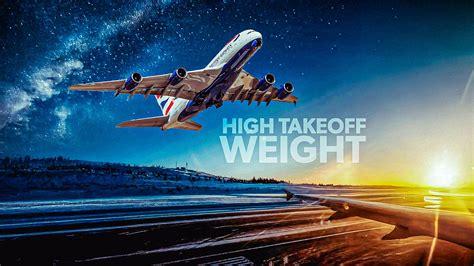
The Airbus A380-800 is not merely a large aircraft — it is a colossus in every sense of aviation engineering. As the world’s only full-length double-decker passenger jet, its maximum takeoff weight (MTOW) is a reflection of unparalleled size, payload, range, and structural complexity. Weighing in at a staggering 1,268,000 lbs, the A380’s MTOW dwarfs nearly all commercial aircraft still in operation. This exceptional figure is the result of a confluence of structural, operational, and design factors unique to the superjumbo.
The A380 was built with one mission in mind: to ferry hundreds of passengers over ultra-long-haul routes with maximum comfort and efficiency. But the price of this vision came in the form of heavy engines, oversized wings, vast fuel storage, and a structural framework built more from metals than composites. Understanding why this aircraft is so heavy means unpacking everything from its internal design to global aviation economics.
The Reign of the Heavyweights: A Comparative Snapshot
Before the A380 took its crown, the Antonov An-225 Mriya, originally designed to transport Soviet spacecraft, held the record for the heaviest flying machine. Its destruction in 2022 in Ukraine left the A380-800 as the reigning monarch of sky-borne weight.
In comparative terms:
- Antonov An-225: 1,410,958 lbs (destroyed in 2022)
- Airbus A380-800: 1,268,000 lbs
- Boeing 747-8F: 990,000 lbs
- Antonov An-124 Ruslan: 886,258 lbs
- Lockheed C-5M Super Galaxy: 840,000 lbs
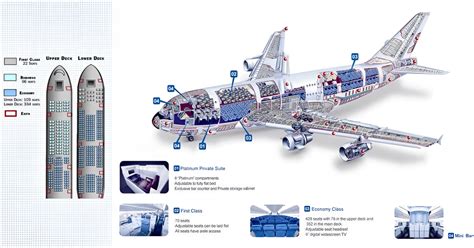
The A380 isn’t just heavier than its peers — it’s engineered to operate under such massive loads daily. It doesn’t just transport cargo; it hauls up to 853 passengers, their luggage, the weight of 11 fuel tanks, and structural reinforcement that supports its unique profile.
Ultra-Long Range = Ultra-Heavy Fuel Load
What separates the A380 from smaller aircraft is its ability to cover distances of up to 8,000 nautical miles without refueling. That feat demands an astronomical amount of jet fuel — up to 85,500 gallons (320,000 liters) distributed across 11 fuel tanks.
Given jet fuel’s density of approximately 1.76 lbs/liter, the aircraft may be lifting 563,200 lbs of fuel when fully fueled. That alone accounts for roughly 44% of its MTOW, a figure that would overwhelm many conventional widebodies.
But the design problem doesn’t end with capacity. Because the aircraft weighs so much from the start, it must burn more fuel just to carry itself — a self-perpetuating weight loop. Every pound of additional weight requires more fuel to offset drag and gravity, increasing the MTOW further.
Passenger Load Adds Substantial Mass
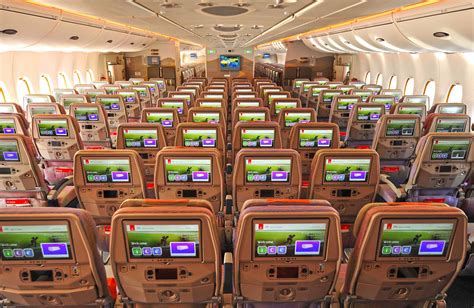
With the ability to carry up to 853 passengers in a dense all-economy layout, or 615 in Emirates’ short-haul layout, the human element of the A380 contributes significantly to its mass. Assuming a conservative average of 150 lbs per person, the full passenger load alone adds about 129,000 lbs — nearly 10% of the aircraft’s MTOW.
This doesn’t even include cabin crew, catering, water, or luggage. When fully loaded, these factors make the A380 a flying city, and that city needs powerful structural reinforcement to remain aloft for 15+ hours at a time.
Old-School Construction: Limited Use of Composites
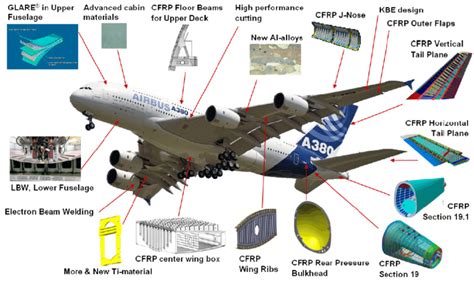
One of the biggest contributors to the A380’s weight is its relative lack of composite materials. Unlike newer aircraft such as the Airbus A350 or Boeing 787, which use 50–53% composites, the A380 uses only 22% composites. Its structure is primarily 61% aluminum alloys, with another 10% made from steel and titanium, and 3% fiber-metal laminates.
This metallurgical makeup is heavy — the dry structural weight alone is about 375,000 lbs. The A350, by contrast, benefits from over 40,000 lbs in structural weight savings, thanks to its use of carbon-fiber-reinforced polymer (CFRP) parts. The A380, developed in the early 2000s, simply didn’t incorporate these innovations to the same degree.
Four Engines Instead of Two
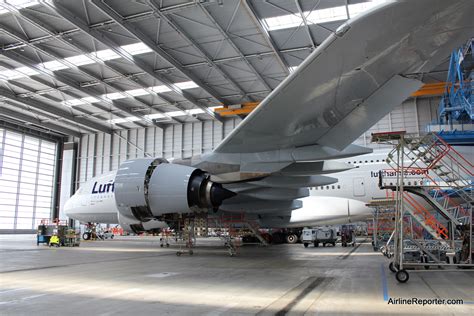
Modern widebodies such as the 787 and A350 make do with two ultra-efficient engines, but the A380 carries four, which dramatically affects its weight.
The A380 is powered by either the Rolls-Royce Trent 900 or the Engine Alliance GP7000, each providing 75,000 lbf of thrust. Individually, these engines weigh 13,400–13,770 lbs in dry weight. Multiplied by four, the aircraft hauls about 53,600 lbs of engine weight alone.
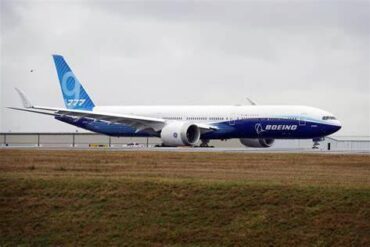
Contrast this with the Boeing 777X, whose GE9X engines are the most powerful in the world and yet only total 42,500 lbs for both. While each 777X engine is heavier, the A380’s reliance on four units significantly increases overall aircraft weight.
Oversized Wings Optimized for a Variant That Never Came
Another quirk in the A380’s design lies in its massive wings, each weighing around 60,000 lbs. Airbus originally designed the wing for a stretched version of the aircraft — the A380-900 — that was never developed. This means the wings are larger and heavier than needed for the current A380-800, contributing unnecessary bulk.
These larger wings increase drag and structural load, demanding a heavier undercarriage and fuselage to support them. While they enable smoother rides and long endurance, they do so at the cost of weight and fuel efficiency.
The Weight of Paint, Systems & Landing Gear
Even seemingly minor factors like paint contribute notably to the A380’s mass. The full-body paint adds about 1,170 lbs to the aircraft, which might sound trivial — until you consider that every pound counts when you’re battling gravity across oceans.
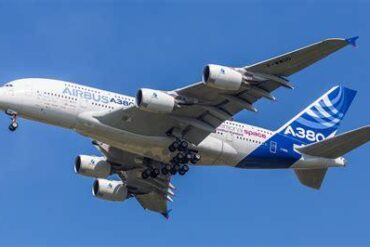
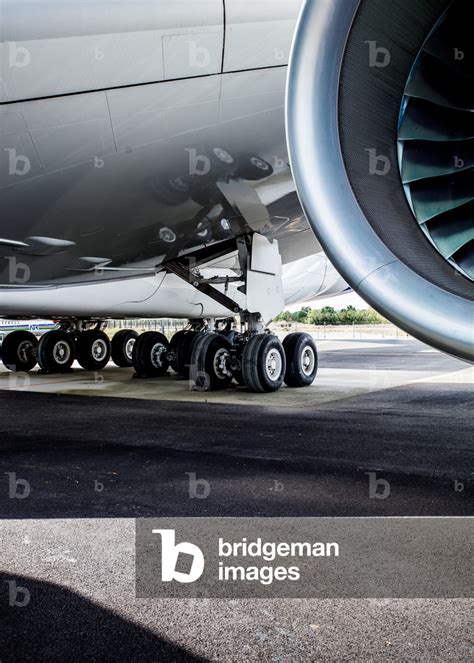
Additionally, the landing gear system must be among the most robust ever built. With 22 wheels on five landing gear assemblies, the gear must distribute over 1.2 million lbs during takeoff and landing. This system, including hydraulics, actuators, and struts, adds significant dead weight but is essential to support the aircraft’s gargantuan mass.
The Compounding Effect: A Self-Fueling Weight Spiral
What makes the A380 so fascinating is how its own weight drives a feedback loop that forces even more weight. Because the aircraft is heavy, it needs more fuel. More fuel requires larger wings. Larger wings increase structural stress, requiring stronger materials and undercarriage components. Each solution adds more pounds.
This cascading effect of interdependent systems means that reducing weight in one area would require a full-scale redesign — something impractical given the A380’s purpose and the era in which it was designed.
Conclusion: A Monument to Heavy Aviation Engineering
The Airbus A380’s massive takeoff weight is the result of numerous interconnected design choices: ultra-long-range capability, enormous passenger capacity, reliance on conventional materials, four-engine configuration, oversized wings, and robust support systems. It stands not as a flaw in aviation engineering, but rather as a testament to what was technically possible in the early 21st century when the industry was still focused on hub-to-hub super-capacity models.
As aviation moves toward lighter, more fuel-efficient twin-engine designs, the A380 remains a spectacular outlier — a sky giant whose immense weight was both its strength and its Achilles’ heel.