The Boeing 777X stands as one of the most advanced widebody aircraft ever built, blending technological breakthroughs with evolutionary design. As the successor to the 777-300ER and incorporating many of the performance efficiencies introduced by the 787 Dreamliner, the 777X represents the next step in long-haul commercial aviation. Yet, for all its innovation and power, one question remains persistently asked by the curious flyer and the aviation enthusiast alike: how fast can the Boeing 777X actually fly?
The answer, while not dazzling in the way of Concorde’s Mach-breaking speeds, reflects the practical constraints and engineering logic of the modern commercial aviation market.
The Evolution of the Boeing 777X: Stretching Limits, Not Speed
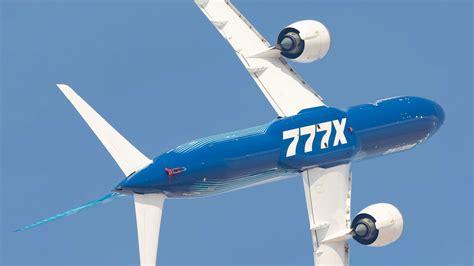
The Boeing 777X comes in two major variants—the 777-8 and the 777-9. The latter is the longer of the two, measuring 251 feet and 9 inches, while the 777-8 stretches 252 feet and 6 inches. Seating capacities for a typical 2-class layout are 395 passengers for the 777-8 and 426 passengers for the 777-9. What truly sets the 777X apart isn’t its size alone, but its groundbreaking folding wingtips, an engineering innovation that lets it span a full 235 feet and 5 inches in the air, but retract to 212 feet and 9 inches on the ground for airport compatibility.
The use of lightweight composite materials, improved cabin architecture, and thinner fuselage walls all contribute to the jet’s increased internal space and fuel economy. However, none of these updates were aimed at increasing raw speed.
The Speed Profile: Transonic, Not Supersonic
Cruise speed, the operational sweet spot for commercial jets, is not where the 777X tries to push boundaries. Like nearly all modern widebody jets, the Boeing 777X cruises at Mach 0.85, or roughly 560 mph (900 km/h) at cruising altitude. This places it in line with competitors such as the Airbus A350-900 and Boeing 787, both of which share the same cruise speed category.
Here’s how the 777X compares:
- Boeing 787-8: Mach 0.85–0.86
- Boeing 747-8: Mach 0.855
- Airbus A350-900: Mach 0.85
- Boeing 777-300ER: Mach 0.84
While the 777X might seem marginally faster than its predecessor, the 777-300ER, the difference of Mach 0.01 is barely perceptible in real-world operations. At best, this might shave 5 to 10 minutes off a transoceanic journey—meaningless when compared to delays, boarding times, and taxiing on the tarmac.
The Physics Behind the Speed Plateau
The primary reason the 777X and other commercial aircraft top out at Mach 0.85 is aerodynamic drag. At transonic speeds—between Mach 0.8 and 1.0—aircraft begin to experience a dramatic increase in drag. This drag, in turn, necessitates exponentially more fuel, which undermines the cost-efficiency goals of modern aviation.
Supersonic travel, like that planned by Boom’s Overture jet, requires entirely different fuselage design, engine architecture, and operational economics. As such, manufacturers like Boeing, Airbus, and Embraer continue to optimize for efficiency, not speed.
The GE9X Engine: Massive Power, But Built for Efficiency
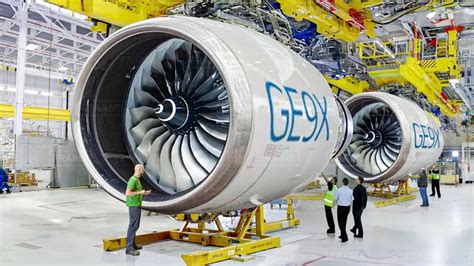
If the 777X doesn’t break speed records, it certainly does break new ground in engine performance. The aircraft is powered by GE Aerospace’s GE9X turbofans, currently the largest and most powerful jet engines ever certified for commercial use. With a fan diameter of 134 inches, the GE9X dwarfs its nearest competitor, the Rolls-Royce Trent XWB (118 inches), used on the Airbus A350.
Key GE9X Specs:
- Rated Thrust: 110,000 lbf (tested to 134,000 lbf)
- Bypass Ratio: 10:1
- Engine Weight: 21,230 lbs
- Fuel Efficiency: 10% improvement over GE90-115B
- Fan Blades: Six fewer than previous GE90, reducing drag
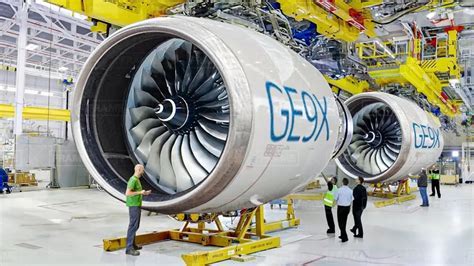
Despite its raw power, the GE9X is not optimized for increased top speed. Instead, it’s engineered for fuel savings, reduced emissions, and a quieter acoustic profile. According to GE Aerospace, the GE9X is 5% more efficient than any twin-aisle engine currently in operation, although Rolls-Royce’s Trent XWB-84 upgrade aims to narrow this gap by 2025.
Efficiency Is the New Speed
Aircraft manufacturers today face immense pressure to reduce carbon footprints, cut operating costs, and comply with international emissions regulations. This is why nearly every innovation in the 777X is centered on efficiency, from the use of composite materials (30% of the airframe) to advanced aerodynamics.
Unlike a clean-sheet design like the Airbus A350, which uses 53% composites, the 777X is an evolution of an existing platform. That said, it still introduces enough improvements—such as thinner cabin walls and larger windows—to deliver an overall superior passenger experience.
Supersonic Competition: Why the 777X Isn’t Playing That Game
With the Boom Overture aiming for Mach 1.7, the idea of faster-than-sound commercial flight is making a cautious return. Backed by United Airlines, American Airlines, and Japan Airlines, the Overture promises speeds double that of the 777X, albeit with severe trade-offs:
- Passenger Capacity: 60–80 (vs. 426 in 777X)
- Range: 4,250 nautical miles (vs. 7,285–8,745 nm in 777X)
- Altitude: 60,000 feet (vs. ~35,000–43,000 feet)
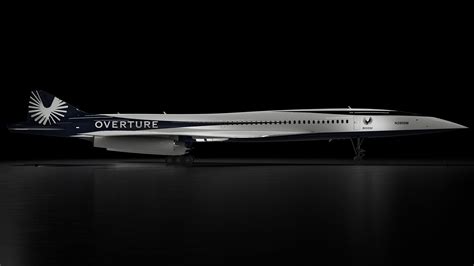
Even with President Trump’s 2025 executive order lifting the supersonic ban over U.S. land routes, supersonic air travel remains a niche market, targeting wealthy travelers on premium business routes. The 777X, by contrast, is designed for mass-scale, long-haul travel—a fundamentally different mission profile.
Practical Flight Speeds: The 777X in Real-World Operation
Despite a maximum cruise Mach of 0.85, airlines may not always fly the 777X at this threshold. Real-world variables like jet streams, air traffic control, and fuel cost optimization mean most widebody aircraft operate closer to Mach 0.78 to 0.82. These speeds typically translate to:
- True Airspeed: 450–500 knots
- Ground Speed: 520–580 mph (depending on wind conditions)
In actual usage, the cruise envelope of the Boeing 777X aligns with industry norms, offering optimized fuel consumption, maintenance longevity, and schedule reliability.
Final Verdict: Not Built for Speed, Built for the Future
So, how fast can the Boeing 777X fly? The technical answer is Mach 0.85, which matches the industry benchmark for widebody aircraft. But the more meaningful answer lies in what the 777X is truly designed to do: maximize fuel efficiency, reduce emissions, enhance passenger comfort, and extend global connectivity over vast distances.
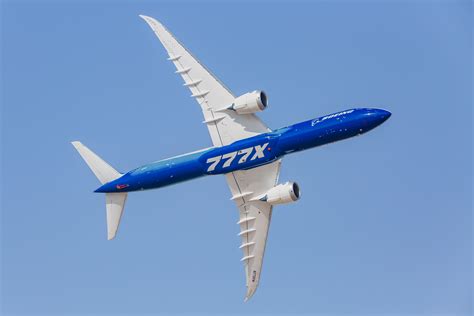
Speed, it turns out, is only one metric of performance. In the current climate—both environmental and economic—efficiency has become the ultimate yardstick. And in that realm, the Boeing 777X may not fly faster, but it certainly flies smarter.