For travelers accustomed to the grind of commercial aviation, the allure of private jets lies not just in their luxury, but in the promise of speed. Flying from New York to Los Angeles in under six hours might seem like science fiction to most, but for those aboard the world’s fastest private jets, it’s a frequent reality—one achieved through a precise blend of aerodynamic engineering, altitude efficiency, and streamlined logistics.
From Wagons to Warp Speed: The Evolution of Cross-Country Travel
The journey across the continental United States once took weeks by horseback and wagon. Even in the age of steam-powered trains, it required days of travel. Fast forward to today, and a private jet can traverse the same 2,800-mile stretch in under five hours, depending on conditions and aircraft type. To grasp this capability, we must examine the speed and performance specifications of various categories of private jets.
At the lower end of the private jet spectrum are light jets, which typically cruise between 403 mph and 518 mph. These aircraft are ideal for shorter regional hops but struggle to compete with long-haul commercial aircraft in coast-to-coast scenarios. Midsize jets, a step up in terms of both comfort and capability, generally cruise at 518 mph to 598 mph. However, it’s the heavy jets—designed for long-range travel—that dominate the cross-country scene, often reaching cruising speeds of up to 690 mph.
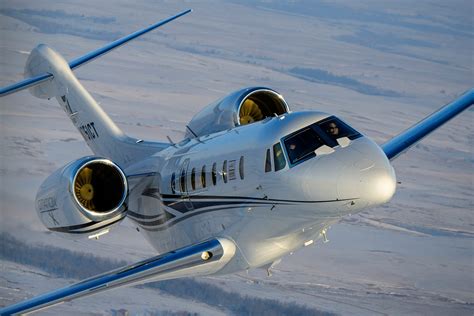
The fastest in the class, such as the Cessna Citation X+, push the envelope even further. Capable of speeds up to 717 mph, the Citation X+ is a marvel of aviation design, clocking in at nearly Mach 0.935. With this kind of performance, flying from JFK to LAX can take just four hours and 30 minutes in favorable conditions.
Aircraft Capabilities: Speed Breakdown by Jet Class
While narratives tell the story, numbers paint the picture. Here’s how different categories of private jets stack up in terms of transcontinental speed:
- Light Jets: 403–518 mph | ~6–7 hours coast-to-coast
- Midsize Jets: 518–598 mph | ~5.5–6 hours
- Heavy Jets: 598–690 mph | ~4.5–5.5 hours
- High-Performance Jets (e.g., Citation X+): Up to 717 mph | ~4–4.5 hours
These ranges can vary based on wind conditions, routing, refueling stops (if required), and air traffic control constraints. But one factor that consistently gives private jets an edge is altitude.
The Advantage of Altitude: Flying Higher, Flying Faster
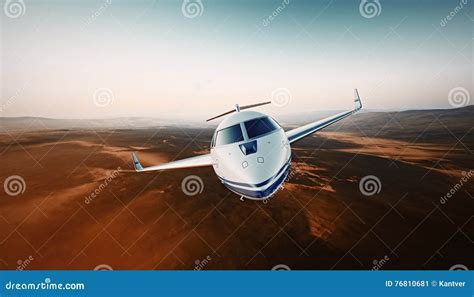
Unlike commercial airliners that typically cruise at 35,000 feet, private jets often operate at 41,000 to 51,000 feet. These elevated altitudes come with two massive advantages. First, air density is significantly lower, which reduces drag and allows the aircraft to maximize cruising speed. Second, there’s far less traffic, allowing for more direct routing and minimal delays.
At these altitudes, turbulence is also reduced. This not only enhances passenger comfort—important when paying tens of thousands for a single flight—but also allows the plane to maintain higher speeds consistently without needing to adjust for bumpy weather patterns.
Pilots flying private jets also benefit from greater routing flexibility, as private aviation isn’t restricted to the same rigid air traffic corridors that commercial airliners must follow. This autonomy contributes to shorter travel time and increased efficiency.
Time Saved on the Ground: Skipping the Chaos of Airports

Even with a speed advantage in the air, private jets dramatically outperform commercial flights on the ground. For regular passengers, a cross-country trip might involve arriving at the airport two hours early, navigating TSA checkpoints, boarding queues, baggage drops, delays, and long walks to distant gates. Then, upon arrival, there’s another wait for baggage claim and often congested airport exits.
Private flyers experience none of that.
- Check-in time: Just minutes before departure
- Security: Personalized and expedited
- Boarding: Direct access via private terminals or FBOs (Fixed-Base Operators)
- Baggage: Handled directly by the crew—no carousel waits
This alone can shave two to three hours off total travel time, sometimes even more during peak holiday seasons or in congested airports.
Aircraft Spotlight: The Cessna Citation X+
The Cessna Citation X+ deserves special mention when discussing private jet speed. Not only is it the fastest civilian jet currently in production, but it was specifically engineered to maximize efficiency for transcontinental routes.
- Top Speed: Mach 0.935 (717 mph)
- Range: 3,460 nautical miles
- Cruise Altitude: 51,000 feet
- Passenger Capacity: Up to 12
With dual Rolls-Royce AE3007C2 engines, the Citation X+ combines power with aerodynamic finesse. Its elliptical wing design and smart avionics suite allow for optimal balance between speed and fuel consumption.
Environmental Cost: Speed vs. Sustainability
For all the glamour and convenience of private aviation, there’s a sobering reality: the environmental impact is significantly higher per passenger compared to commercial flying. A private jet carrying 4–6 passengers across the country can emit 10 to 20 times more CO₂ per person than a fully booked commercial flight.
Given that many of these jets operate with fewer passengers than their seat configurations allow, their emissions per person mile soar even higher. As carbon accountability becomes more of a societal focus, the ethics of private air travel for convenience alone continue to draw scrutiny.
That said, the industry is not blind to criticism. Sustainable Aviation Fuel (SAF) and carbon offsetting programs are gaining traction among elite flyers and operators. Yet, until scalable technology like electric propulsion or hydrogen fuel becomes viable for long-range flights, private jet speed will come with an undeniable carbon price tag.
Conclusion: How Fast Is Fast Enough?
A private jet crossing the United States in under five hours isn’t a fantasy—it’s a practical option for those with the resources. The blend of aerodynamic precision, high-altitude cruising, and ground logistics efficiency allows private jets to deliver speeds and convenience commercial airlines simply can’t match.
Yet, in the age of climate awareness and sustainability, the conversation is shifting. It’s no longer just about how fast you can fly—it’s also about why you fly that fast, and at what cost to the planet.
Still, for high-stakes executives, celebrities, or anyone for whom time is worth more than money, private aviation remains the ultimate tool for velocity and efficiency. Whether flying from Manhattan to Malibu or D.C. to Silicon Valley, the question isn’t just “how fast”—it’s “how fast, how direct, and how effortless.”