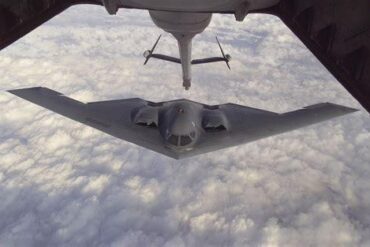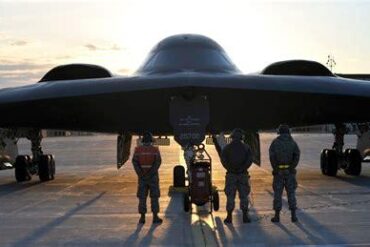
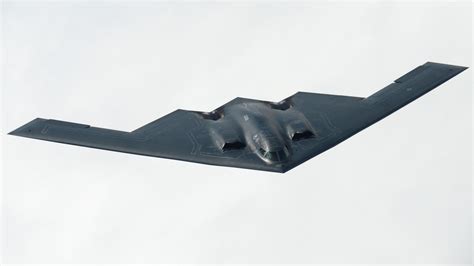
The Northrop Grumman B-2 Spirit, a cornerstone of U.S. strategic bombing capability, remains one of the most advanced and secretive aircraft in the world. With its distinctive flying wing design and radar-evading stealth profile, the B-2 bomber represents more than three decades of airborne dominance. But beyond its striking appearance lies a lethal combination of endurance, precision, and payload flexibility that gives the United States Air Force (USAF) a critical strategic edge.
When the B-2 first emerged from the shadows on November 22, 1988, it was immediately recognized not just for its futuristic look but for its ambitious role in U.S. military doctrine. Officially entering service in 1993, it has proven itself repeatedly—from the skies over Yugoslavia during Operation Allied Force to modern conflicts in the Middle East.
The B-2’s Payload: A Versatile Arsenal Within a 40,000-Pound Limit
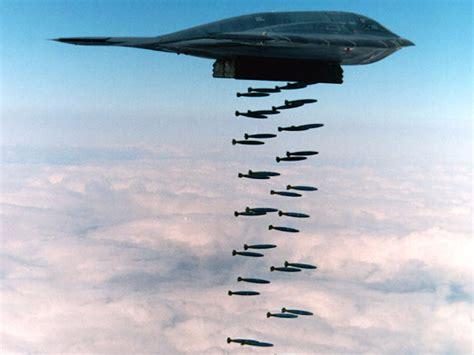
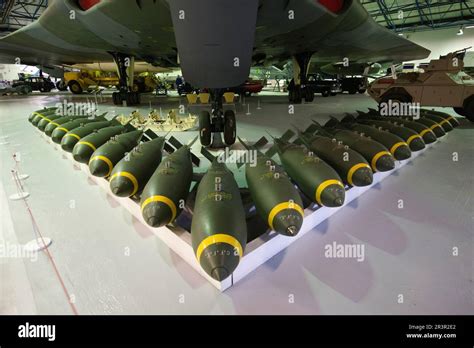
The B-2 bomber’s capacity for devastation is defined by its maximum payload of 40,000 pounds, which it can configure according to mission demands. The aircraft’s bomb bay can accommodate a diverse range of ordnance—from tactical nuclear weapons to conventional smart bombs.
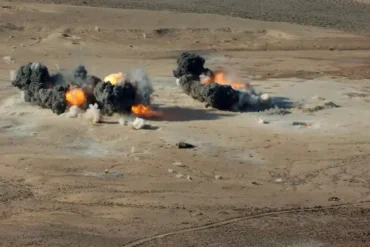
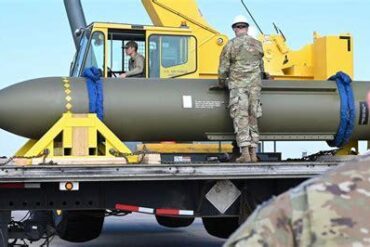
If equipped with MK-82 general-purpose bombs, which each weigh 500 pounds, a B-2 can carry up to 80 bombs in a single mission. However, if the mission requires high-impact strikes on fortified facilities, such as underground bunkers, the aircraft can carry a single 30,000-pound Massive Ordnance Penetrator (MOP). These bunker busters were most recently used against hardened Iranian nuclear sites, underlining the bomber’s ability to deliver enormous destructive force from thousands of miles away.
For missions involving precision targeting, the B-2 frequently uses Joint Direct Attack Munitions (JDAMs)—500 or 2,000-pound bombs retrofitted with GPS-guided tail kits. The B-2 can carry 12 JDAMs, providing it with surgical strike capability that was put to decisive use in conflicts such as Operation Allied Force, where it dropped over 600 JDAMs on Serbian military infrastructure.
When it comes to nuclear payloads, the B-2 is certified to carry the B61 nuclear bomb, a variable-yield device weighing around 825 pounds. Despite the B-2’s high payload threshold, it can only carry 16 B61s, likely due to storage protocols and strategic deployment guidelines rather than physical limitations alone.
Strategic Speed: High-Subsonic Yet Formidable
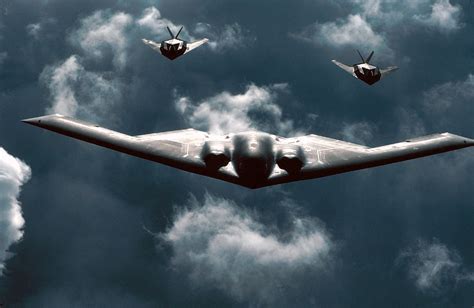
The B-2 is not designed to outrun enemy aircraft or missiles through speed alone. Official USAF documents only describe the aircraft as “high-subsonic,” with most analysts estimating its cruising speed to be around 628 miles per hour (1,010 km/h). This makes it slower than supersonic bombers like the B-1B Lancer, but speed is not the point of the B-2’s design.
Instead, it relies on stealth and strategic reach to evade radar detection and enemy engagement. Its engine inlets are shielded and buried deep within the wing structure to reduce heat signature and radar return, and its composite skin reflects minimal radar waves. In essence, its survivability is rooted not in outrunning threats, but in avoiding detection altogether.
This stealth-first approach allows the B-2 to loiter near enemy airspace, penetrate deep into hostile territory, and strike without warning—essential traits for launching pre-emptive or retaliatory nuclear strikes.
The Endurance Champion: Flying to the Ends of the Earth
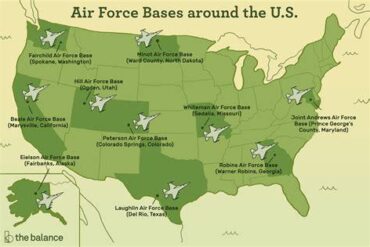
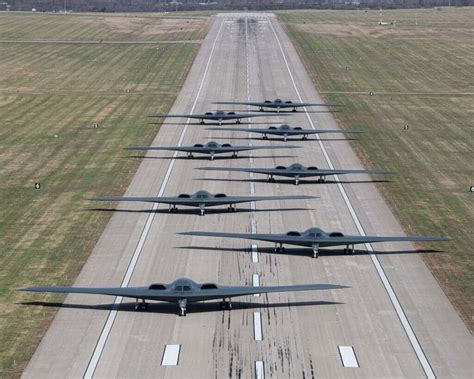
Where the B-2 truly excels is in its unmatched range and endurance. With a maximum unrefueled range of 6,000 nautical miles (about 6,900 miles or 11,100 kilometers), and with the ability to conduct aerial refueling, the B-2 can effectively strike anywhere on Earth from its home base in Whiteman Air Force Base, Missouri.
This endurance is not theoretical. During a 2025 mission targeting Iranian facilities, B-2 bombers took off from Missouri at 00:01 EDT, reached their targets at 18:40 EDT, and returned without ever landing, resulting in a 36-hour mission.
But this wasn’t the longest. During Operation Enduring Freedom, launched in response to the 9/11 attacks, B-2 bombers flew the longest combat mission in history—44 continuous hours in the air. Six aircraft participated, and each exceeded 40 hours of flight time. That level of persistence, combined with the ability to remain undetected, renders the B-2 not just a bomber, but a strategic globe-spanning asset.
Combat Record: Proven, Precise, and Powerful
The B-2 Spirit’s combat record is as potent as its payload. In Operation Allied Force in 1999, just six B-2s dropped 33% of all U.S. Air Force bombs in the first eight weeks of the campaign. This level of effectiveness—delivered with minimal aircraft—highlighted the B-2’s efficiency and force-multiplying effect.
Fast forward to 2024–2025, and the B-2 is still in action. During skirmishes and full-scale conflicts involving Iran and its regional adversaries, the B-2 delivered Massive Ordnance Penetrators (MOPs) on deeply buried facilities believed to be related to nuclear enrichment. In doing so, it reinforced its role as the first choice when facing strategic, time-sensitive, high-value targets.
Despite its age, the B-2 has been kept relevant through continuous upgrades, including improved avionics, communications systems, stealth coatings, and weapon integration. These upgrades ensure that it remains a viable platform until its eventual retirement and replacement by the upcoming B-21 Raider, which is set to join the force later in the decade.
Engineering a Legend: Why the B-2 Still Matters
The B-2 Spirit was a marvel of Cold War-era ingenuity and remains one of the most expensive military aircraft ever built, with a unit cost north of $2 billion. But every dollar has translated into unparalleled strategic utility. From its unique flying wing architecture to its near-invisible radar profile and ability to carry both nuclear and conventional munitions, the B-2 has changed the way air power is projected.
It is a deterrence tool, a first-strike weapon, and a symbol of technological dominance. While other bombers can carry more or fly faster, none match the B-2’s combination of stealth, range, payload flexibility, and combat record.
Conclusion: Precision Over Speed, Reach Over Numbers
So, how many bombs can a B-2 bomber carry? The answer lies in its mission. Whether it’s 80 MK-82s for tactical saturation, 16 B61 nuclear bombs for strategic deterrence, or a single 30,000-pound MOP to annihilate a deep-earth bunker, the B-2 is as flexible as it is formidable.
And how fast can one fly? At approximately 628 mph, it’s not the swiftest aircraft in the sky—but its stealth and global reach make it among the most feared. With the ability to fly over 40 hours nonstop, evade radar, and strike with pinpoint accuracy, the B-2 doesn’t just fly fast—it flies smart. And in modern warfare, that’s what counts.
The B-2 remains a pillar of American air superiority, proving that the ultimate bomber isn’t defined by raw speed or brute force—but by stealth, strategy, and endurance.