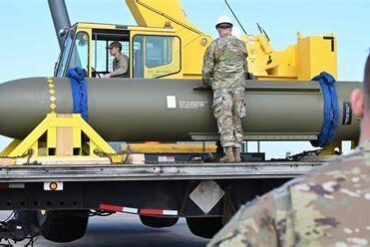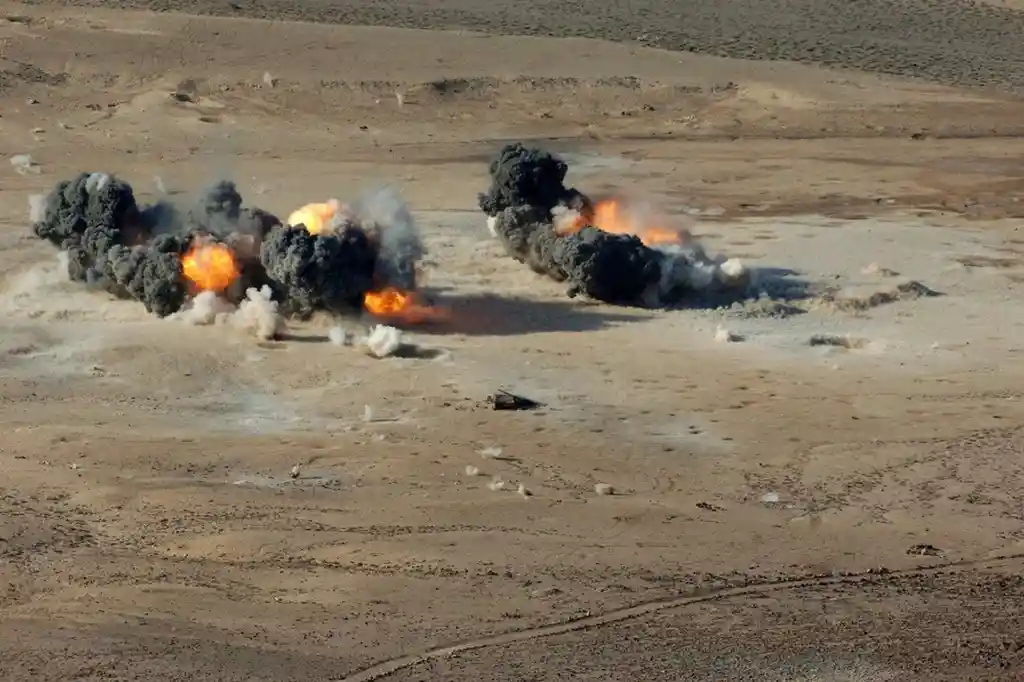
The United States has authorized an emergency transfer of 12,000 BLU-110 1,000-pound bomb bodies to Israel, a move designed to sustain the tempo of Israeli air operations targeting Iranian military infrastructure. Valued at $151.8 million, the Foreign Military Sale underscores Washington’s determination to ensure that Israel retains the munitions capacity required for prolonged precision strikes during an escalating regional conflict.
Approved on March 6 by U.S. Secretary of State Marco Rubio, the transfer bypassed the traditional congressional review process under the emergency provisions of the Arms Export Control Act. The decision reflects the urgency surrounding Israel’s ongoing air war against Iran, where repeated long-range sorties demand a steady supply of versatile strike weapons capable of damaging a wide array of targets.
For modern air campaigns, success is not merely a matter of advanced aircraft or intelligence dominance. It often comes down to a simpler metric: munition availability. A sustained air war burns through bombs at an astonishing rate, and the rapid authorization of thousands of bomb bodies highlights how logistics and industrial production shape the battlefield as much as tactics or technology.
Emergency Authorization Signals Strategic Urgency
The emergency Foreign Military Sale demonstrates how quickly geopolitical calculations can compress normal arms-transfer timelines. Under standard procedures, arms sales must undergo formal congressional notification and review, a process typically lasting between 15 and 30 days depending on the partner nation. In this case, the U.S. government invoked emergency authority, allowing the sale to proceed immediately.
Washington justified the move by citing national security interests and the operational realities of the conflict between Israel and Iran. According to official statements, the objective is to strengthen Israel’s defensive and offensive capabilities while reinforcing deterrence across a region already strained by rising military tensions.
The sale will draw partly from existing U.S. stockpiles, ensuring rapid availability, while the remainder will be produced by Repkon USA, a defense manufacturer based in Garland, Texas. This hybrid supply approach reveals a deeper layer of wartime planning: immediate operational needs must be balanced with ongoing industrial production so that stockpiles remain sustainable over time.
In modern warfare, such logistical orchestration becomes a form of strategy. The ability to maintain a reliable flow of weapons often determines whether an air campaign maintains momentum or gradually stalls.
Understanding the BLU-110: A Workhorse of Precision Strike Warfare
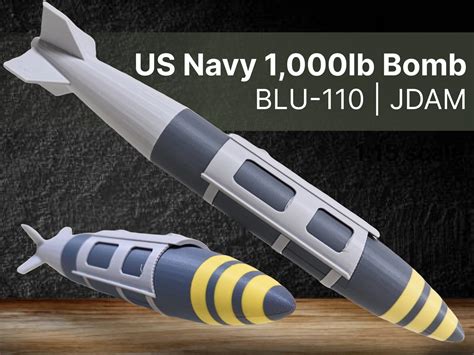
The BLU-110A/B is a 1,000-pound general-purpose bomb body, designed to deliver powerful blast and fragmentation effects against a variety of military targets. Unlike specialized bunker-buster weapons, the BLU-110 is engineered for flexibility. Its streamlined casing allows it to be deployed in high-drag or low-drag configurations, depending on the tactical environment.
At its core, the BLU-110 functions as a modular warhead. When combined with various guidance systems, it becomes the heart of several precision weapons widely used by Western air forces. These include:
- Paveway II and Paveway III laser-guided bombs
- GBU-15 precision glide weapons
- Joint Direct Attack Munition (JDAM) kits
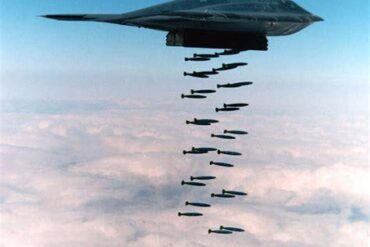
When equipped with a JDAM guidance system, the BLU-110 transforms into a GPS-guided weapon capable of striking targets from more than 15 miles away, depending on altitude and release conditions. This allows aircraft to attack while remaining outside the engagement envelopes of many air defense systems.
The bomb’s design also supports a range of fuzing options, including proximity, instantaneous, and delayed detonation. These options enable planners to tailor the weapon’s destructive effect to specific targets, whether collapsing structures, disabling radar installations, or damaging ammunition depots.
Why the 1,000-Pound Class Matters in Air Warfare
Air warfare is a study in balance. Too small a bomb and the target survives; too large a bomb and aircraft carry fewer weapons per sortie. The 1,000-pound class occupies a strategic middle ground that many military planners consider ideal for sustained strike operations.
Compared with 500-pound weapons, the BLU-110 offers significantly greater destructive power against hardened infrastructure such as command centers, logistics depots, and missile support facilities. At the same time, it is lighter and more adaptable than 2,000-pound bombs, allowing fighter aircraft to carry larger quantities without compromising range or maneuverability.
This balance becomes especially important in campaigns involving large target networks rather than isolated high-value sites. Destroying a military capability rarely means hitting a single facility. Instead, planners must dismantle a web of supporting elements—radar stations, communication nodes, launch facilities, fuel depots, and transportation links.
The BLU-110 excels in precisely that role. It can devastate soft to semi-hardened targets, degrade logistical networks, and erode air defense architecture over repeated strikes. In effect, it acts as a system-breaker, gradually dismantling the infrastructure that enables missile launches or air defense coordination.
Israel’s Expanding Long-Range Air Operations
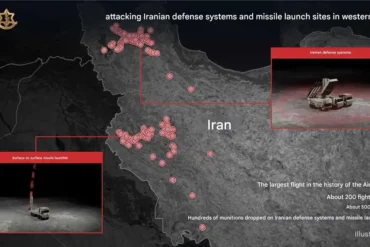
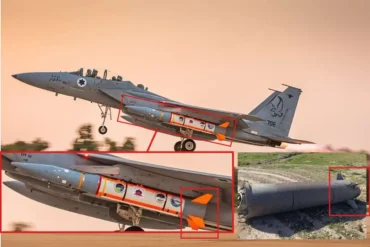
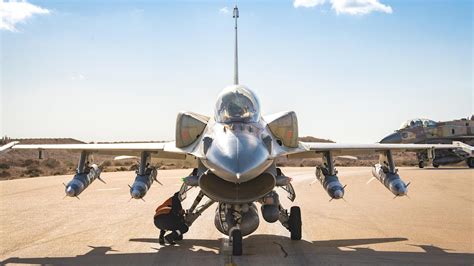
Israel’s need for large quantities of these weapons becomes clearer when examining the scale of its operations against Iran. Israeli fighter aircraft have been conducting long-distance strike missions exceeding 2,000 kilometers, targeting missile facilities, command centers, and logistical hubs across Iranian territory.
One notable operation in June 2025 reportedly involved around 20 Israeli Air Force fighter jets striking military targets with more than 30 munitions. The targets included Khorramshahr missile storage facilities, demonstrating Israel’s ability to reach deep into Iranian territory.
Since the outbreak of the broader conflict in March 2026, Israeli military officials indicate that the air campaign has expanded significantly. Strikes have reportedly targeted military infrastructure across Tehran and other strategic regions, with the objective of weakening Iran’s missile forces and suppressing its air defense systems.
Long-range missions of this scale require enormous logistical support. Each sortie consumes fuel, maintenance hours, and—most critically—precision munitions. Even the most advanced air force cannot sustain operations without adequate stockpiles of bombs and guidance kits.
Magazine Depth: The Hidden Metric of Air Power
Military analysts often refer to “magazine depth,” a term describing how many weapons a force can deploy before running out. In high-intensity conflicts, magazine depth becomes a decisive factor.
A single spectacular strike may dominate headlines, but air campaigns are built on repetition. Radar sites must be attacked repeatedly as they relocate or reactivate. Missile launchers must be hunted across large territories. Supply depots must be destroyed again after being rebuilt.
The emergency transfer of 12,000 bomb bodies dramatically expands Israel’s magazine depth, enabling the continuation of large-scale strike operations without interruption. In practical terms, it means fighter squadrons can keep flying missions rather than pausing while waiting for munitions replenishment.
From Washington’s perspective, ensuring that Israel maintains this operational rhythm also reinforces broader strategic objectives: regional deterrence and alliance credibility.
A Continuation of a Larger Munitions Pipeline
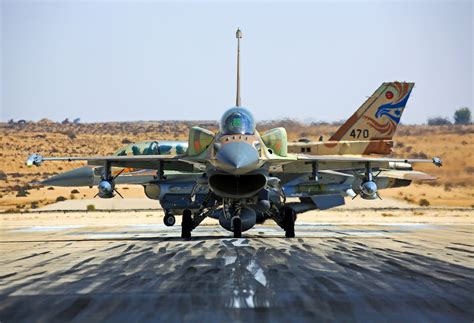
The emergency sale did not appear out of nowhere. It follows earlier U.S. approvals that already aimed to reinforce Israel’s precision strike inventory. In February 2025, Washington authorized a package including 4,799 BLU-110 bomb bodies and 3,500 JDAM guidance kits.
That earlier transaction suggested Israel was already building the infrastructure required to generate large numbers of GBU-32-class precision weapons, a common JDAM configuration using the 1,000-pound warhead.
Seen in this context, the latest transfer represents an acceleration rather than a policy shift. The United States is effectively expanding the supply pipeline to match the realities of an active war.
Military logistics operates on long timelines. Manufacturing bombs, guidance kits, and fuzes involves complex industrial processes. By combining stockpile drawdowns with new production, the United States can deliver immediate capability while keeping future supplies flowing.
Industrial Power Behind Modern Warfare
Behind every air strike lies an industrial ecosystem that often remains invisible to the public. Factories producing bomb casings, electronics for guidance kits, and specialized explosives form the backbone of modern military capability.
The involvement of Repkon USA illustrates how defense manufacturing can quickly transition from routine production to wartime surge capacity. Facilities capable of producing large quantities of bomb bodies become strategically valuable when conflicts intensify.
History repeatedly demonstrates that wars are not won solely by tactical brilliance. They are also won by factories, logistics chains, and the ability to sustain production under pressure.
In the unfolding conflict between Israel and Iran, the emergency transfer of thousands of BLU-110 bombs shows how industrial capacity, alliance politics, and battlefield strategy intersect. The weapons themselves are not revolutionary. They are proven tools—precisely the kind of dependable hardware that allows an air campaign to continue day after day.
And in modern warfare, endurance often proves more decisive than spectacle.