The U.S. Navy has formally launched the FF(X) Frigate Program, a bold and accelerated initiative to deliver a smaller, more agile class of surface combatants. This project is poised to become a cornerstone of President Donald Trump’s Golden Fleet, placing emphasis on American-built designs, rapid deployment, and industrial resilience. Spearheaded by Secretary of the Navy John C. Phelan, the program marks a critical pivot away from troubled procurement cycles and toward a scalable warfighting architecture anchored in operational pragmatism.
From Stalled Programs to Fast-Tracked Frigates: The Strategic Pivot
The FF(X) initiative arrives in the wake of the Constellation-class frigate’s shortcomings, a program riddled with design instability, cost overruns, and labor shortages. With the Constellation line now capped at just two vessels—the USS Constellation and USS Congress—the Navy is urgently seeking alternatives that avoid these pitfalls.
Enter Huntington Ingalls Industries’ (HII) proven Legend-class National Security Cutter design. This existing platform offers a stable, mature baseline, bypassing the delays and design churn that plagued its European-inspired predecessor. Secretary Phelan emphasized in a recent announcement that the Navy’s top priority is clear: “Delivering combat power to sea fast.”
The Golden Fleet Vision: American Built, Globally Deployed
The FF(X) class is deeply embedded in Trump’s Golden Fleet doctrine, a maritime vision centered on naval supremacy, industrial sovereignty, and fleet scalability. Every facet of the FF(X) reflects this philosophy:
- 100% American hull design and construction
- Domestic supply chain prioritization
- Rapid shipyard mobilization
Phelan’s announcement tied the program directly to the Golden Fleet, underlining the administration’s push for vessels that are “battle-ready, not blueprint-bound.” Unlike speculative concepts, the FF(X) derives from a decade-long legacy of real-world deployment, particularly in the U.S. Coast Guard.
Industrial Powerhouse: Pascagoula Takes Center Stage
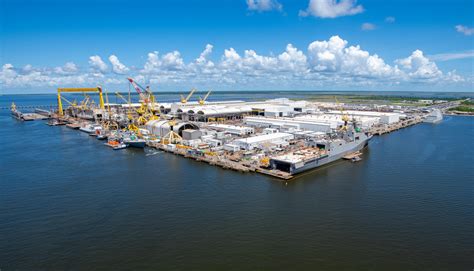
At the core of the FF(X) rollout is Ingalls Shipbuilding, an 800-acre facility in Pascagoula, Mississippi, which will construct the lead ship using the same tooling, workforce, and production lines that built ten National Security Cutters between 2008 and 2023. This strategy leverages industrial momentum rather than reinventing the wheel.
- The FF(X) will be based on a 418-foot hull, displacing between 4,000 and 4,500 tons.
- Top speeds are projected at 28 knots, with endurance spanning 60 to 90 days.
- Its mission set includes maritime security, escort operations, and distributed warfare, thanks to aviation support and modern C2 systems.
By reusing established systems and avoiding radical redesigns, the Navy and HII expect to avoid the three-year delays seen in the Constellation-class. This approach also minimizes technical risk while keeping timelines tight—the first FF(X) hull is expected in the water by 2028.
Distributed Power, Modular Arsenal: A Versatile Warship
The FF(X) frigate isn’t just smaller—it’s smarter. The Navy envisions a ship with:
- Flexible mission modules
- Surface warfare focus
- Unmanned system control capability
- Canister missile launchers and CIWS for layered defense
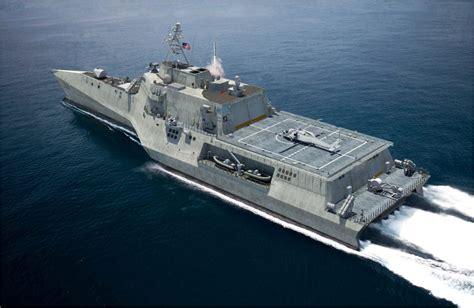
While specific combat systems remain under wraps, artist renderings show sleek superstructures, rear launch cells, and close-in weapon stations—all suggesting a powerful, networked combatant suited to the emerging distributed maritime operations (DMO) doctrine.
This modularity is strategic: it allows for incremental upgrades, echoing the successful Arleigh Burke-class model where each flight evolves technologically while maintaining the same base hull.
Beyond the Blueprint: Operational Credibility First
In messaging from both the Pentagon and Navy leadership, the driving mantra is clear: Credibility through action, not ambition. The FF(X) is not a paper ship. Ingalls Shipbuilding has already demonstrated that the Legend-class cutters can handle:
- Red Sea combat patrols
- Caribbean interdiction missions
- Global presence operations
These real-world credentials are vital. They sidestep the operational unprovenness of new designs and build upon living production memory within shipyards—reducing the learning curve and fast-tracking deliveries.
Phelan specifically cited deployments from the Caribbean to the Pacific as proving grounds that validate the cutter hullform for naval use.
Multi-Yard Vision: From Pascagoula to Nationwide Production
While Ingalls will produce the lead FF(X), the Navy has plans to transition to a competitive multi-yard model. Once the design is validated in steel, other American shipyards will be invited to join the program under a build-to-print strategy.
- This minimizes design churn.
- Allows for scalable production.
- Spurs industrial competition without compromising standards.
HII has already invested over $1 billion into Ingalls infrastructure and maintains 23 strategic outsourcing partnerships, laying the groundwork for broader national production.
Lessons from the Past: Avoiding the Constellation-Class Trap
The Constellation-class, once envisioned as a 20-ship fleet, was cut down to two hulls following a Navy report that revealed:
- 36-month schedule slippage
- Design instability due to constant change requests
- Cost overruns exceeding initial budgets
In contrast, FF(X) begins with a ship the Navy has already operated via the Coast Guard. By eliminating uncertainty, the Navy is prioritizing timely results over speculative capability. It’s a clear response to criticism from Congress and defense analysts about procurement stagnation.
Strategic and Economic Imperatives Aligned
The FF(X) is more than a ship—it’s a symbol of industrial resilience and national security self-sufficiency. With global tensions rising and U.S. shipyards underutilized, this program serves as:
- A surge platform for U.S. surface forces
- A backbone of distributed maritime operations
- A stimulus for domestic manufacturing and labor
Naval leaders have framed the move as both a combat readiness measure and a geoeconomic hedge against foreign supply chain volatility. American-built frigates mean American-controlled logistics, maintenance, and parts continuity.

Conclusion: The Frigate of the Future, Forged from Experience
The FF(X) frigate represents a course correction in U.S. naval procurement—a return to what works, and a rejection of what merely looks good on paper. It merges the lessons of past failures with the urgency of current demands, charting a path forward built on:
- Proven hull designs
- Streamlined acquisition
- Operational versatility
- Domestic production strength
As the Golden Fleet takes shape, the FF(X) is set to be its most nimble and reliable blade—fast to build, hard to sink, and ready to fight.
Delivery of the first hull by 2028 will be the litmus test, not just for the frigate’s performance, but for the Navy’s ability to adapt, innovate, and deliver under political, strategic, and operational pressure. If successful, it may well redefine the standard for future surface combatants across the globe.