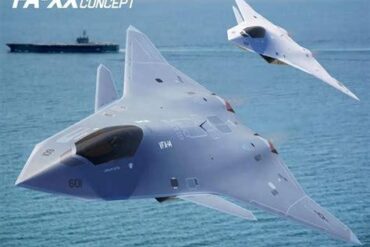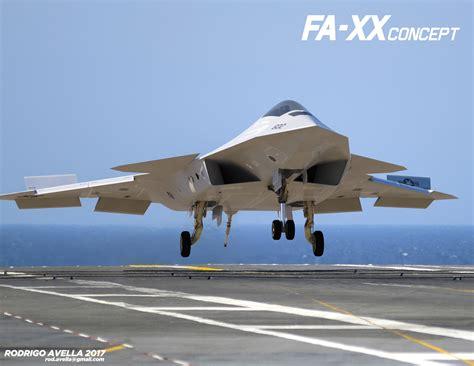
The Pentagon’s decision to inject $750 million into accelerating the U.S. Navy’s F/A-XX sixth-generation carrier fighter marks a pivotal turn in the long chess match unfolding across the Indo-Pacific. The move is designed to protect carrier strike groups from China’s rapidly extending anti-ship missile ranges and increasingly dense integrated air defense networks, both of which are pushing U.S. naval aviation farther from defended targets. At stake is whether carrier air wings in the 2030s can still penetrate contested airspace, hold targets at meaningful distances, and survive the opening salvos of high-end conflict. The acceleration clears a path toward a milestone decision that will determine the aircraft’s transition into full development and production, a moment that quietly shapes the future geometry of maritime power projection.
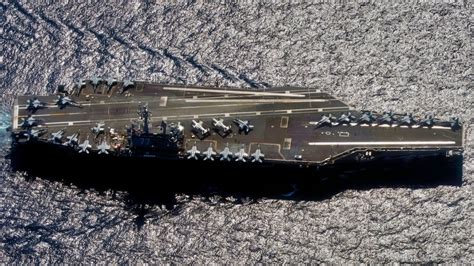
The strategic pressure is not abstract. Chinese doctrine has steadily married long-range sensors, maritime strike aircraft, and layered missile coverage into a system designed to stretch the distance between U.S. carriers and their targets. That expanding radius forces U.S. air wings to either accept shrinking reach or reinvent how they fight. The F-35C provides stealth and sensor fusion, but the air wing still leans heavily on the F/A-18E/F Super Hornet for mass and daily sortie generation, while the E/A-18G Growler shoulders most of the electronic attack burden. As these fleets age into the 2030s, the Navy faces a widening gap between threat and reach. The F/A-XX is intended to close that gap by replacing the Super Hornet and absorbing portions of the Growler’s mission set, compressing strike, escort, and electronic warfare into a single survivable platform.
The funding surge arrives after internal hesitation that reflected a real industrial dilemma. The U.S. aerospace base is already committed to the Air Force’s Next Generation Air Dominance effort, with Boeing developing the F-47, and concerns lingered that two sixth-generation fighters could strain production capacity and specialized suppliers. The White House-approved plan to accelerate F/A-XX signals a judgment that the operational risk of delay now outweighs the industrial risk of concurrency. Congress has reinforced that signal, wary that a prolonged pause would widen the capability gap precisely as long-range missile threats mature.
Strategic Pressure From China’s Long-Range Strike Complex
China’s anti-access strategy has evolved into a multi-layered strike complex that fuses over-the-horizon sensors, space-based surveillance, maritime patrol aircraft, and land-based missile forces. Carrier strike groups operating inside the first island chain face a shrinking margin for error as anti-ship ballistic missiles and long-range cruise missiles expand their envelopes. The geometry problem is simple and cruel: as the threat radius grows, carriers must stand farther off, which compresses the combat radius of embarked aircraft. Without a step change in range, survivability, and networking, the carrier’s relevance erodes not through vulnerability alone, but through dwindling operational reach.
Design Goals for Penetration and Reach in the 2030s
Much of the F/A-XX program remains classified, but the Navy has sketched a capability bundle that signals a clear departure from incremental upgrades. The aircraft is expected to deliver roughly a 25 percent increase in combat radius over today’s carrier fighters, a target driven less by a single metric than by a reworked design baseline. Higher fuel fraction, refined aerodynamics, and propulsion advances must coexist with the brutal physics of carrier operations, where catapult launches and arrested recoveries impose structural penalties that land-based fighters never face. The design must also fit the cramped ecology of flight decks and elevators, a constraint that quietly shapes every line drawn on a naval aircraft.
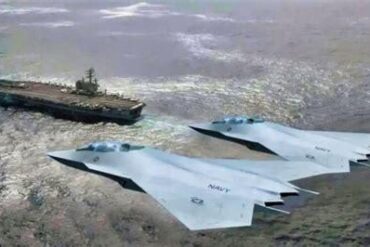
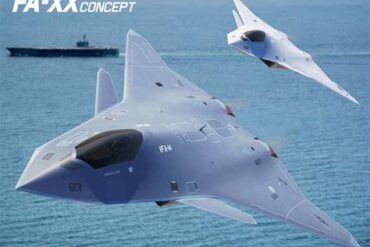
Low observability is central to the concept. Analysts expect a tailless or near-tailless configuration with careful edge alignment to manage radar returns across multiple bands, paired with thermal control features to blunt infrared tracking. Deeply integrated sensor apertures will blur the line between structure and sensor, while internal weapons bays will preserve stealth while carrying long-range air-to-air missiles and maritime strike weapons. The remaining competitors, Boeing and Northrop Grumman, are both associated with blended-body concepts that prioritize signature management and internal volume over traditional visual maneuverability. The shift reflects a sober assessment that survivability in the missile age comes from being difficult to see, track, and target, not from winning close-in dogfights that increasingly occur only after layers of detection and interception have already failed.
The F/A-XX as a Networked Combat Node
The most consequential change may be less about shape and more about role. The Navy envisions F/A-XX as a command-and-control node within a distributed air wing. Advanced digital radar arrays are expected to function simultaneously as sensors, jammers, and communications relays, collapsing functions that once required separate aircraft. Low-probability-of-intercept datalinks and onboard processing will fuse passive and active inputs into weapons-quality tracks, allowing a single aircraft to coordinate strike packages, cue weapons launched by other platforms, and manage unmanned teammates inside contested electromagnetic environments.
This architecture aligns with the Navy’s push toward manned-unmanned teaming, where piloted aircraft orchestrate collaborative combat aircraft operating ahead of the formation. The intent is to push sensors and weapons deeper into defended airspace without pushing human pilots into the densest threat rings. Integrated electronic attack further reduces reliance on legacy Growlers, shrinking the number of specialized escorts required during the opening phases of conflict. When paired with the MQ-25 Stingray tanker, the F/A-XX gains extended time on station and deeper reach without exposing vulnerable manned tankers to advanced surface-to-air systems.
Industrial Stakes and the Sixth-Generation Supply Chain
Acceleration reshapes industrial risk as much as it reshapes operational timelines. Digital engineering, advanced composites, and mission-system architectures developed for the Air Force’s sixth-generation fighter can be leveraged for F/A-XX, potentially lowering technical risk through shared tooling and software frameworks. Yet concurrency also stresses a supplier base that must deliver advanced propulsion components, high-temperature materials, and exquisite electronics at scale. The decision to move forward reflects a strategic bet that industrial learning curves will steepen faster than threat curves if momentum is maintained.
For Northrop Grumman, the program offers a route back into high-rate fighter production, building on stealth manufacturing expertise honed on strategic bomber programs. For Boeing, the challenge is synchronizing two next-generation fighter efforts without diluting engineering focus. The Pentagon’s calculus suggests that forcing the industrial base to stretch is preferable to allowing adversary capabilities to sprint ahead unopposed.
Global Sixth-Generation Competition Tightens the Clock
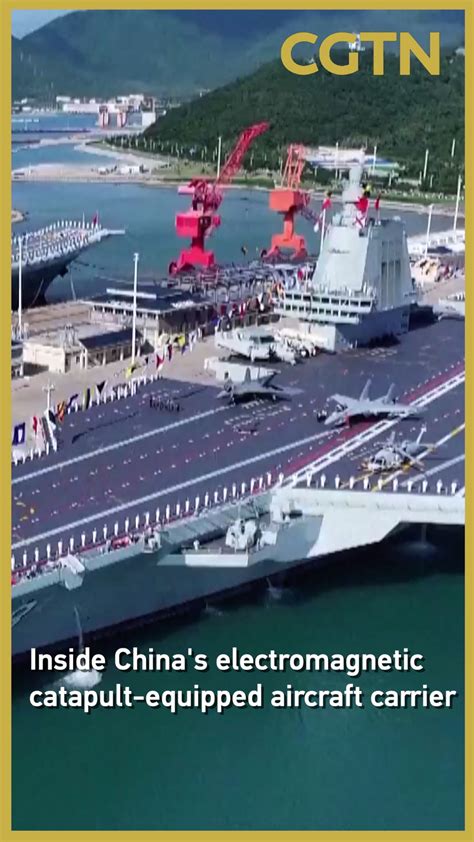
The U.S. timeline unfolds amid a global rush toward next-generation air combat. China’s transition to catapult-equipped carriers expands the payload and sortie potential of its naval aviation, while development of carrier-capable stealth fighters and airborne early warning platforms points toward a more networked maritime airpower model. Public glimpses of experimental tailless aircraft reinforce assessments that Beijing is probing sixth-generation design spaces with an eye toward broadband stealth and long-range operations.
Russia continues to modernize around the Su-57 and unmanned teaming concepts, though propulsion and industrial constraints limit fleet size. Even so, Russian doctrine emphasizes long-range missile employment and layered air defenses, a reminder that future conflicts will be shaped by sensor reach as much as by aircraft performance. Among U.S. allies, the Global Combat Air Programme linking the United Kingdom, Italy, and Japan aims for mid-2030s service entry, while Europe’s Future Combat Air System navigates industrial friction. These parallel efforts will shape interoperability standards for sensors, datalinks, and weapons. Decisions embedded in F/A-XX will ripple across coalition air combat architectures, influencing how seamlessly carrier air wings plug into allied networks.
Why the Milestone Decision Matters Now
The forthcoming milestone decision will lock in a development path that determines not only who builds the aircraft, but what kind of carrier air wing the Navy fields in the 2030s. Delays risk leaving carriers dependent on aircraft optimized for an earlier threat environment, forcing operational workarounds that trade reach for safety. Acceleration does not guarantee smooth execution or cost stability, but it signals recognition that carrier air dominance cannot be deferred without strategic consequence. As sensor networks thicken and missile envelopes expand, survivability hinges on aircraft that can operate farther, strike deeper, and knit together distributed forces under electronic attack.
The deeper truth is that the carrier’s future is being negotiated in design studios and budget lines today. The F/A-XX is not a single airplane so much as a wager on a way of fighting: stealth over spectacle, networks over lone heroes, and reach over proximity. In an era defined by long-range precision and contested information, the Navy is choosing to move its most visible symbol of power projection into the shadows, where survival begins with not being found.