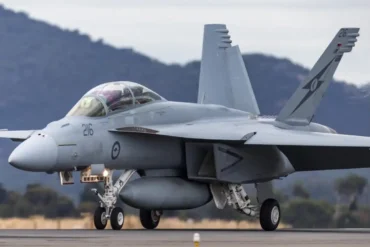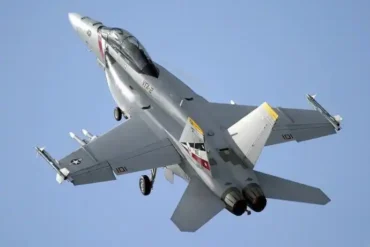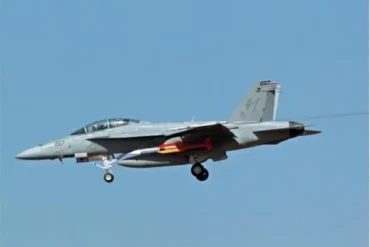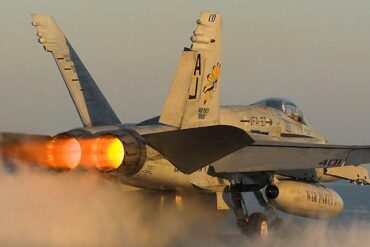
The Boeing F/A-18 Super Hornet has been the backbone of U.S. Navy carrier aviation for more than two decades. Since entering operational service in 1999, it has flown thousands of combat sorties over Iraq, Afghanistan, Syria, and Libya while proving itself as one of the world’s most versatile multirole fighters. Designed to replace the legendary F-14 Tomcat, the Super Hornet brought greater reliability, lower operating costs, and exceptional mission flexibility.
Despite its impressive record, military aviation evolves far faster than aircraft service lives. The strategic environment facing the United States today bears little resemblance to the one that existed when the Super Hornet was designed during the Cold War’s final years. Modern air combat is increasingly defined by long-range precision missiles, integrated air defense systems, electronic warfare, artificial intelligence, stealth technologies, and network-centric operations. These developments have significantly reduced the operational advantages enjoyed by fourth-generation fighters.
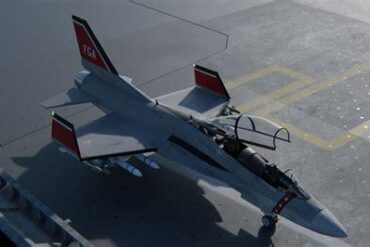
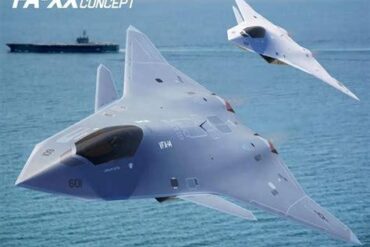
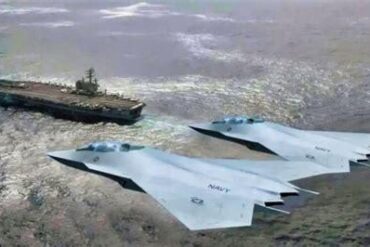
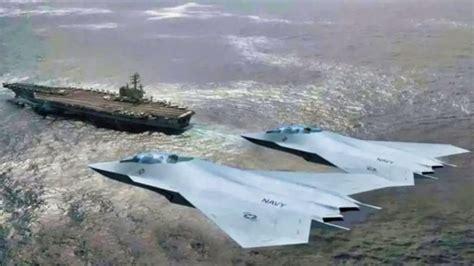
As the United States shifts its military focus toward the Indo-Pacific region, naval planners recognize that future carrier air wings require an aircraft capable of surviving and dominating in highly contested environments. That requirement has led to the development of the F/A-XX, a sixth-generation carrier-based fighter intended to become the centerpiece of the Navy’s future air dominance strategy.
After decades of successful service, the Super Hornet is not becoming obsolete because it has failed. Rather, it is being replaced because the battlefield itself has fundamentally changed.
The Super Hornet Was Designed for a Different Era
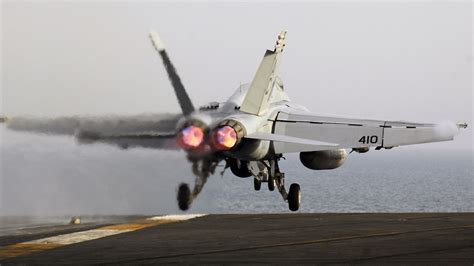
When the F/A-18E/F Super Hornet first entered service, it represented a major leap forward over the original Hornet family. Although sharing the same designation, the Super Hornet is substantially larger than its predecessor, featuring an airframe roughly 20% bigger, significantly greater fuel capacity, higher maximum takeoff weight, and much longer operational range.
These improvements allowed the aircraft to excel across nearly every mission assigned to carrier aviation. It performs air superiority, strike missions, fleet defense, suppression of enemy air defenses, reconnaissance, aerial refueling, close air support, maritime strike, and precision attack with remarkable effectiveness.
Its twin General Electric F414-GE-400 turbofan engines provide exceptional reliability while allowing the aircraft to reach speeds exceeding Mach 1.8. Combined with its advanced APG-79 AESA radar, infrared search and track system, and continuously upgraded avionics, the Super Hornet has remained one of the world’s most capable fourth-generation fighters.
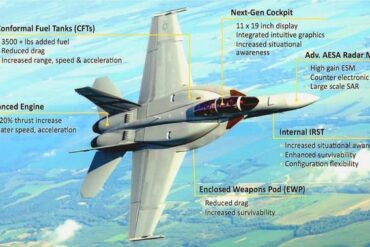
Even today, the aircraft continues receiving improvements through the Block III modernization program, extending its service life to approximately 10,000 flight hours while reducing radar signature and significantly improving networking capabilities.
However, these upgrades cannot completely overcome the aircraft’s original design limitations.
Why Modern Warfare Demands a New Carrier Fighter
The biggest challenge facing today’s carrier air wings is no longer enemy fighters alone. Instead, it is the growing sophistication of anti-access/area-denial (A2/AD) strategies developed by potential adversaries.
Countries such as China have invested heavily in layered defensive networks designed specifically to prevent American carrier strike groups from operating close to their coastlines. These defenses combine:
- Long-range anti-ship ballistic missiles
- Hypersonic glide weapons
- Cruise missiles
- Integrated air defense systems
- Advanced fifth-generation fighters
- Space-based surveillance
- Electronic warfare capabilities
Rather than defeating an aircraft carrier directly, these systems aim to force carriers farther away from conflict zones, reducing the effectiveness of their aircraft.
For the Navy, this creates a difficult mathematical problem.
While a Super Hornet possesses an impressive combat radius, modern Chinese missile systems can threaten targets at significantly greater distances. Carrier strike groups may therefore be forced to operate within enemy missile envelopes simply to launch aircraft capable of reaching their objectives.
That dramatically increases operational risk.
Range Has Become the Navy’s Highest Priority
One of the defining design goals of the F/A-XX is dramatically increasing combat range.
Current projections suggest the aircraft could approach a 1,000-mile combat radius, representing one of the largest improvements in carrier aviation history.
Greater range produces multiple operational advantages simultaneously.
Aircraft carriers can remain farther from hostile coastlines while still projecting meaningful combat power. This complicates enemy targeting efforts because locating and striking a moving carrier becomes considerably more difficult when that carrier is operating hundreds of additional miles from shore.
Longer range also gives commanders far greater operational flexibility. Rather than concentrating aircraft around tanker support, missions can penetrate deeper into contested airspace while maintaining larger safety margins for returning to the carrier.
In the vast geography of the Pacific Ocean, where distances between islands frequently exceed several hundred miles, increased range becomes every bit as valuable as increased speed.
Stealth Is No Longer Optional
The Super Hornet incorporates numerous measures that reduce radar signature, particularly in its Block III configuration. Conformal fuel tanks, improved radar-absorbent materials, refined panel treatments, and reduced external stores all contribute to lowering detectability.
Yet it remains fundamentally a fourth-generation design.
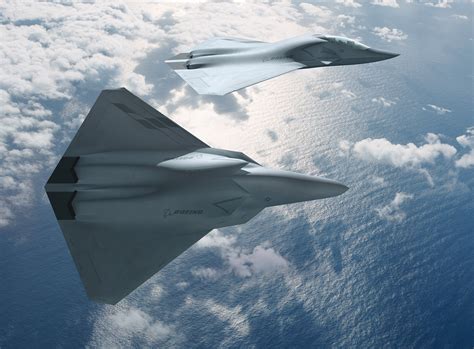
The F/A-XX is expected to embrace true sixth-generation stealth, combining advanced shaping with next-generation radar-absorbent materials and thermal management technologies to minimize detection across multiple sensor types.
Future battlefields will rely on far more than traditional radar. Infrared tracking systems, passive electronic surveillance, distributed sensors, and space-based observation networks will all work together to locate aircraft.
Surviving inside such environments demands dramatically lower observability than current fighters can achieve.
Stealth therefore becomes not merely a tactical advantage but a basic requirement for operating near sophisticated integrated air defense systems.
Artificial Intelligence Will Transform Air Combat
Perhaps the most revolutionary aspect of the F/A-XX will not be its engines or airframe but its onboard computing power.
Modern fighters already generate enormous quantities of information from radar, infrared sensors, electronic support measures, satellite communications, and off-board intelligence.
The challenge increasingly lies in helping pilots process that information quickly enough to make effective decisions.
The F/A-XX is expected to employ AI-enabled mission systems capable of rapidly collecting, prioritizing, and synthesizing battlefield data before presenting pilots with actionable recommendations.
Instead of managing dozens of individual sensor displays, aviators may receive an integrated tactical picture highlighting immediate threats, optimal engagement options, friendly force locations, and mission priorities.
This greatly reduces pilot workload while accelerating decision-making during high-intensity combat.
The F/A-XX Will Command Unmanned Loyal Wingmen
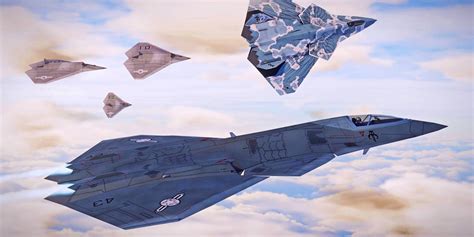
Another defining feature of sixth-generation aviation is the integration of collaborative combat aircraft, commonly known as loyal wingman drones.
Rather than flying alone, the F/A-XX is expected to direct multiple autonomous or semi-autonomous aircraft operating alongside it.
These unmanned systems could perform numerous missions, including:
- Electronic warfare
- Intelligence gathering
- Airborne reconnaissance
- Long-range strike
- Decoy operations
- Air refueling support
- Additional missile carriage
- Sensor extension
Instead of risking a manned aircraft during especially dangerous operations, commanders could send unmanned escorts into the highest-threat areas while the crewed fighter coordinates the mission.
This approach dramatically expands combat capability without proportionally increasing risk to pilots.
Becoming the Center of a Networked Battlefield
Future warfare increasingly depends upon information superiority rather than simply possessing superior aircraft.
The F/A-XX is expected to function as a networked battle management platform, continuously exchanging information with ships, satellites, submarines, ground forces, airborne early warning aircraft, space assets, and unmanned systems.
Instead of operating independently, every aircraft becomes one node within an integrated combat network.
Data collected by one sensor can immediately benefit every connected platform.
For example, an unmanned reconnaissance drone may detect a hostile missile battery. That information can instantly appear aboard the F/A-XX, an Aegis destroyer, nearby F-35Cs, and command headquarters without requiring separate detection by each platform.
Such distributed sensing dramatically accelerates kill chains while improving battlefield awareness across every military domain.
Working Alongside the E-2D and F-35C
The arrival of the F/A-XX will not eliminate existing carrier aircraft overnight.
Instead, the Navy intends to build highly integrated carrier air wings in which each aircraft contributes unique strengths.
The F-35C Lightning II provides penetrating stealth and intelligence collection.
The E-2D Advanced Hawkeye coordinates airborne command and battle management.
The MQ-25 Stingray extends operational reach through aerial refueling.
The Super Hornet continues delivering exceptional payload capacity and mission flexibility.
The F/A-XX will eventually unite these capabilities by serving as the long-range command-and-strike platform capable of coordinating increasingly complex operations deep inside contested airspace.
Rather than replacing every existing aircraft immediately, it enhances the effectiveness of the entire carrier air wing.
The Super Hornet Still Has Important Work Ahead
Although attention increasingly focuses on the F/A-XX, the Super Hornet remains a highly capable combat aircraft.
Recent procurement contracts continue delivering new Block III aircraft while modernization efforts ensure existing fleets remain operational well into the 2030s.
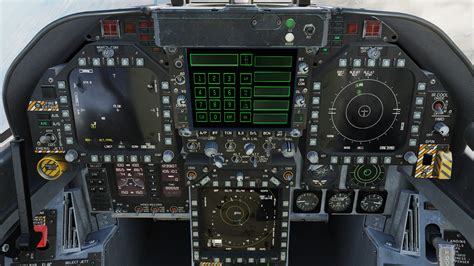
The aircraft’s Distributed Targeting Processor-Networked, Tactical Targeting Network Technology, advanced cockpit displays, and improved sensor fusion significantly enhance performance in modern operations.
Its robust open mission systems architecture also allows rapid integration of future weapons and software upgrades.
Rather than disappearing quickly, the Super Hornet will likely transition into complementary roles alongside newer aircraft.
Its ability to carry substantial weapon loads while operating as both fighter and strike aircraft ensures continued relevance during the lengthy transition toward sixth-generation aviation.
Boeing’s Production Line Is Nearing Its Final Chapter
Another factor influencing the Navy’s transition is industrial reality.
Demand for newly built Super Hornets has steadily declined as many international customers pursue fifth-generation fighters such as the F-35.
Consequently, Boeing plans to conclude Super Hornet production following completion of the Navy’s remaining aircraft orders.
The company has gradually reduced manufacturing rates while preparing to shift skilled personnel toward programs including the F-15EX Eagle II, T-7A Red Hawk, and MQ-25 Stingray.
Although production will end, sustainment, modernization, and service-life extension programs will continue supporting the existing fleet for years.
This measured transition allows the Navy to maintain readiness while preparing for the introduction of the F/A-XX.
The Indo-Pacific Is Driving Every Design Decision
Virtually every major design requirement for the F/A-XX traces back to one operational theater: the Indo-Pacific.
Unlike previous conflicts concentrated over relatively compact land masses, the Pacific presents enormous distances separated by open ocean.
Aircraft require exceptional range simply to reach operational areas.
Meanwhile, sophisticated missile systems, integrated air defenses, cyber warfare capabilities, and advanced enemy aircraft demand unprecedented survivability.
Carrier strike groups must therefore project power from greater stand-off distances while maintaining the ability to establish air superiority hundreds of miles beyond the fleet.
The F/A-XX has been conceived specifically to solve these challenges.
Every major feature—from increased fuel capacity and stealth to AI-assisted decision-making and unmanned teaming—addresses the realities of future Pacific warfare.
The F/A-XX Represents the Next Evolution of Naval Air Power
The F/A-18 Super Hornet has earned its reputation as one of the most successful carrier-based fighters ever built. Its adaptability, reliability, and combat record have made it indispensable to U.S. naval aviation for more than a quarter century. Continuous modernization has ensured that it remains highly capable even as new threats emerge.
Nevertheless, technological progress and evolving geopolitical realities demand a new generation of aircraft. The F/A-XX is not intended simply to outperform the Super Hornet in speed or maneuverability. Instead, it represents a comprehensive transformation in how carrier aviation will fight future wars. Longer range, advanced stealth, artificial intelligence, collaborative unmanned aircraft, and seamless integration into a distributed combat network will allow carrier strike groups to remain effective against increasingly sophisticated adversaries.
Rather than replacing a failed platform, the F/A-XX succeeds one of naval aviation’s greatest success stories. Much as the Super Hornet once replaced the iconic F-14 Tomcat, the Navy’s next-generation fighter is expected to bridge the transition into an era where information dominance, autonomous systems, and extended reach define victory. When it eventually enters operational service during the 2030s, the F/A-XX will mark the beginning of a new chapter in carrier-based air power while preserving the aircraft carrier’s role as one of America’s most important instruments of global military projection.