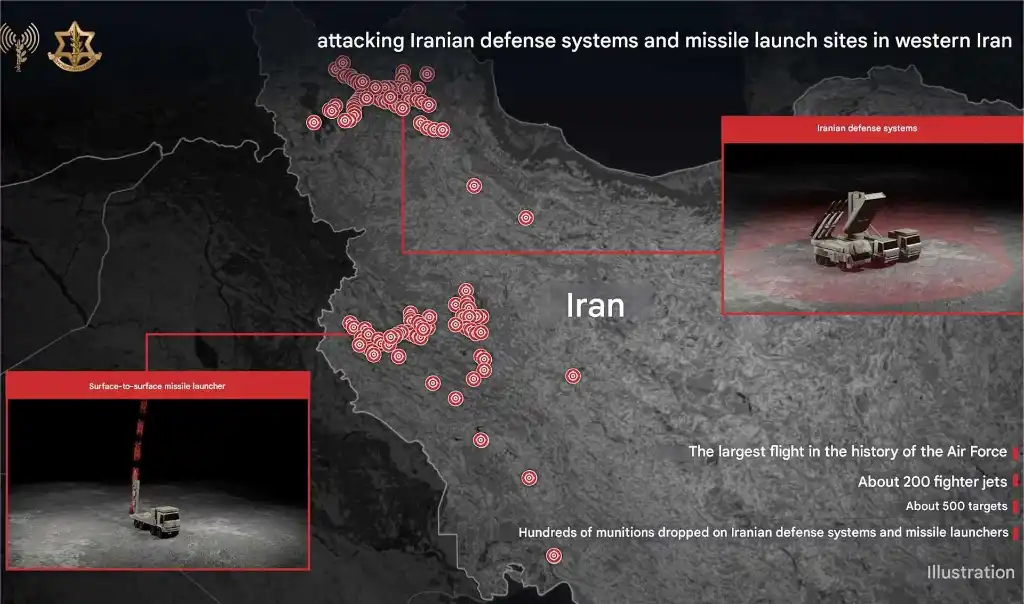
Israel has executed the largest air combat operation in its history, deploying approximately 200 Israeli Air Force fighter jets in a synchronized strike campaign targeting more than 500 missile and air defense sites across western and central Iran. Conducted under the U.S.-designated operational framework Operation Epic Fury, the mission represents a dramatic escalation in direct military engagement between Jerusalem and Tehran, while underscoring deep operational alignment between Israel and the United States.
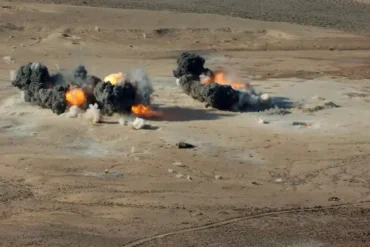
The scale alone sets the operation apart. Never before has the Israeli Air Force committed such a large strike package to a single coordinated mission at extended range. The operation was not a symbolic retaliatory strike but a calculated effort to degrade the structural backbone of Iran’s ballistic missile launch infrastructure and its layered integrated air defense systems. By attacking missile arrays, radar installations, surface-to-air missile batteries, and command nodes in near-simultaneous waves, Israeli planners sought to fracture Iran’s defensive network within a compressed operational window.
According to information released by the Israeli Air Force, the campaign followed extensive intelligence preparation and precision targeting analysis. The strikes were reportedly synchronized to overwhelm Iranian detection and response cycles, limiting the ability of air defense crews to reposition or reassign interceptors. The effect was not merely physical destruction, but systemic disruption—an attempt to break the connectivity of Iran’s defensive grid.
Operation Epic Fury and Strategic Coordination
While Israeli aircraft conducted the strike package, the mission unfolded within a broader framework identified by U.S. defense officials as Operation Epic Fury. The designation signals structured coordination between Washington and Jerusalem, particularly in intelligence sharing, regional airspace deconfliction, and strategic targeting priorities. Even without public confirmation of direct U.S. kinetic participation, the integration suggests satellite reconnaissance, electronic surveillance, and command alignment were tightly synchronized.
Such coordination is not incidental. Modern long-range air campaigns depend on resilient data fusion—combining satellite imagery, signals intelligence, airborne early warning, and real-time battle management. The ability to orchestrate 200 aircraft over extended distances implies a mature command-and-control architecture capable of dynamic retasking in contested airspace. That alone represents a strategic message to adversaries observing the operation’s execution.
Targeting Iran’s Layered Air Defense Architecture
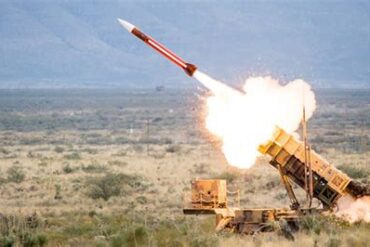
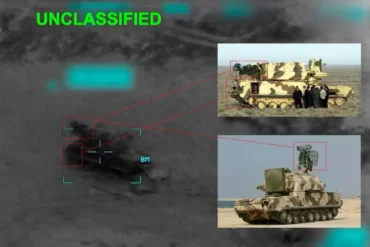
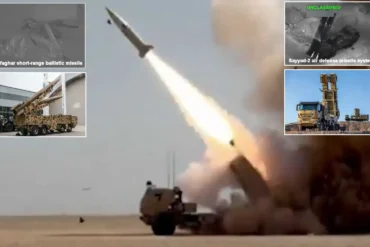
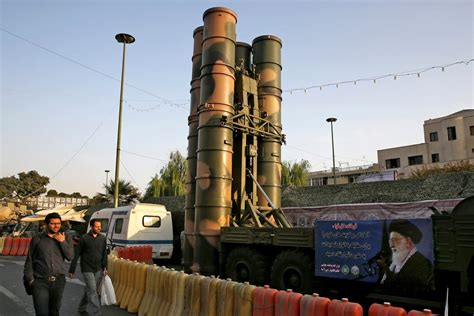
Central to the operation was the suppression and destruction of Iranian air defense systems that form the backbone of Tehran’s protective shield. Among the systems reportedly struck were the S-300 long-range surface-to-air missile system, the Khordad-3 medium-range system, and the RAAD-1 short-range air defense platform. The Israeli Air Force refers to these under internal classification designations, but their real-world identities are well known within defense circles.
The S-300, originally developed in Russia, provides long-range engagement capability against aircraft and certain ballistic missile threats, with engagement envelopes exceeding 150 kilometers depending on variant. It protects strategic facilities including missile depots and critical command infrastructure. Neutralizing elements of this network reduces the reach and confidence of Iran’s high-altitude interception layer.
The Khordad-3, internationally recognized after its 2019 downing of a U.S. RQ-4 Global Hawk, represents a domestically developed mid-range system equipped with phased-array radar. It fills the critical gap between strategic and tactical air defense layers, engaging targets at medium altitude and distance. The RAAD-1, designed for shorter-range protection, contributes to point defense of high-value facilities and mobile units.
Striking these systems in parallel indicates a deliberate strategy: dismantle the outer, middle, and inner rings of Iran’s air defense shield in one coordinated assault. Air superiority is not achieved by eliminating a single radar; it requires degrading the network so that surviving nodes cannot communicate effectively.
Aircraft and Munitions: Precision at Scale
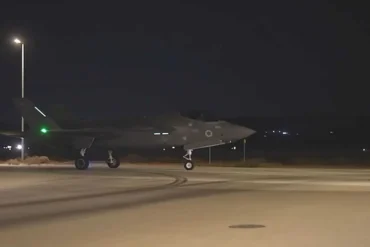
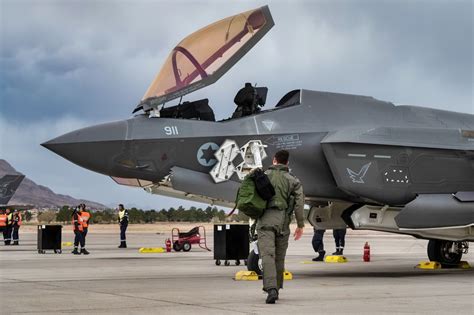
Executing such a campaign demanded a carefully balanced mix of stealth penetration and heavy strike capacity. Israel’s F-35I Adir stealth fighters are optimized for operating within contested airspace, using reduced radar cross-section and advanced sensor fusion to identify and engage high-value targets. These aircraft likely spearheaded initial penetration waves, targeting radar and command nodes to blind defensive systems.
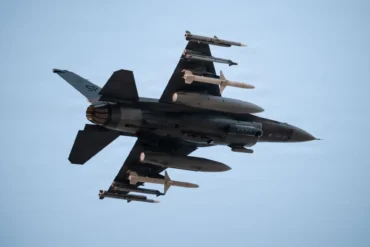
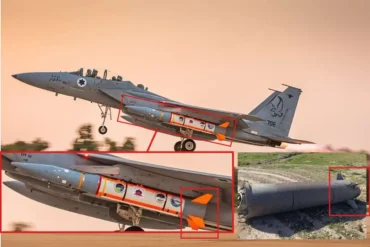
Following suppression, F-15I Ra’am and F-16I Sufa strike aircraft would have delivered substantial payloads of precision-guided munitions. Stand-off weapons such as the SPICE guidance kits and long-range cruise missiles enable engagement from outside the most dangerous engagement envelopes. Electronic warfare support—jamming radars, confusing missile seekers, disrupting communications—would have been essential to compress Iranian reaction time.
Coordinating nearly 200 aircraft across such distances almost certainly required extensive aerial refueling support and airborne early warning platforms. Sustaining sortie tempo while maintaining deconfliction in crowded operational corridors reflects years of rehearsal and doctrinal development.
Operational Impact: Degrading Missile Launch Infrastructure
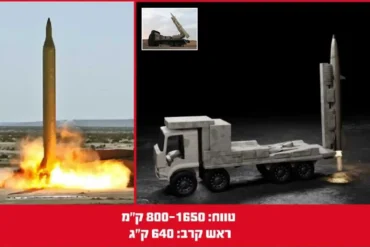
The reported destruction of over 500 targets signals more than a punitive response. Ballistic missile forces depend on a chain of capabilities: storage depots, transporter-erector-launchers, fueling systems, command vehicles, and protective air defense cover. Disrupting this ecosystem reduces both immediate launch readiness and survivability under continued surveillance.
By targeting both missile infrastructure and its protective shield, Israel appears to have pursued a two-fold objective: degrade Iran’s ability to launch sustained missile salvos and expand Israeli freedom of aerial maneuver in follow-on operations. Reduced air defense density in western and central Iran widens operational corridors for reconnaissance flights, deterrent patrols, or additional strikes if required.
Strategic Consequences for Regional Deterrence
This operation alters the strategic equation in the Middle East. Iran has long invested in layered air defenses to shield its missile arsenal and nuclear-adjacent infrastructure from air attack. Demonstrating the ability to penetrate and dismantle key nodes challenges assumptions about the survivability of fixed sites in a high-intensity air campaign.
The broader regional context amplifies the significance. Concurrent reports detail U.S. deployments of stealth bombers, carrier strike groups, and extended surveillance operations. Within this environment, Operation Epic Fury signals that Israeli long-range strike capability operates within a broader deterrent architecture aligned with Washington’s strategic posture.
For Tehran, the immediate military cost may be followed by doctrinal recalibration. Greater emphasis on mobility, dispersal of launchers, hardened underground facilities, and acquisition of more advanced defensive technologies could follow. Air defense networks evolve rapidly under pressure, and lessons learned on both sides will shape the next phase of competition.
A New Threshold in Air Power Projection
The mission marks a watershed moment for the Israeli Air Force. Committing 200 aircraft to a single, coordinated strike across such depth demonstrates operational confidence, logistical sophistication, and intelligence dominance. It underscores the maturation of Israel’s stealth fleet and the enduring relevance of heavy strike aircraft in modern warfare.
The immediate outcome is a measurable reduction in Iranian air defense density and missile infrastructure resilience. The longer-term consequence is more subtle but equally profound: the normalization of large-scale, long-range Israeli air operations against heavily defended targets. That shift reshapes deterrence calculations not only for Iran, but for every regional actor assessing the balance of power in the Middle East.