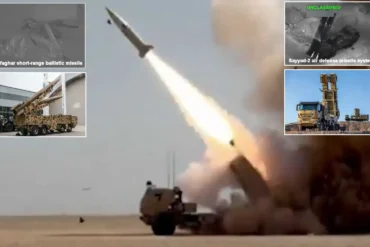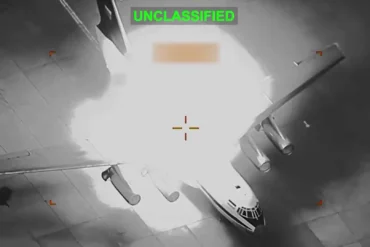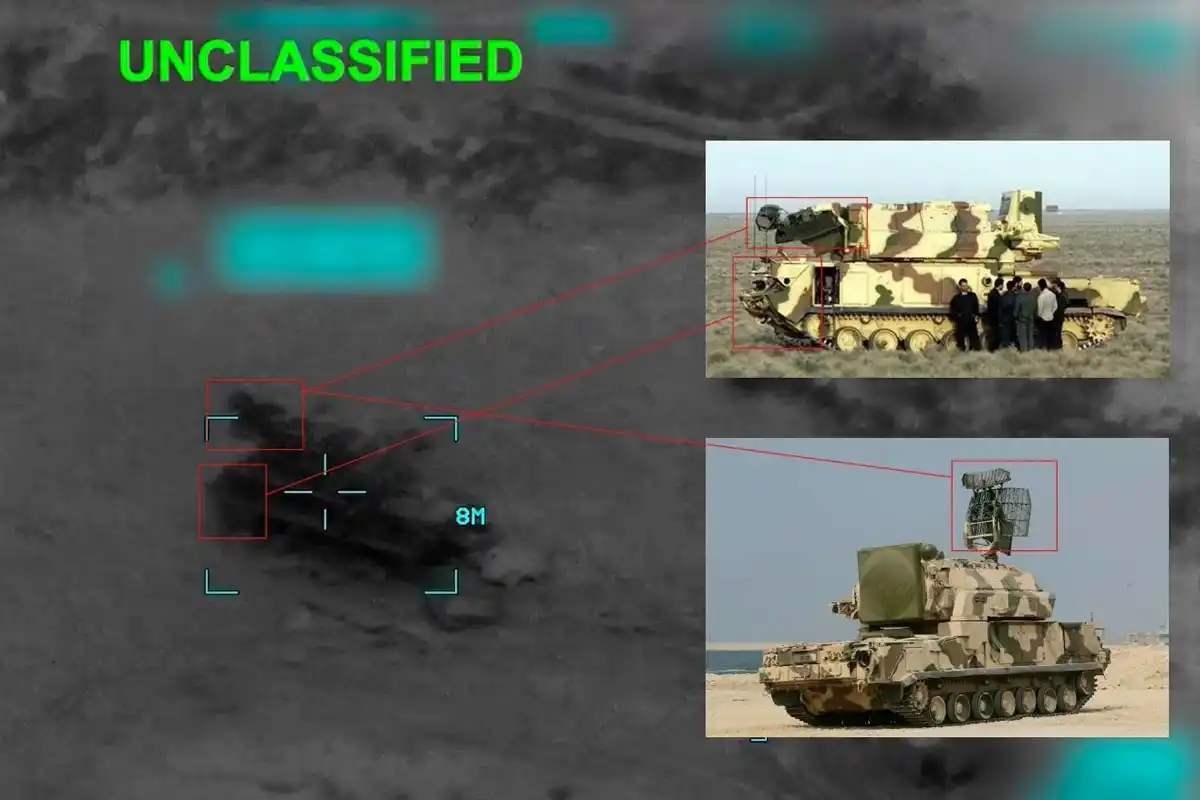
The release of combat footage by U.S. Central Command (CENTCOM) on March 2, 2026, has intensified scrutiny of Washington’s ongoing air campaign against Iranian military infrastructure. The video documents a precision-guided strike that destroyed what defense analysts assess to be a Russian-supplied Tor-M1 short-range air defense system in Iranian service. The operation forms part of the broader U.S.-led campaign known as Operation Epic Fury, a sustained effort to dismantle Iranian missile, command, and air-defense networks following Tehran’s recent ballistic missile and drone attacks across the region.
The strike represents more than a single tactical success. It marks a deliberate attempt to erode the defensive shield protecting Iran’s most sensitive military assets. While U.S. officials have not publicly specified the platform responsible for the engagement, the footage shows a tracked, radar-equipped vehicle moments after firing, followed by the impact of a precision munition that neutralizes the system. The sequencing strongly suggests that the strike was timed to suppress a point-defense asset actively engaged in airspace denial, likely positioned to protect ballistic missile units or high-value command infrastructure.
Iran’s air-defense network relies on layered protection, combining long-range systems with mobile short-range assets designed to intercept low-altitude threats. The Tor-M1, supplied by Russia in the mid-2000s, occupies a critical role within this architecture. Eliminating even a single launcher carries operational and strategic implications, particularly given the relatively limited size of Iran’s Tor inventory.
Iran continues to maliciously launch ballistic missiles, indiscriminately targeting military and civilian locations throughout the region. U.S. forces remain on the hunt to eliminate this threat. As the President has said, our resolve has never been stronger. pic.twitter.com/SDdvaL38yp
— U.S. Central Command (@CENTCOM) March 2, 2026
The Tor-M1: A Compact but Formidable Defensive Node
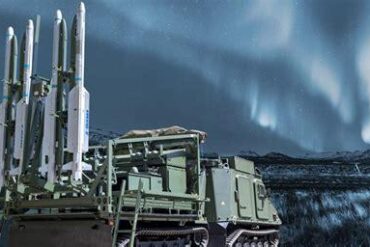
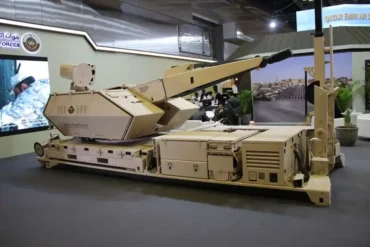
The Tor-M1 (NATO reporting name: SA-15 Gauntlet) is a self-contained, short-range surface-to-air missile system mounted on a tracked chassis. Weighing approximately 34 tons, the platform integrates a target-acquisition radar, fire-control radar, and eight vertically launched 9M330 or 9M331 missiles on a single vehicle. This integration enables the system to detect, track, and engage aerial threats independently without relying on external radar networks.
Designed to counter aircraft, helicopters, cruise missiles, guided bombs, and unmanned aerial vehicles, the Tor-M1 typically operates within an engagement range of roughly 12 to 15 kilometers and can intercept targets at altitudes up to around 6 kilometers. Its missiles travel at speeds exceeding Mach 2, allowing rapid reaction against low-flying threats. Iranian sources have claimed the system can track dozens of targets simultaneously and engage multiple threats in rapid succession, forming a dense defensive “bubble” around strategic installations.
From a military planning perspective, systems like the Tor-M1 present a serious hazard to strike aircraft and standoff munitions. Their mobility allows them to reposition, complicating targeting efforts. Their ability to engage precision-guided munitions and drones makes them particularly relevant in modern air campaigns, where low-observable and remotely piloted systems are heavily employed.
Russian Transfers and Iran’s Limited Tor Inventory
Iran acquired its Tor-M1 systems under a contract signed with Russia in late 2005, with deliveries completed between 2006 and 2007. Moscow reportedly supplied 29 launchers and more than 700 missiles, providing Tehran with a modern short-range defensive capability at a time of increasing international pressure.
Public defense assessments as recently as 2025 continued to list all 29 launchers as operational, with no verified evidence that Iran procured the more advanced Tor-M2 variant. This suggests that Tehran’s Tor capability remains finite and aging, dependent on legacy systems that may face maintenance and modernization challenges under sanctions.
Given this limited inventory, the destruction of even a single Tor-M1 launcher represents a measurable reduction in available assets. Replacement options are constrained by ongoing export restrictions and geopolitical tensions affecting Russian defense exports. Attrition therefore compounds over time, steadily weakening the short-range defensive layer guarding Iran’s strategic sites.
Operational Context: Operation Epic Fury
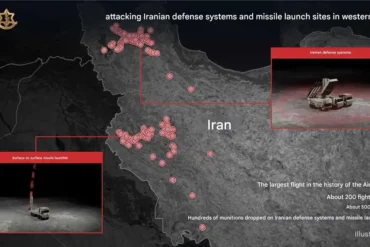
CENTCOM described the strike as part of Operation Epic Fury, a campaign targeting Iranian missile launch infrastructure and associated air-defense systems. U.S. officials have accused Tehran of conducting “malicious” ballistic missile launches against military and civilian locations in the region, framing the air campaign as a defensive response aimed at protecting American personnel and allied populations.
Neutralizing point-defense systems such as the Tor-M1 serves a clear operational objective. Before sustained air operations can proceed, strike planners typically prioritize the suppression or destruction of enemy air defenses, a doctrine commonly referred to as SEAD (Suppression of Enemy Air Defenses). Short-range systems protect high-value targets from precision munitions, drones, and low-flying aircraft. Removing them creates safer corridors for follow-on strikes.
The footage released by CENTCOM appears to show a moment of vulnerability: the Tor-M1 firing and then being struck. This sequence indicates precise intelligence and timing, likely enabled by persistent surveillance and real-time targeting coordination. Such engagements demonstrate the interplay between reconnaissance assets, electronic warfare, and precision-guided munitions in contemporary conflict environments.
Integration Within Iran’s Layered Air Defense Network
Iran’s air-defense doctrine emphasizes layered coverage. Long-range systems such as the S-200, S-300, and domestically developed Bavar-373 form the outer perimeter, while medium- and short-range systems provide inner protection for sensitive facilities. The Tor-M1 occupies this inner defensive ring, shielding command centers, missile depots, and nuclear-related sites from low-altitude penetration.
The system also holds historical significance within Iran’s military narrative. Iranian crews trained in Russia during its initial induction, and the Tor-M1 quickly featured in Islamic Revolutionary Guard Corps (IRGC) exercises. Its deployment around critical infrastructure signaled Tehran’s intent to harden strategic assets against Western air power.
However, the system’s record is not without controversy. In January 2020, a Tor-M1 unit operated by IRGC personnel mistakenly shot down Ukraine International Airlines Flight PS752, resulting in the deaths of 176 civilians. Investigations attributed the incident to misidentification during a period of heightened military tension. The tragedy underscored both the lethality and the risks associated with operating short-range air-defense systems in complex airspace environments.
Tactical and Strategic Implications of the Strike
At the tactical level, removing a Tor-M1 battery reduces the immediate defensive density around whatever asset it was protecting. This increases the vulnerability of nearby missile launchers, logistics hubs, or command facilities. In practical terms, fewer interceptors mean reduced probability of stopping incoming precision munitions.
At the strategic level, the strike conveys a message about vulnerability. Russian-supplied air-defense systems, long marketed as capable of countering Western air power, remain susceptible to modern detection and targeting methods. This reality is shaped not only by hardware but by integration, training, and operational coordination. Air defense effectiveness depends on a network functioning cohesively; isolated nodes can be identified and dismantled.
For Iran, the erosion of its Tor fleet may force difficult allocation decisions. Protecting every high-value site becomes increasingly challenging as inventory shrinks. Mobility can mitigate risk, but movement also exposes systems to detection.
A Broader Signal in a High-Stakes Campaign
The elimination of a Russian-built Tor-M1 in Iranian service fits into a wider pattern of escalating exchanges across the region. Each destroyed system carries both material and symbolic weight. Materially, it diminishes Iran’s defensive capacity. Symbolically, it underscores the reach and precision of U.S. strike capabilities.
Operation Epic Fury reflects a shift from reactive measures to systematic degradation of enabling infrastructure. Rather than focusing solely on launch platforms, the campaign targets the protective layers that allow those platforms to operate with relative security. By thinning air-defense coverage, U.S. planners aim to sustain operational tempo while limiting exposure of aircraft and crews.
The broader geopolitical dimension cannot be ignored. Russian-origin systems deployed by regional actors are increasingly tested in real combat scenarios. Their performance, survivability, and integration outcomes shape perceptions far beyond the immediate theater.
As the campaign continues, the attrition of advanced air-defense assets like the Tor-M1 will influence both sides’ calculations. Iran must adapt its defensive posture under pressure, while U.S. forces seek to maintain precision and momentum. In modern conflict, dominance in the air often determines the trajectory on the ground. The destruction of this Tor-M1 system illustrates how a single, well-timed strike can ripple through an entire defensive network, altering the balance of risk and capability in a volatile regional environment.