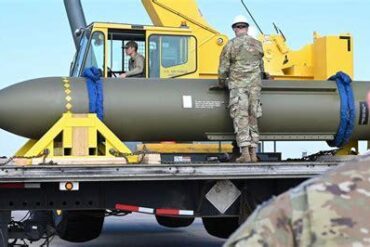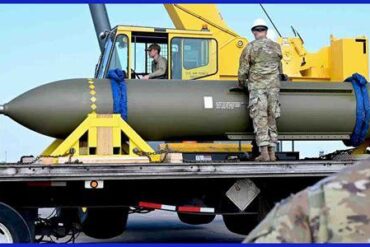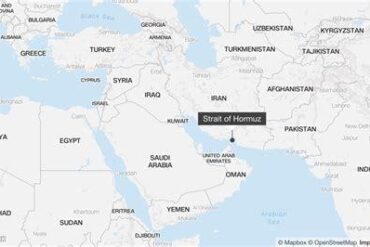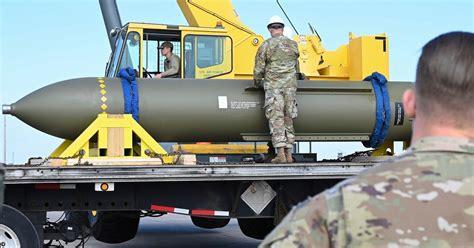
The United States military has escalated its precision strike capabilities in the Persian Gulf by deploying the GBU-72 Advanced 5,000-pound “bunker-buster” munition against Iranian missile infrastructure positioned along the strategically vital Strait of Hormuz. The operation, confirmed by U.S. Central Command, targeted hardened coastal installations believed to house anti-ship cruise missiles, long considered a persistent threat to global maritime traffic.
The Strait of Hormuz remains one of the most critical chokepoints in the world, with a significant percentage of global oil shipments passing through its narrow corridor. Any disruption—whether through mining, missile strikes, or naval harassment—has immediate implications for energy markets, shipping insurance costs, and geopolitical stability. By striking these missile sites, Washington signaled a clear intent: neutralize threats before they materialize into maritime crises.
The use of the GBU-72 underscores a deliberate tactical choice. Rather than deploying heavier strategic munitions, the U.S. opted for a weapon that blends precision, penetration capability, and rapid deployability, making it particularly suited for time-sensitive targets embedded within fortified terrain.
Why the GBU-72 Was Chosen for This Strike
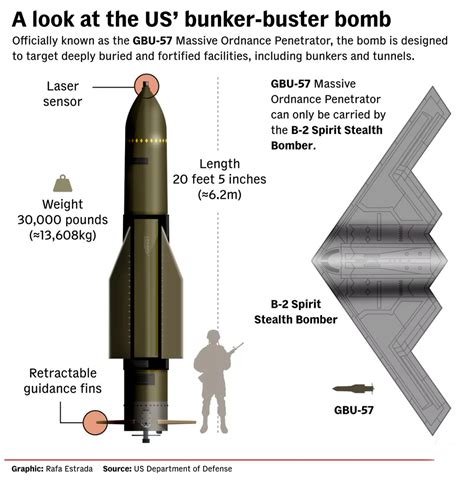
The GBU-72 Advanced 5K Penetrator occupies a unique niche in the U.S. arsenal. Designed to bridge the gap between legacy bunker-busters and massive ordnance like the GBU-57 Massive Ordnance Penetrator (MOP), it offers a balance of lethality and flexibility. Weighing approximately 5,000 pounds, the weapon is engineered to penetrate deeply buried or reinforced targets, including underground bunkers and missile silos.
Unlike older systems such as the GBU-28, which relies heavily on laser guidance, the GBU-72 integrates a GPS/INS guidance system. This allows it to maintain accuracy even in degraded environments—dust storms, heavy cloud cover, or battlefield smoke—conditions that are not uncommon along Iran’s southern coastline.
This technical advantage becomes decisive in real-world combat scenarios. Coastal missile batteries are often shielded by terrain masking, reinforced concrete, and layered defenses. The GBU-72 is specifically optimized to defeat such protections, ensuring that a single strike can disable or destroy critical launch infrastructure.
Operational Flexibility: A Weapon Built for Rapid Deployment
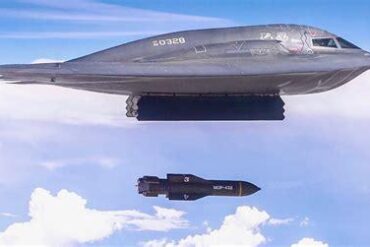
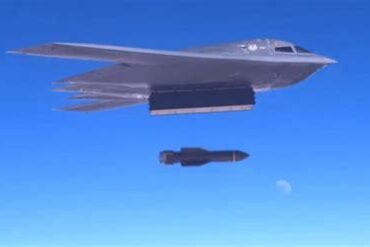
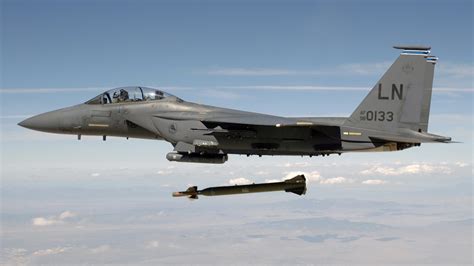
One of the most significant advantages of the GBU-72 lies in its compatibility with multiple aircraft platforms. Unlike the GBU-57, which requires stealth bombers such as the B-2 Spirit, the GBU-72 can be deployed from more readily available platforms, including the F-15E Strike Eagle and the B-1B Lancer.
This flexibility allows U.S. forces to respond quickly to emerging threats without waiting for strategic bomber positioning. In a region as volatile as the Gulf, where escalation timelines can compress into hours, such responsiveness can define the difference between deterrence and disruption.
The weapon achieved initial operational capability around mid-2024, following extensive testing that began with its first successful release in October 2021. Developed with heavy reliance on advanced modeling and simulation, the GBU-72 represents a new generation of precision-guided munitions where digital validation accelerates battlefield readiness.
Targeting Iran’s Coastal Missile Network
The missile sites targeted in this operation were reportedly equipped with anti-ship cruise missiles, systems specifically designed to threaten vessels transiting the Strait of Hormuz. These weapons, often deployed in hardened coastal bunkers, are capable of striking both military and commercial ships, making them a strategic lever for Iran in times of tension.
By employing deep-penetration munitions, U.S. forces aimed not just to damage surface-level infrastructure but to neutralize the core operational capability of these sites. This includes underground storage, launch systems, and command nodes, which are typically shielded from conventional airstrikes.
The decision to strike reflects a broader doctrine of preemptive risk reduction, particularly in regions where asymmetric threats—such as mobile missile launchers and concealed bunkers—can rapidly alter the tactical landscape.
Regional Escalation and Political Reverberations
The strikes occurred amid heightened regional tensions, compounded by significant developments within Iran’s leadership structure. Reports indicate that Ali Larijani, a key figure associated with Iran’s strategic and defense apparatus, was recently killed, triggering strong reactions from Iranian authorities and affiliated organizations.
Iran’s Revolutionary Guard Corps (IRGC) framed the loss as a rallying point, emphasizing themes of resistance and national unity. Meanwhile, Israeli leadership has intensified its rhetoric, signaling continued willingness to pursue high-value targets within Iran’s leadership hierarchy.
These overlapping dynamics—military strikes, leadership losses, and escalating rhetoric—are contributing to a volatile regional environment where actions in one domain quickly reverberate across others.
Strategic Implications for Global Shipping and Security
The implications of these strikes extend far beyond immediate military objectives. The Strait of Hormuz handles roughly one-fifth of the world’s oil supply, making its security a matter of global concern. Even the perception of risk can trigger spikes in oil prices, rerouting of shipping lanes, and increased naval deployments.
By targeting missile infrastructure directly, the United States is attempting to restore deterrence credibility while minimizing prolonged engagement. The message is precise: threats to international shipping will be met with targeted, technologically advanced force.
At the same time, the use of a weapon like the GBU-72 reflects a broader shift in modern warfare toward precision over volume. Rather than overwhelming targets with sheer firepower, the emphasis is on surgical strikes that achieve maximum effect with minimal collateral exposure.
The Evolution of Bunker-Buster Technology
The GBU-72 represents the latest step in a lineage that began with weapons like the GBU-28, developed during the Gulf War to penetrate deeply buried Iraqi command bunkers. While the GBU-28 could reach depths of up to 150 feet underground, its reliance on laser guidance limited its effectiveness under certain battlefield conditions.
Modern systems like the GBU-72 build upon that foundation, integrating multi-mode guidance, improved penetration physics, and enhanced reliability. The result is a weapon that not only hits its target but does so with greater consistency and adaptability.
This evolution reflects a broader trend in military technology: the convergence of data-driven design, advanced materials, and precision navigation systems. In practical terms, it means fewer munitions are required to achieve mission objectives—an efficiency that carries both tactical and strategic advantages.
A Calculated Display of Force
The deployment of the GBU-72 near the Strait of Hormuz is more than a tactical operation—it is a calculated demonstration of capability and intent. By choosing a weapon that embodies precision, flexibility, and penetrative power, the United States has highlighted its ability to neutralize hardened threats without escalating to full-scale bombardment.
In a region defined by fragile balances and rapid escalation cycles, such signals matter. They shape perceptions, influence decision-making, and ultimately determine whether tensions spiral or stabilize.