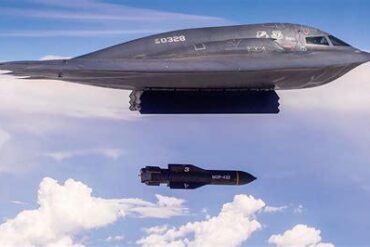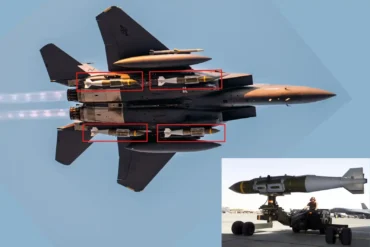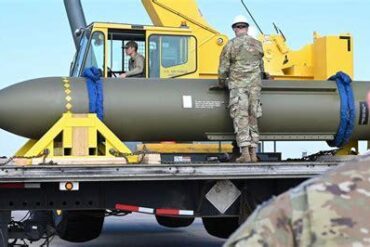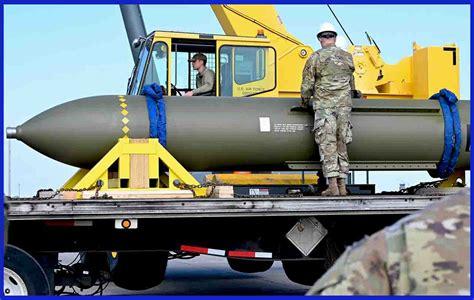
The GBU-57A/B Massive Ordnance Penetrator (MOP) stands as one of the most formidable bunker-buster bombs ever engineered. Designed to penetrate deep into the earth and obliterate heavily fortified underground facilities, this weapon represents a pinnacle of precision and destructive capability in modern warfare. As the geopolitical landscape intensifies, particularly in the Middle East, the GBU-57 has emerged as a critical asset in the United States’ strategic arsenal, a weapon that even close allies such as Israel must rely upon the U.S. to deploy.
Unlike conventional bombs, the GBU-57 is meticulously crafted to break through layers of concrete, steel, and rock before delivering its devastating payload. This unique capability is essential for targeting deeply buried military infrastructure, such as command centers, missile silos, and nuclear enrichment facilities that are intentionally shielded from surface-level attacks.
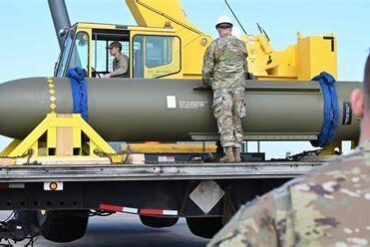
The GBU-57 weighs more than 30,000 pounds and is housed within a specially reinforced high-performance steel casing. This casing not only preserves the bomb’s structure during the initial impact but also ensures it can travel through multiple barriers without losing its penetrative force. Once the bomb achieves the required depth, its precision-guided detonation maximizes the damage within the targeted subterranean site.
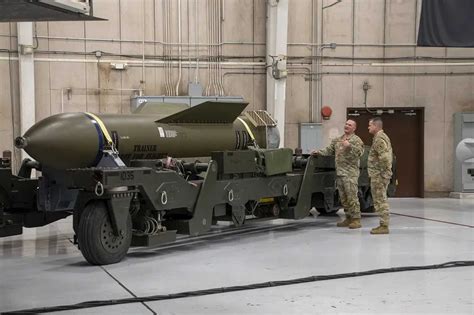
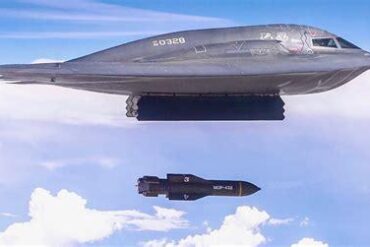
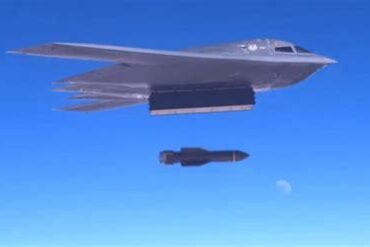
The delivery platform for the GBU-57 is equally critical. Currently, only the U.S. Air Force’s B-2 Spirit stealth bomber is equipped to carry and deploy the MOP. Each B-2, based at Whiteman Air Force Base in Missouri, is capable of carrying two of these massive weapons. The stealth capabilities of the B-2 allow it to evade sophisticated air defense systems, enabling the aircraft to approach high-value targets with a significant degree of surprise and minimal detection risk.
This unique combination of payload and platform means that the GBU-57 is a U.S.-exclusive capability. Allied nations, including Israel, lack both the bomb itself and the stealth bomber necessary to deliver it effectively. This exclusivity underscores the U.S.’s pivotal role in potential military operations against deeply buried targets, such as Iran’s Fordow Fuel Enrichment Plant.
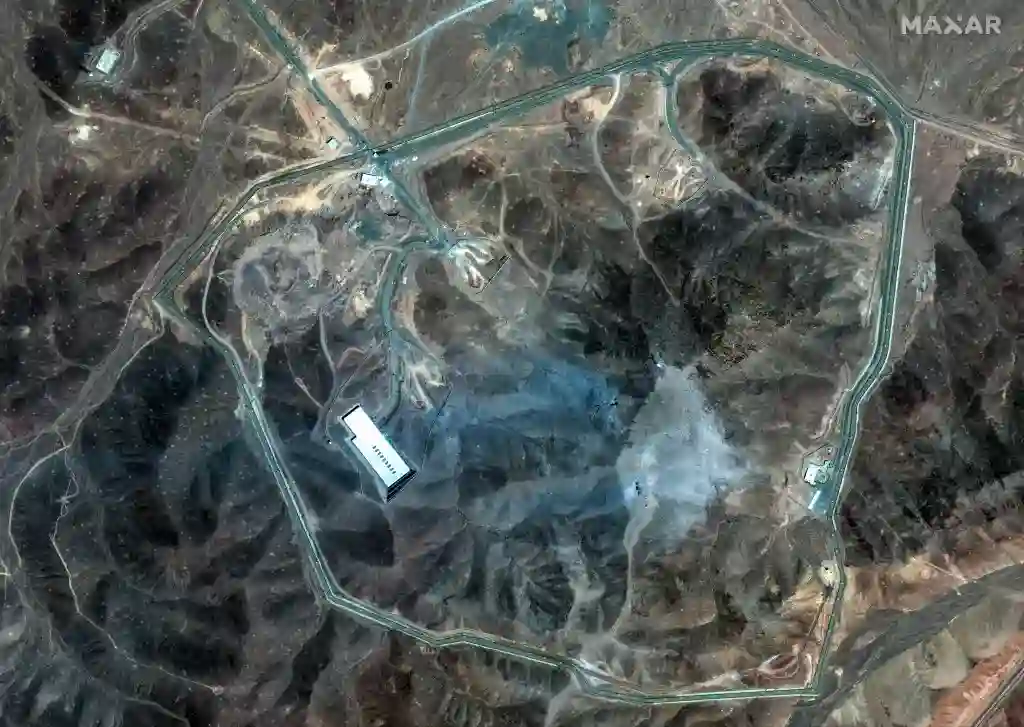
The Fordow facility, located deep under a mountainside, is a symbol of Iran’s determination to protect its nuclear program. With 1,000 active uranium enrichment centrifuges, Fordow is specifically designed to withstand airstrikes. The plant’s formidable defenses have made it a focal point in discussions about the limits of Israel’s independent military capabilities.
In a revealing exchange on June 15, Israeli Ambassador to the United States, Yechiel Leiter, appeared on ABC News’ “This Week.” When asked about Israel’s capacity to destroy the Fordow site, Leiter acknowledged the challenge but emphasized that Israel may have alternative strategies that do not rely solely on U.S. bunker-busting bombs. “We have a number of contingencies which will enable us to deal with Fordow. Not everything is a matter of taking to the skies and bombing from afar,” said Leiter, indicating that Israel’s playbook might involve other forms of sabotage or cyber-operations.
Despite Leiter’s assertions, Israel’s National Security Advisor Tzachi Hanegbi provided a sharper perspective during an interview with Channel 12 News on June 17. Hanegbi made it unequivocally clear that Israel’s military campaign would ultimately target Fordow. “This operation will not conclude without a strike on the Fordow nuclear facility,” he said, signaling the significance Israel places on neutralizing Iran’s subterranean nuclear assets.
The growing tension highlights why the GBU-57 is so strategically valuable. The bomb’s technical design enables it to penetrate 200 feet of earth or up to 60 feet of reinforced concrete before detonation. Such depth is beyond the reach of most conventional munitions and is a testament to the GBU-57’s engineering.
The bomb’s precision is guided by a Global Positioning System (GPS) coupled with an advanced inertial navigation system, allowing it to strike within a tight circular error probable (CEP). This degree of accuracy ensures the bomb can achieve its objective while minimizing the risk of collateral damage, a crucial consideration when operating near sensitive or civilian-populated areas.

The development of the GBU-57 was spurred by the need to address the increasing trend of adversaries hardening and burying their most sensitive facilities. Traditional air-dropped munitions often lack the mass and penetrative power to reach such depths, prompting the U.S. Department of Defense to seek solutions that could adapt to evolving threats.
While Israel possesses an arsenal that includes smaller bunker-busting weapons like the GBU-28, those are not comparable to the GBU-57 in either depth penetration or explosive yield. The GBU-28, for example, can breach roughly 20 feet of reinforced concrete — a fraction of the GBU-57’s capability. This technological gap further illustrates why Israel might require U.S. cooperation should it decide to mount a direct assault on Fordow.
Despite Israel’s robust intelligence network and history of innovative military operations, including cyber-sabotage events like the Stuxnet virus attack that targeted Iran’s centrifuges in 2010, physical destruction of deeply buried facilities like Fordow presents an unparalleled challenge without the MOP.
In a broader context, the GBU-57 plays a psychological role in geopolitical strategy. Its very existence can serve as a deterrent, signaling to potential adversaries that no bunker is truly impenetrable. The bomb’s capacity to eliminate even the most fortified targets exerts pressure on nations to reconsider the effectiveness of burying critical assets.
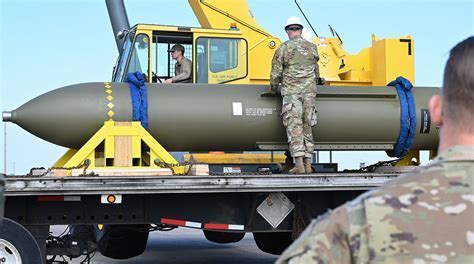
Operational deployment of the GBU-57 involves complex mission planning. Given the bomb’s considerable weight and size, its release alters the aerodynamic profile of the B-2 bomber. Pilots must execute precise flight paths and approach angles to ensure the munition impacts the target at the correct velocity and trajectory to achieve maximum penetration.
The cost associated with producing and deploying the GBU-57 is substantial. However, for missions where the destruction of fortified underground sites is imperative, no alternative offers comparable assurance of success. The Department of Defense’s investment in this weapon reflects its strategic emphasis on neutralizing high-value, deeply concealed threats.
The GBU-57’s capability is not just a matter of raw power—it is a synthesis of advanced metallurgy, aerodynamics, navigation technology, and tactical delivery. Each element has been fine-tuned to produce a weapon system that can accomplish what few others can: breach the world’s most secure subterranean fortresses.
As discussions about Iran’s nuclear ambitions continue to dominate global security agendas, and as Israel weighs its options regarding preemptive or retaliatory strikes, the GBU-57 remains a key factor in any potential military calculus. Its deployment would represent a decisive escalation and would likely only occur under the gravest of circumstances, where diplomatic and covert avenues have been fully exhausted.
Ultimately, the Massive Ordnance Penetrator serves as a reminder that, despite the increasing sophistication of cyber warfare and remote strikes, some military challenges still require the brute force of a well-designed, precisely delivered munition capable of piercing the earth itself to achieve strategic objectives.