Iran has formally warned that unexploded U.S. bunker-buster bombs may still be embedded within nuclear facilities targeted during the June 2025 strikes, creating what officials describe as serious safety and security barriers to international inspections. The statement, delivered by Foreign Minister Abbas Araghchi, introduces a new layer of complexity to an already volatile post-conflict environment and raises urgent questions about unexploded ordnance, nuclear oversight, and the technological implications of advanced U.S. weapons remaining intact underground.
According to Iranian authorities, the presence of unexploded munitions at bombed nuclear sites constitutes a tangible physical hazard that must be addressed before any inspection regime can resume. Araghchi emphasized that no international legal framework currently governs inspections at nuclear facilities that have been directly attacked by heavy ordnance. The absence of precedent, he argued, makes the situation operationally and legally uncharted territory.
Iran has communicated these concerns to the International Atomic Energy Agency (IAEA), seeking agreement on safety, access, and procedural protocols before inspections move forward. Iranian officials maintain that unexploded bombs are among several unresolved technical issues that complicate any on-site verification effort. Tehran has further reiterated its distrust of the United States and characterized ongoing diplomatic exchanges as uncertain.
The 2025 Strikes on Fordow, Natanz, and Isfahan
The controversy stems from the June 2025 conflict, a 12-day confrontation that escalated into direct military exchanges between Iran, Israel, and the United States. During that period, U.S. forces conducted precision strikes against three of Iran’s most strategically significant nuclear sites: Fordow, Natanz, and Isfahan.
These facilities represent the backbone of Iran’s uranium enrichment and nuclear technology infrastructure. Fordow, in particular, is constructed deep within mountainous terrain, designed to resist aerial bombardment. Natanz has long been central to enrichment operations, while Isfahan houses key elements of nuclear conversion and research infrastructure.
Iranian officials later acknowledged substantial structural damage but insisted that nuclear materials had been relocated before the strikes, preventing radiological fallout. Active hostilities ended with a ceasefire, yet damaged underground chambers, collapsed access points, and potential unexploded ordnance remain.
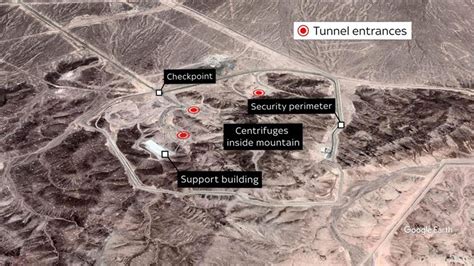
The strikes were carried out during what U.S. sources described as a coordinated operation targeting hardened underground structures. Iranian accounts frame the campaign as part of a broader assault supported by Washington, including attacks on military installations and infrastructure.
The GBU-57 Massive Ordnance Penetrator: Engineering for Depth
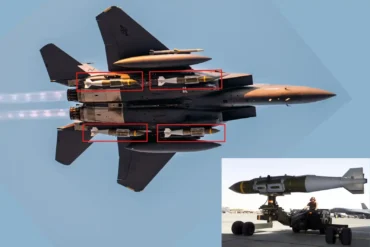
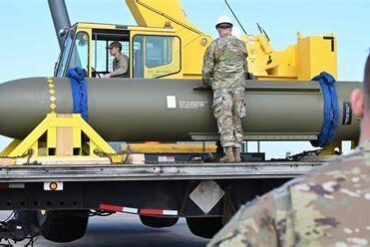
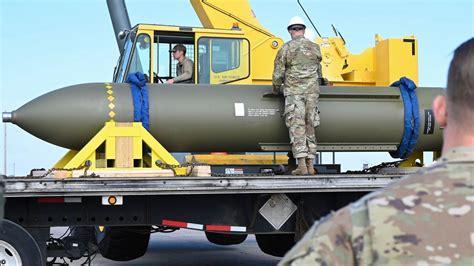
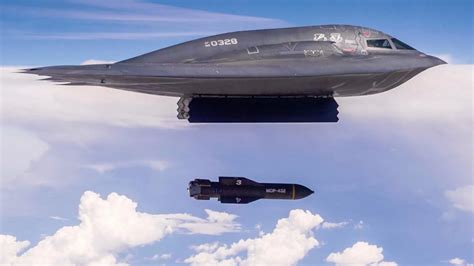
Central to Iran’s warning is the GBU-57 Massive Ordnance Penetrator (MOP), one of the most powerful conventional bunker-buster bombs in the U.S. arsenal. Weighing approximately 13,600 kilograms, the weapon is specifically engineered to penetrate deep layers of rock and reinforced concrete before detonation.
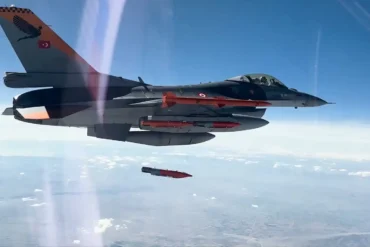
Unlike surface-impact bombs that rely primarily on explosive force, the GBU-57 derives much of its destructive capability from kinetic energy. Its hardened steel casing is designed to withstand extreme impact stresses without fracturing prematurely. Upon striking the ground, the bomb penetrates to significant depth before a programmable delayed fuze triggers detonation. The result is maximum internal structural damage rather than surface blast effects.
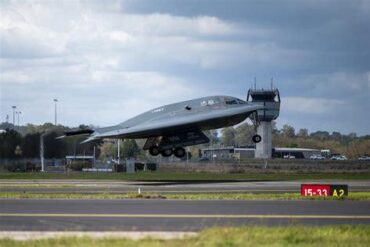
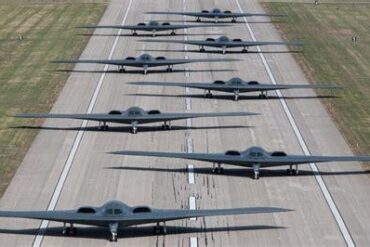
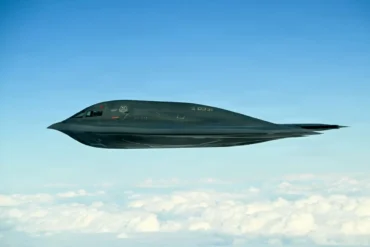
The bomb measures roughly 6.2 meters in length and is guided by a combined GPS and inertial navigation system. Delivery is limited to B-2 Spirit stealth bombers, as few aircraft can physically carry such mass.
During the June 2025 operation, U.S. forces reportedly employed fourteen GBU-57A/B variants against underground halls, access tunnels, and ventilation shafts. Additional strikes included Tomahawk cruise missiles targeting associated infrastructure.
How Unexploded Bunker-Busters Become a Hazard
The possibility that some GBU-57 bombs failed to detonate is technically plausible. Delayed-fuze systems are designed to activate after penetration to a specified depth. However, extreme impact angles, structural collapse, or mechanical disruption during penetration can interfere with fuze operation.
When a fuze fails, a large, largely intact munition may remain embedded within rock, soil, or collapsed concrete. In the case of a weapon the size of the GBU-57, this represents not just an explosive hazard but a complex engineering challenge.
Removing or neutralizing a 13-ton penetrator buried beneath unstable underground structures requires specialized ordnance disposal expertise. The presence of radioactive materials or damaged nuclear infrastructure further complicates safe access.
From Iran’s perspective, inspectors entering such environments face both explosive and structural risks. From an international standpoint, inspection teams would require extraordinary safety assurances before deployment.
Inspection Protocols in Unprecedented Conditions
Araghchi has argued that there is no existing international protocol for inspecting nuclear facilities that have been directly bombed with heavy penetrating ordnance. Traditional IAEA inspection frameworks were not designed for post-strike environments containing unexploded military hardware.
The situation introduces overlapping legal, technical, and political challenges. Questions include chain-of-custody control over unexploded weapons, verification of neutralization procedures, and liability in case of accidental detonation. Additionally, inspectors would need coordinated engineering assessments before accessing underground halls potentially compromised by structural collapse.
Iran has insisted that inspections can proceed only after formal agreements address safety, security, and access logistics. Tehran maintains ongoing communication with the IAEA but frames the issue as unprecedented in scope.
Strategic and Technological Implications of Recovery
One of the most sensitive dimensions of this development involves what might occur if unexploded GBU-57 bombs are successfully recovered and neutralized. Even inert hardware can offer substantial technical insight.
A recovered penetrator could allow detailed measurement of casing thickness, alloy composition, structural reinforcement patterns, and internal compartment layout. Examination of the guidance electronics, inertial navigation components, and fuze assembly could provide valuable data on penetration timing and detonation logic.
However, translating such examination into replication is far from straightforward. The GBU-57 depends on specialized metallurgy, precision machining, advanced explosives, and extensive high-impact testing under controlled conditions. Replicating equivalent performance would require industrial capacity, materials science expertise, and a compatible delivery platform capable of carrying a payload exceeding thirteen tonnes.
Operational integration presents an even greater barrier. The bomb’s weight restricts deployment to aircraft with extraordinary lift and structural capacity. Without a comparable delivery system, duplication of its full capability would remain impractical.
More realistically, technical examination could inform defensive countermeasures. Adjustments to tunnel depth, reinforcement layering, access geometry, and overburden density might reduce vulnerability to future penetration strikes. Defensive engineering often evolves as rapidly as offensive capability.
Regional Tensions and Diplomatic Fallout
The warning about unexploded ordnance arrives amid continued regional tension. The June 2025 conflict marked a rare period of direct exchanges between Iran and Israel, with the United States entering the fray through targeted strikes. Iranian officials describe the campaign as including assassinations of military commanders and nuclear scientists, framing it as a comprehensive assault rather than isolated air operations.
The ceasefire halted immediate hostilities but did not resolve underlying strategic disputes. The presence of unexploded bunker-buster bombs now serves as both a physical and diplomatic flashpoint.
Iran’s public statements signal a calculated approach. By highlighting unexploded U.S. weapons embedded within nuclear infrastructure, Tehran underscores both the destructive scale of the strikes and the ongoing risks. At the same time, the issue provides leverage in negotiations over inspection conditions and broader nuclear talks.
The Broader Military Context
The 2025 operation, sometimes referred to in U.S. circles as “Midnight Hammer,” demonstrated the operational niche of ultra-heavy penetrators in modern warfare. Underground fortification has long been a strategic method for protecting high-value assets. In response, bunker-busters evolved to defeat reinforced concrete and mountain overburden.
The cycle is technologically relentless. Hardened structures grow deeper and stronger. Penetrators grow heavier and more resilient. Guidance systems refine accuracy to ventilation shafts and access corridors. Each iteration reflects the ongoing contest between concealment and detection, depth and force.
The possibility that some of these weapons remain intact underground adds an unexpected twist. Weapons engineered to destroy concealed infrastructure now themselves lie concealed within it.
An Unfinished Chapter
Iran’s assertion that unexploded U.S. GBU-57 bombs remain inside Fordow, Natanz, or Isfahan transforms the aftermath of the 2025 strikes into an unresolved chapter. Inspection protocols must now navigate explosive hazards. Diplomatic discussions must account for unprecedented conditions. Military analysts must consider the technological implications of hardware potentially accessible to adversaries.
Whether the bombs are ultimately neutralized, recovered, or proven absent, the episode highlights the intricate intersection of modern military engineering and nuclear diplomacy. Beneath layers of reinforced concrete and rock, the consequences of June 2025 remain physically embedded, waiting to be addressed.