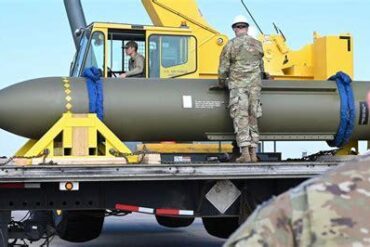
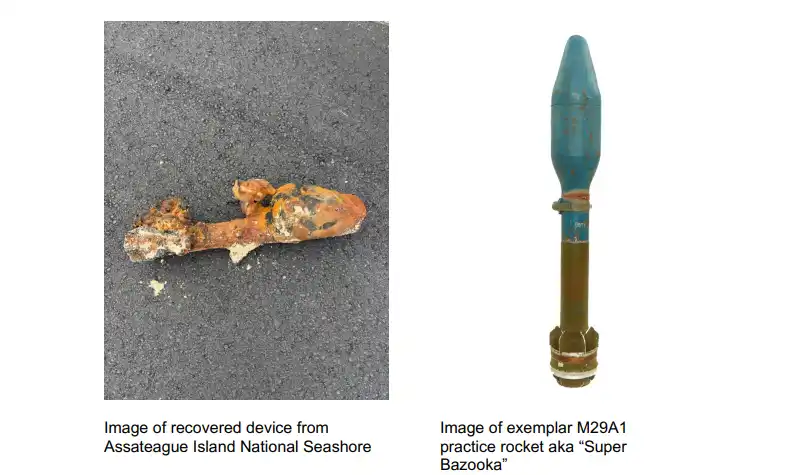
On the final days of 2025, a chilling reminder of America’s wartime past surfaced from beneath the windswept sands of Assateague Island National Seashore, straddling the coasts of Maryland and Virginia. Two unexploded M29A1 ‘Super Bazooka’ training rockets—remnants of World War II military exercises—were recovered in separate incidents that triggered swift action from the U.S. Air Force Explosive Ordnance Disposal (EOD) unit and local bomb squads. These discoveries brought to light not only the island’s historical significance but also the enduring danger of long-buried munitions.
The first of the two devices was spotted shortly after 8:30 a.m. by vigilant staff from the National Park Service. Suspicious of the object’s appearance, they promptly contacted emergency responders. That same day, a second device—later confirmed to be another M29A1 rocket—was recovered from a private residence in Ocean Pines, where it had been unknowingly transported by a curious beachgoer. Both devices, though categorized as training ordnance rather than live munitions, were safely rendered inert and disposed of without incident.
Rediscovering a Forgotten Training Ground
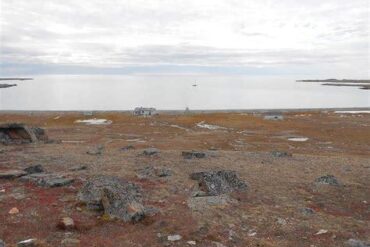
Assateague Island, known today for its serene coastal beauty and wild horses, bore a very different identity during the 1940s. During World War II, the island served as a classified military bombing and weapons training site. Allied forces used the terrain for aerial bombardment drills and ground-based weapon launches. Among the arsenal tested were M29A1 rockets, nicknamed “Super Bazookas” due to their enhanced range and armor-penetrating capabilities compared to earlier models.
While the military undertook efforts to clear the area following the war, nature had other plans. Decades of coastal erosion, storm surges, and tidal shifts continually reshaped the landscape, exhuming forgotten weapons from their sandy graves. In this case, it appears the recent rediscovery was the result of such natural changes, prompting a stark warning to residents and visitors alike.
The Risks of Disturbing Historical Ordnance
Although the recovered M29A1s were designed for training, EOD specialists emphasized that all unexploded military ordnance must be treated as live and potentially lethal. Time, corrosion, and environmental exposure can turn even inert-seeming items into volatile hazards. Officials stressed that no one should attempt to touch, move, or transport these types of objects. Even souvenirs from wartime training exercises could contain unstable propellants or trigger mechanisms.
If a suspicious or unfamiliar object is encountered—on the beach, in old storage sheds, or even at construction sites—the immediate protocol is evacuation and notification of authorities. Calling 911 initiates a controlled response from experts trained to handle such volatile discoveries.
Echoes of War in the Modern Day
The recovery of these rockets stands as a sobering reminder of how history can reemerge unexpectedly. Despite the peace that now defines Assateague Island, its sands still conceal vestiges of a time when the U.S. prepared for global conflict. The professionalism and swift coordination between local fire marshals, bomb squads, and the Air Force prevented what could have been a tragic outcome.
This event also reignites discussions on the long-term safety of former military training grounds repurposed for public use. As climate change accelerates coastal erosion, hidden ordnance may increasingly surface, demanding public awareness and preventive education.
The United States’ ability to remember and respond to its past, even through such startling discoveries, underscores the importance of vigilance, respect for history, and unwavering commitment to public safety.