A Strategic Shift Toward Hypersonic Dominance
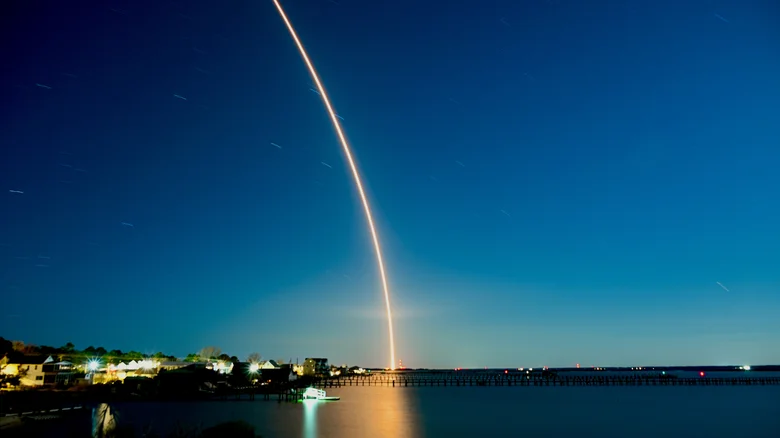
The United States Department of Defense (DoD) is committing $190 million to a rocket program that, at first glance, seems paradoxical: a Mach 5-capable vehicle that never reaches space. Yet this investment in Rocket Lab’s HASTE (Hypersonic Accelerator Suborbital Test Electron) is not about orbiting Earth—it is about mastering the thin boundary between atmosphere and space, where future conflicts may be decided in seconds.
Unlike traditional orbital rockets, HASTE is suborbital, meaning it never achieves the velocity required to remain in orbit. Instead, it follows a controlled arc through the upper atmosphere before descending back to Earth. That limitation is precisely its strength. By avoiding the complexities of full orbital insertion, the platform enables rapid, repeatable, and cost-effective hypersonic testing, a capability the U.S. military considers essential in an era of accelerating global competition.
What Makes HASTE Different from Conventional Rockets
Built on the foundation of Rocket Lab’s Electron rocket, HASTE is purpose-engineered for high-speed atmospheric experimentation. While orbital rockets prioritize payload delivery into space, HASTE is optimized for velocity, frequency, and adaptability within suborbital conditions.
This distinction allows engineers and defense researchers to simulate real-world hypersonic scenarios without the prohibitive costs and long timelines associated with traditional launch systems. Instead of waiting months or years between tests, the DoD can now execute missions in rapid succession, dramatically improving development cycles.
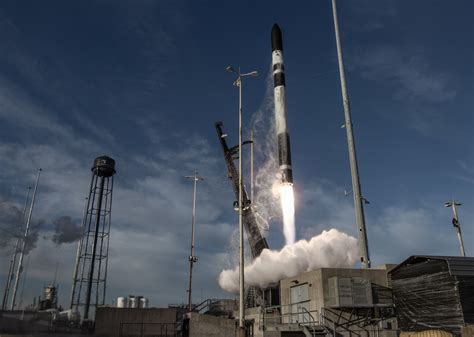
The program supporting these launches, known as TRMC MACH-TB 2.0 (Test Resource Management Center Multi-Service Advanced Capability Hypersonic Test Bed), represents a coordinated effort between multiple defense branches. Its objective is straightforward but ambitious: accelerate hypersonic innovation at scale.
Why Suborbital Flights Are a Game-Changer
Suborbital flights occupy a unique niche in aerospace research. They provide brief periods of microgravity, exposure to extreme aerodynamic forces, and access to near-space environments—all without the logistical burden of orbital missions.
For hypersonic research, this environment is invaluable. At speeds exceeding Mach 5, airflow behaves unpredictably, materials face intense thermal stress, and control systems must react almost instantaneously. Testing under these conditions is not optional—it is the only way to validate technologies intended for real-world deployment.
NASA has long used suborbital platforms for Earth science, biological experiments, and robotic testing, but HASTE pushes this concept further into the defense domain. It transforms suborbital space into a high-speed laboratory, where each flight generates actionable data on propulsion, guidance systems, and thermal protection technologies.
The Military Advantage of Mach 5 Capabilities
Hypersonic speeds introduce a fundamental shift in warfare dynamics. At Mach 5 and beyond, vehicles travel so fast that traditional tracking and interception systems struggle to keep pace. Decision windows shrink dramatically, forcing defense systems to operate with unprecedented speed and precision.
HASTE’s role is not to deploy weapons but to refine the technologies that make such speeds usable and controllable. By conducting 20 planned test flights over four years, the program aims to deliver a steady stream of insights that can be translated into operational capabilities.
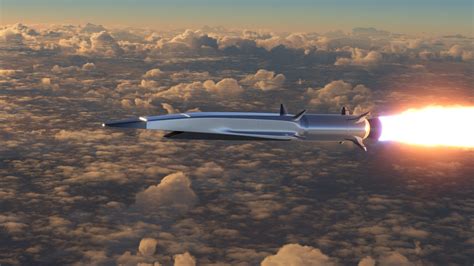
This approach also addresses a longstanding bottleneck: testing frequency. Historically, hypersonic experiments have been limited by cost and infrastructure constraints. HASTE changes that equation by offering a high-cadence launch model, enabling continuous iteration and faster breakthroughs.
Cost Efficiency Meets Technological Urgency
One of the most compelling aspects of the HASTE program is its emphasis on cost reduction without sacrificing performance. Traditional hypersonic testing methods can cost tens of millions per launch, often with limited flexibility. By contrast, Rocket Lab’s approach leverages modular design and streamlined launch operations, making each mission more accessible and repeatable.
This efficiency is not merely a financial advantage—it is a strategic necessity. As global powers race to develop hypersonic systems, the ability to test, fail, refine, and relaunch rapidly becomes a decisive factor in technological leadership.
Beyond Space: The Real Frontier
The irony of a rocket that never reaches space fades quickly when viewed through the lens of modern defense priorities. The true frontier is not orbit—it is speed, responsiveness, and adaptability within Earth’s atmosphere.
HASTE embodies this shift. It is not a compromise but a specialized tool, designed to unlock insights that orbital missions cannot provide. By focusing on suborbital hypersonic performance, the United States is investing in a domain where milliseconds matter and innovation cannot wait.
In that context, the $190 million price tag looks less like an expense and more like a calculated move to secure technological superiority in the fastest battlefield ever conceived.